Key Takeaways
- Controller-HIL and power-HIL testing each address distinct stages of development, yet both rely on precise real-time simulation to reduce design risk and cost.
- Real-time simulation ensures deterministic timing, repeatable validation, and faster feedback, building confidence in every engineering phase.
- Combining controller-HIL and power-HIL into one workflow helps OEMs validate embedded control software and hardware performance without redundant setups.
- A structured validation plan—with clear requirements, model partitioning, safe interfaces, and automation—keeps projects efficient and traceable.
- OPAL-RT empowers engineers with scalable platforms and real-time fidelity that deliver measurable confidence from controller design to power integration.
Real-time HIL gives you proof, not guesswork, before hardware reaches your bench. Control code meets plant behavior under tight timing, so you catch problems while changes still cost little. Teams move faster when models, controllers, and power interfaces speak the same language. Confidence grows as each test ties directly to requirements, signals, and limits.
Hardware-in-the-loop (HIL) shortens the path from concept to safe, confident release. Controller hardware-in-the-loop (C-HIL), commonly written as controller-HIL, focuses on the embedded controller with simulated plant signals. Power hardware-in-the-loop (PHIL), often shortened as power-HIL, introduces power flow between a power amplifier and the test hardware. Each method supports a different stage, yet both rely on real-time simulation to keep timing, fidelity, and safety under control.
Understanding how controller-HIL and power-HIL support OEM development
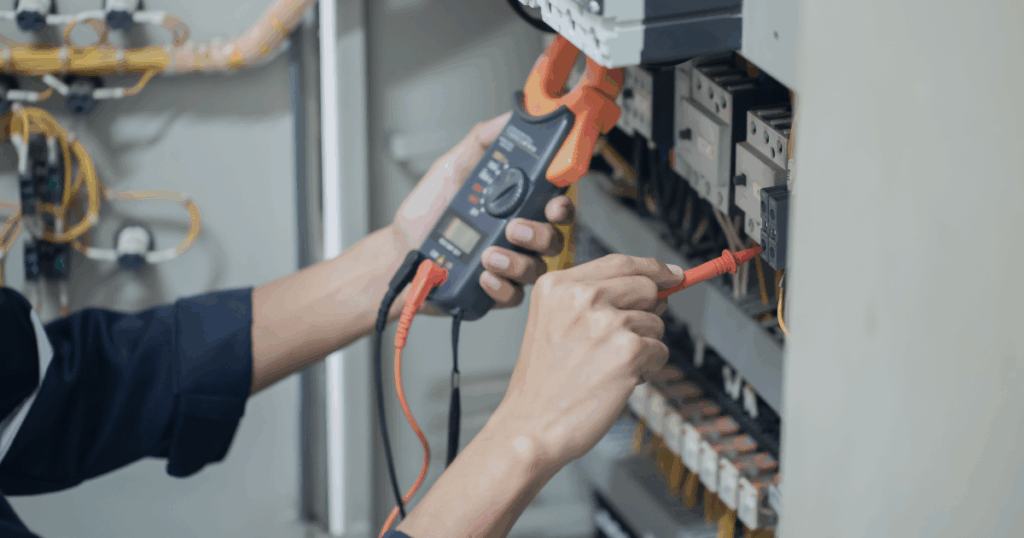
Controller-HIL connects a real controller to a simulated plant with electrical signals and communication buses. The controller runs production code or a near-final build, while the simulator produces sensor inputs and reads actuator outputs. You validate logic, timing, and I/O early, long before full prototypes exist. This approach reduces uncertainty around algorithms, diagnostics, and communication behavior.
Power-HIL adds a controlled power interface so hardware sees current and voltage as it would under operation. The simulator still computes plant dynamics, but a power stage drives or absorbs energy to exercise converters, drives, or protection functions. Engineers can stress limits, observe responses, and tune protections with safe boundaries. Combined use lets teams progress from software confidence to power-stage assurance without resetting their workflow.
Exploring the difference between controller-HIL and power-HIL testing
The main difference between controller-HIL and power-HIL is the presence of actual power transfer to the device under test. Controller-HIL uses signal-level interfaces to validate embedded control logic, timing, and communications. Power-HIL introduces a power amplifier so the device experiences current and voltage under controlled conditions. Each method targets distinct risks, complements the other, and reduces surprises during integration.
“Control code meets plant behavior under tight timing, so you catch problems while changes still cost little.
Scope of the test loop
Controller-HIL focuses on the embedded controller, I/O, and software state machines. Plant dynamics run on a real-time simulator, and all physical interactions remain at safe signal levels. This keeps hardware risk low while revealing timing jitter, task overruns, and fault-handling gaps. Engineers gain a repeatable way to test edge cases that would be difficult or unsafe on a bench with power.
Power-HIL expands the loop to include energy transfer between a power stage and the device under test. The simulator computes network or plant behavior while the amplifier emulates electrical conditions. This adds realism for converters, drives, and protection schemes that depend on true current and voltage. Teams observe thermal trends, saturation effects, and protection trips under controlled stress.

Typical signal levels and interfaces
Controller-HIL uses low-voltage interfaces such as analog inputs, digital outputs, controller area network (CAN), Ethernet, or pulse-width modulation (PWM). Signal conditioning replicates sensors and actuators, and latencies stay deterministic. Safety is easier to manage since energy remains minimal. Hardware remains protected while software is tested thoroughly.
Power-HIL uses a power amplifier sized to the target device and test envelope. Current loops, voltage limits, and hardware protections keep tests safe and repeatable. Cables, connectors, and measurement paths mirror those used on power benches. Engineers gain insight into impedance, switching behavior, and thermal margins under meaningful load.
Model fidelity and timing constraints
Controller-HIL relies on models that capture the dynamics needed for control decisions. Time steps, numerical methods, and solver choices focus on closed-loop stability with the controller. The simulator must meet strict deadlines to avoid overruns, so lean models are valuable. Fidelity targets controller needs, not full power-stage physics.
Power-HIL pushes fidelity further for switching effects, network interactions, and protection dynamics. The plant model must sustain small time steps and high bandwidth to drive the amplifier correctly. Field-programmable gate array (FPGA) acceleration often helps capture fast phenomena. The goal is safe, accurate power emulation within tight real-time margins.
Safety, cost, and risk posture
Controller-HIL carries lower risk and lower operating cost since tests run at signal level. Engineers iterate quickly on algorithms, diagnostics, and communications without expensive hardware damage. The method is ideal for early validation and regression testing. Coverage grows steadily, with low maintenance cost and high reuse.
Power-HIL introduces higher complexity and cost due to amplifiers, protections, and safety procedures. The payoff is deeper confidence in converters, drives, and protection settings. Teams reduce late-stage surprises that would otherwise appear during power-up. A planned handoff from controller-HIL to power-HIL keeps risk acceptable.
| Aspect | controller-HIL | power-HIL | Typical OEM use |
| Energy in loop | Signal level only | Actual current and voltage | Software logic vs power-stage behavior |
| Primary goal | Validate embedded control code and timing | Validate hardware response under power | Early design vs integration and stress |
| Safety posture | Lower, simpler procedures | Higher, needs protection and limits | Fast iteration vs power assurance |
| Model demands | Control-oriented fidelity | Power-oriented fidelity and bandwidth | Functional tests vs protection and performance |
| Equipment | I/O, real-time simulator | I/O, real-time simulator, power amplifier | Controller benches vs power benches |
Controller-HIL and power-HIL serve different needs across the same development path. Signal-level testing accelerates software quality and interface confidence. Power-level testing confirms hardware behavior, protection settings, and energy interactions. A coordinated plan uses both methods for full coverage without wasted effort.
Why real-time simulation matters for accurate validation and faster design cycles
Real-time simulation keeps models and hardware aligned at deterministic time steps. Timing certainty reveals scheduling conflicts that offline tools might hide. Engineers trust results when the simulator guarantees deadlines at each tick. Decisions become easier when a failure can be reproduced, measured, and fixed quickly.
- Deterministic timing under load: Real-time execution holds deadlines as controller tasks run. You see missed cycles, overruns, and latency spikes while they are easy to fix. Confidence rises because behavior stays consistent across reruns.
- Early exposure of edge cases: Faults, transients, and sensor dropouts can be replayed without risk. You verify monitoring, fallback modes, and alarms with clear pass or fail evidence. Teams adjust thresholds before hardware sees stress.
- Protection of valuable hardware: Signal-level tests avoid damage during early logic checks. Power-HIL adds protections and limits so stressful cases remain controlled. Equipment lives longer, and budgets stretch further.
- Faster calibration loops: Parameters change on the fly, then effects appear instantly. Engineers compare strategies quickly, and keep the best candidates. Real-time simulation reduces time spent waiting between iterations.
- Scale across benches and teams: Scenarios run the same way in different labs using shared models and scripts. Versioned cases keep results consistent across releases. Collaboration improves because tests read like specifications.
Real-time simulation reduces uncertainty during design, verification, and integration. Problems surface at the moment they matter instead of weeks later. Teams reuse scenarios, compare builds, and trend metrics with less friction. Schedules improve without trading away quality or safety.
How controller-HIL strengthens embedded control design and verification

Engineers use controller-HIL to validate software logic against representative plant dynamics. Deterministic timing exposes scheduling issues that might slip through desktop runs. I/O behavior, communications, and fault handling get tested under tight control. Traceable evidence supports design reviews, audits, and signoff.
“Controlled stress reveals true margins. Teams tune thresholds for overcurrent, undervoltage, and thermal events.”
Algorithm prototyping with hardware timing
Control algorithms look sound on paper, yet timing can surprise you. Controller-HIL validates sampling, filtering, and estimator updates at target rates. The platform reveals missed deadlines, priority inversions, and jitter that degrade performance. You fix issues with a short loop between change, test, and result.
Model-based design (MBD) workflows benefit from quick turnarounds. Engineers push builds to the controller, execute scenarios, and collect metrics for trend charts. Parameter sweeps run overnight with clear pass conditions. Teams keep only strategies that hold timing margins under stress.
I/O integration and interface validation
I/O paths shape controller behavior as much as algorithms do. Controller-HIL exercises analog scaling, PWM alignment, and sensor quantization. Communication buses such as controller area network (CAN) or Ethernet get loaded to realistic rates. You confirm message timing, queue sizes, and diagnostic flags with clean evidence.
Interface mismatches surface early while fixes stay simple. Engineers adjust pin maps, edge polarities, and filter constants without risking hardware. Test scripts keep coverage consistent across versions and branches. Integration later feels predictable because small issues were handled early.
Fault injection at the controller boundary
Fault injection builds confidence in monitoring and response functions. Controller-HIL can simulate short circuits, overcurrent flags, sensor freezes, and invalid frames. Each fault is repeatable, timed, and captured for review. You learn how the controller responds at thresholds, and then refine the logic.
Safety functions gain evidence with traceable results. Teams verify detection times, fallback modes, and recovery sequences. Logs show timing, states, and outputs for quick review. Stakeholders see proof that faults were considered, measured, and handled.
Regression and requirements traceability
Controller-HIL fits naturally with automated regression. Each requirement maps to one or more scenarios with clear pass criteria. Nightly runs catch behavior drift that might follow refactoring. Failures come with data, not guesswork.
Traceability makes audits straightforward. Requirements link to tests, logs, and version tags. Reviewers see consistent evidence for each claim. Engineers spend less time gathering proof, and more time improving code.
Controller-HIL focuses attention on software quality, timing discipline, and interface correctness. The method keeps risks low while building a base of repeatable tests. Teams arrive at integration with fewer blind spots and stronger evidence. Confidence carries forward as hardware complexity increases.
How power-HIL improves hardware testing and system integration
Power-HIL adds power exchange so devices see current, voltage, and real switching effects. Tests run within safe limits while capturing interactions that signal-level setups cannot show. Protection schemes, thermal behavior, and converter dynamics receive focused attention. The result is fewer surprises during power-up and commissioning.
Power-stage stress testing with safe limits
Converters and drives face stress when loads shift, faults occur, or commands step. Power-HIL recreates those conditions with current and voltage limits in place. Protections on the amplifier and device keep the test safe and repeatable. Engineers collect waveforms, temperatures, and event logs with each run.
Controlled stress reveals true margins. Teams tune thresholds for overcurrent, undervoltage, and thermal events. Confirmed margins help avoid nuisance trips and damaged parts. Confidence rises before larger systems get involved.
Converter and grid interaction studies
Power electronics interact with grids, microgrids, or other sources. Power-HIL models these networks while the amplifier imposes electrical conditions. Engineers observe impedance effects, oscillations, and controller cross-coupling. Findings feed back into filters, gains, and rate limits.
Interaction studies reduce integration risk. Teams validate ride-through behavior, droop settings, and synchronization. Corner cases receive attention under repeatable conditions. Launch schedules benefit because fewer issues appear during onsite tests.
Thermal, protection, and compliance checks
Thermal paths set a safe operating space. Power-HIL allows longer runs at controlled loads to watch the temperature rise. Protection thresholds are verified with clear timing and sequence evidence. Compliance goals stay visible without full-scale facilities.
Engineers use the same setup for firmware updates and rechecks. Changes get verified against past results with identical scenarios. Documentation stays clean because scripts and logs match prior versions. Audits move faster thanks to consistent records.
System integration with mechanical and plant models
Complex systems involve mechanics, fluids, and thermal behavior. Power-HIL couples these models with electrical dynamics so devices see realistic behavior. Mechanical limits and filters shape electrical responses and vice versa. Integration feels measured and predictable, not improvised.
The same framework supports incremental integration. Subsystems enter the loop as soon as models exist. Interfaces improve step by step with repeatable evidence. Teams meet performance targets with fewer late changes.
Power-HIL provides grounded confidence in hardware under energy flow. Results reach beyond controller logic into protection, losses, and thermal comfort zones. Integration gains momentum because major risks receive attention early. Engineers close gaps before full prototypes arrive.
Key advantages of combining controller-HIL and power-HIL in one test workflow
A combined workflow reduces handoffs, preserves test intent, and keeps teams aligned. Signal-level work builds software quality, then power-level work confirms hardware behavior. Shared models, scripts, and reports keep results consistent. Costs drop because scenarios and assets carry forward without rework.
Using both methods inside one plan also improves coverage. You inspect logic first, then test energy interactions with the same cases. Stakeholders see a single line of evidence across the development cycle. Findings move smoothly from requirement to test to signoff.
Combined workflow advantages
| Advantage | What it looks like | Value for OEMs |
| Shared models across phases | Same plant models feed controller-HIL, then power-HIL | Less duplication, consistent behavior |
| Reusable scenarios | One test definition runs at signal and power levels | Clear traceability, faster audits |
| Early fault-proof, later power-proof | Fault injection first, stress testing later | Lower risk, fewer late failures |
| Single data pipeline | Unified logging and KPIs across benches | Easier trending, stronger decisions |
| Stepwise coverage | Start with software, add power when ready | Shorter cycles, higher confidence |
Practical steps OEM engineers can take to plan a real-time validation setup
Clear planning aligns requirements, models, hardware, and safety from day one. Real-time constraints shape models and I/O choices, so early agreement matters. Teams benefit from shared definitions for timing, accuracy, and pass criteria. A good plan reads like a testable specification, not a wish list.
Define requirements and acceptance criteria
Start with measurable outcomes tied to system purpose. Specify timing budgets, accuracy targets, and recovery expectations. Map each requirement to a scenario that proves or disproves the claim. Keep wording unambiguous so tests can pass cleanly.
Acceptance criteria must be practical to verify. Use thresholds, durations, and tolerances that a test rig can observe. Include fault and recovery behavior with clear timing expectations. Stakeholders sign off when evidence meets the agreed limits.
Map the model architecture and partitioning
Decide which dynamics must run in real time, and which can stay offline. Partition models for CPUs or FPGAs based on bandwidth needs. Keep interfaces stable so components can update without breaking others. Document time steps, solver choices, and data types.
A clean partition eases maintenance and scaling. Teams add detail where needed without slowing everything down. Hardware targets stay clear because each block lists timing and I/O. Reuse improves as models follow the same structure across projects.
Select I/O and power interfaces with safety
List all signals, buses, and power paths with expected ranges. Choose I/O modules that match voltage, current, and resolution needs. For power-HIL, size amplifiers for the envelope, with protections and interlocks. Safety plans include e-stops, isolation, and procedure checklists.
Well-chosen interfaces save time later. Wiring stays tidy, and measurements stay reliable. Safety gear and processes keep people and equipment protected. Audits pass smoothly when limits and tests are documented.
Automate tests and data management
Script scenarios, pass criteria, and reports so results stay consistent. Version control test assets beside models and code. Store logs with metadata, and compute key performance indicators automatically. Dashboards help teams see trends, not just single runs.
Automation reduces manual effort and errors. New builds run through known tests without delay. Failures carry data that points to root causes quickly. Managers see progress with clear numbers and traceable artifacts.
A strong plan aligns requirements, models, interfaces, and safety practices. Teams build confidence step by step with results that hold up. Automation turns evidence into insight without extra labor. Projects finish sooner with fewer late surprises.
Controller-HIL focuses on embedded control logic with signal-level inputs and outputs. Plant dynamics run on a simulator, and the controller sees realistic sensors and actuators without power flow. Power-HIL adds a power amplifier so the device experiences current and voltage under safe limits. The first improves software and interface quality, and the second confirms power-stage behavior and protections.
Real-time simulation guarantees timing so tests hit reliable pass conditions. Engineers connect controllers to plant models, run scenarios for faults and transients, and log key metrics. Automated scripts replay tests after each software change to catch regressions. The combination of deterministic timing, repeatability, and traceability gives strong evidence for signoff.
Controller-HIL needs models that capture dynamics relevant to control decisions at the chosen sample rate. Emphasis is placed on stability, estimator performance, and realistic sensor behavior. Power-HIL adds requirements for switching effects, impedance, and protection timing that drive the amplifier. Teams often start with control-oriented models, then refine fidelity for power studies.
A consistent data pipeline helps results stand up to review. Store raw logs, computed indicators, and scenario metadata for each run. Reports should link requirements, scenarios, thresholds, and outcomes with clear plots. Version tags for models, code, and tests complete the trace.