Key Takeaways
- Real-time platforms help students apply theory with timing accuracy, safe fault cases, and repeatable tests.
- Power system simulation strengthens industry readiness through evidence-based tuning, data logging, and clear reporting.
- Hardware-in-the-loop practice develops I/O awareness, controller timing skills, and confidence under test constraints.
- Universities gain safer labs, higher throughput, and consistent assessment with reproducible scenarios and data traces.
- Familiarity with open toolchains and structured workflows reduces ramp-up time for internships and first roles.
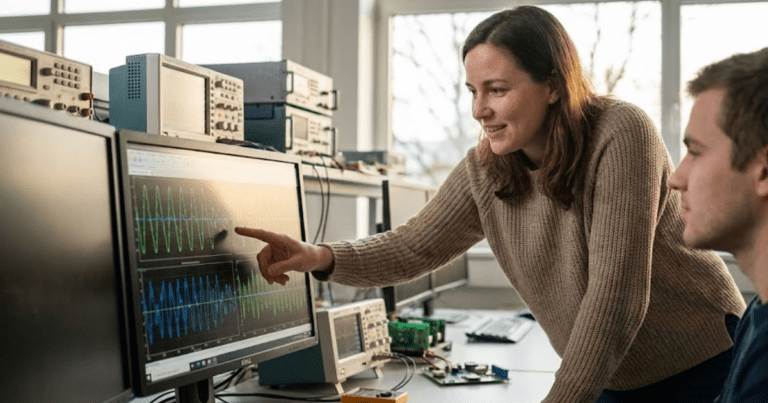
Students want to graduate with skills they can use on day one. Real-time simulation turns theory into hands-on practice, without safety risks or costly equipment downtime. You can try bold ideas, measure the outcome, and repeat experiments at full speed. Instructors keep control of the scope while students get authentic signals, faults, and timing constraints.
Universities face tight lab schedules, limited hardware, and rising expectations from industry. Teams across energy, aerospace, automotive, and academia want graduates who can test, debug, and explain systems under pressure. Power system simulation, control prototyping, and hardware interfacing build that edge without stretching budgets. Real-time platforms make course outcomes tangible, consistent, and aligned with engineering practice.
Why electrical simulation in education is essential for modern engineers

Electrical systems now span power converters, grid interactions, embedded control, and communication links. Setting up all that hardware for every student is expensive, labor-intensive, and sometimes unsafe. Electrical simulation in education lets students build and test equivalent models that behave like the target plants, while keeping people and equipment safe. Students can inject faults, tune parameters, and compare results against theory without waiting for a specific bench to free up. Faculty gain repeatable experiments that scale from small cohorts to large classes, which supports consistent grading and feedback.
Simulation also builds analysis habits that employers value. Students learn to create test plans, capture waveforms, and interpret differences between expected and measured behaviour. Those practices map cleanly to acceptance testing for labs across energy, aerospace, and automotive. The result is stronger industry readiness, because graduates can discuss evidence, limits, and trade-offs with the same fluency they use in theory.
How real-time simulation bridges the gap between theory and industry application
Real-time execution keeps models running at fixed step sizes that match the timing of controllers, sensors, and I/O. That timing makes it possible to close the loop with actual devices, which turns a software exercise into a practical lab. Students see how sample rates, latency, and solver choices affect system stability, not just the math on paper. They gain intuition for saturation, quantization, and fault handling that book examples rarely cover.
“Students want to graduate with skills they can use on day one.”
Real-time platforms also make room for staged complexity. A class can begin with pure software models, progress to controller-in-the-loop, then finish with power-stage emulation and sensor interfaces. That pathway matches the development flow used in many labs, so students can point to concrete achievements when speaking with hiring teams. The approach links theory with practice through repeatable experiments and clear measurements.
6 ways real-time simulation prepares students for industry
Real-time simulation adds structure to learning that builds habits used on the job. The techniques grow from simple models into hardware-connected tests that reflect industrial timing and constraints. Students practice planning, measurement, and debugging in a safe setting while still facing the urgency of deadlines. That combination moves learners from classroom confidence to industry readiness without guesswork.
1. Develops hands-on experience with power system simulation
Students start with a model of a converter, microgrid, or motor drive that runs in real time. They tune parameters such as switching frequency, filter values, and gains, then watch waveforms respond. Because the platform runs deterministically, timing issues materialize the way they would on a bench. Power system simulation supports fault cases like short circuits or unbalanced loads, which are unsafe on physical test stands. Labs can repeat those cases across sections, so every student sees the same conditions.
The result is muscle memory, not only theory. Learners practice measurement technique, from proper grounding to sampling strategy, which strengthens experimental discipline. They document procedures, compare runs, and justify parameter choices using traces and tables. That practice anchors electrical concepts and builds industry readiness that hiring teams notice.
2. Builds confidence in control system testing and validation
Control designs often pass simulation but falter when timing or noise shifts. Real-time platforms expose those gaps early, so students refine controllers with realistic delays and quantization. Learners run step, ramp, and disturbance tests while tracking overshoot, settling time, and robustness. Students connect controllers over analog and digital I/O, then verify stability at target sample rates. The experience turns tuning from guesswork into an evidence-based process.
Validation habits carry into internships and first jobs. Teams appreciate graduates who can prepare acceptance criteria, write automated checks, and explain outcomes clearly. Because experiments are repeatable, students see how small changes in code or plant parameters shift performance. That awareness shortens integration time and raises confidence in field tests.
3. Strengthens understanding of hardware-in-the-loop applications
Hardware-in-the-loop (HIL) connects physical controllers to a simulated plant that runs fast enough to behave like the target system. Students wire actual I/O, sensors, and communication links to the simulator, then test control code safely. Fault insertion, parameter sweeps, and corner cases become routine, which would be risky or time-consuming on full prototypes. Learners see how interface cards, sampling, and driver settings affect closed-loop behavior. The experience clarifies where the control code ends and plant dynamics begin.
Common HIL scenarios include grid protection relays in energy labs and inverter controllers in automotive powertrains. Students test trip logic, ride-through behavior, and communication failures using scheduled events. Each session records inputs, outputs, and fault flags for later review, which supports clear grading and self-assessment. Exposure to HIL builds vocabulary and judgment that map directly to job requirements.
“Real-time simulation turns abstract ideas into convincing evidence of skill.”
4. Encourages collaborative problem-solving and interdisciplinary teamwork
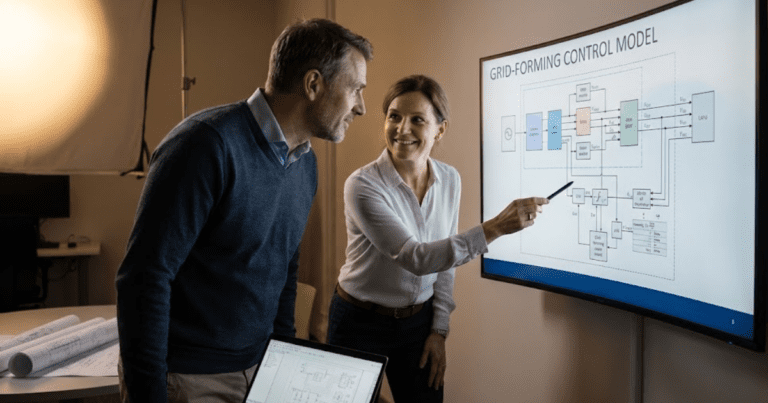
Modern systems cross boundaries between power, control, and embedded software. Group projects on the simulator reflect that reality, since models, I/O, and scripts must align. Students learn to define roles, track versions, and review one another’s work with care. Clear checklists and shared datasets reduce confusion and keep progress visible. Teams finish with artifacts that are easy to present, share, and extend in advanced courses.
Collaboration also builds communication skills. Learners practice explaining trade-offs to peers from other disciplines without jargon. Faculty can rotate roles so that each student touches modeling, wiring, and test automation. Those habits match the structure of engineering teams across energy, aerospace, automotive, and academia.
5. Enhances familiarity with tools used by leading engineering firms
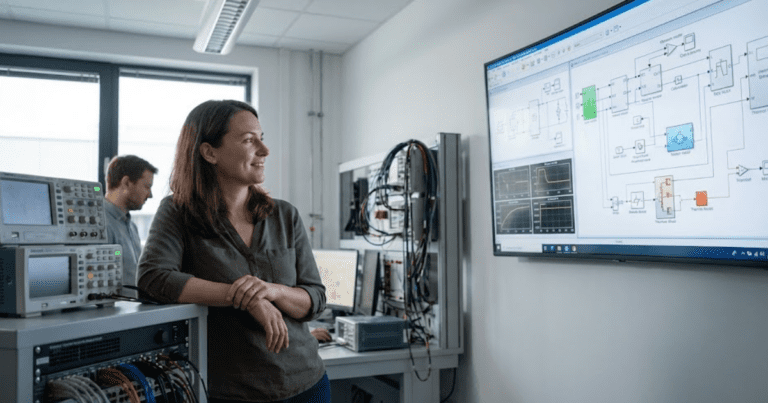
Students work inside model-based design environments, scripting languages, and test automation frameworks that mirror industry practice. They create plant and controller models, generate test scenarios, then push runs through batch jobs for repeatability. Projects include report templates, data exports, and version control hooks that align with lab standards. Exposure to open file formats and well-documented APIs encourages reuse across courses. Graduates speak fluently about toolchains, which helps during interviews and onboarding.
Familiarity also reduces ramp-up time for internships. Students understand model libraries, solver settings, and performance limits for real-time targets. They write small utilities to clean data, tag anomalies, and create figures that make results easy to digest. Those habits strengthen industry readiness because new graduates can contribute early without heavy coaching.
6. Improves adaptability to new technologies and simulation platforms
Real-time projects encourage curiosity about computing targets, from multi-core CPUs to reconfigurable logic. Students see why model partitioning, fixed-step solvers, and I/O latencies matter when scaling models. Assignments that move between targets teach what changes, what stays constant, and how to plan upgrades. That exposure builds confidence when teams switch hardware or adopt new standards.
Adaptability also comes from clean modelling discipline. Clear interfaces, unit tests, and documented parameters make a project portable across labs and courses. Students who practice that discipline ramp quickly when they join a new team, because they can follow structure and contribute fixes. The habit supports long-term learning and keeps skills useful as tools shift.
Real-time simulation turns abstract ideas into convincing evidence of skill. Students leave with repeatable methods, shareable artifacts, and measured performance, not just grades. Faculty gain reliable labs that scale across cohorts and programs. Industry benefits when graduates arrive with timing awareness, test discipline, and strong judgement.
Key advantages for universities adopting power system simulation tools
Universities look for investments that boost teaching quality, scale across courses, and fit within lab budgets. Power system simulation tools check those boxes while raising safety and repeatability. Faculty can plan clear outcomes, assess work fairly, and keep equipment in service longer. Students benefit from consistent access to the same conditions, which improves skills and confidence.
- Safer fault testing and incident prevention: Students can study short circuits, overvoltage events, and protection trips without risk. Instructors maintain control and can reset conditions instantly.
- Higher lab throughput and better use of time: Setup time drops because models and configurations load quickly. Teams spend more minutes testing and less time wiring or waiting.
- Consistent assessment and reproducible experiments: Identical scenarios run across sections, which supports fair grading. Data logs provide a trace of actions, measurements, and results.
- Lower equipment wear and budget relief: Critical hardware stays on the shelf for capstone work while most assignments run on simulators. Parts fail less often, and maintenance windows get shorter.
- Curriculum alignment across power, control, and embedded courses: The same platform supports introductory labs and advanced projects. Students see continuity across semesters, which strengthens knowledge transfer.
- Industry connections and project sponsorships: Partners recognize the value of students who can speak to test plans, failure modes, and validation results. Shared models and datasets make collaboration straightforward.
Simulation supports quality, safety, and scale without asking faculty to compromise on rigor. Administrators see clear impact on outcomes and budgets. Students gain time on task and repeatable practice that leads to stronger confidence. Those gains make power system simulation a reliable foundation for modern programs.
Real-time work teaches timing discipline, test planning, and evidence-based tuning. Students practice closing the loop with physical interfaces, logging data, and explaining results. Projects include fault cases, parameter sweeps, and acceptance checks that match industry practice. Graduates arrive with artefacts they can show during interviews, and with habits that shorten their first months on the job.
Universities get reliable results from platforms that run deterministically, connect to hardware, and support model-based workflows. Strong candidates include systems designed for power system simulation, with I/O suitable for protection relays, converters, and drives. Open architecture, clear documentation, and sample projects reduce setup time and keep content maintainable. Campus teams should prefer tools that scale from pure software to hardware-in-the-loop without rewriting core models.
The main difference between hardware-in-the-loop and software-in-the-loop lies in how the controller is represented. Software-in-the-loop runs both the plant and the controller as models on a computer, which helps with early algorithm checks. Hardware-in-the-loop runs the plant on a real-time target and keeps the controller as physical hardware, which exposes timing, quantization, and I/O issues. Many courses start with software-in-the-loop for speed, then progress to hardware-in-the-loop for closer-to-hardware testing.
Setup time drops after the first iteration because templates handle I/O, safety checks, and logging. A typical session uses the first third for parameter review and safety briefings, the second third for tests, and the last third for analysis and reflection. Capstone projects that include hardware-in-the-loop often use longer blocks, yet weekly progress still benefits from repeatable runs. Faculty often note that preparation time falls as shared libraries, examples, and rubrics mature across semesters.