Key Takeaways
- Digital labs work best when each run has a fixed check and a required explanation.
- Inspectable models and scaled exercises build consistent habits for testing and debugging.
- Templates and validation test cases keep modelling activities teachable across class sizes.
Modern modelling will make your labs teach understanding, not button clicks. Digital labs let students change parameters and explain waveforms. You’ll grade exercises with checks, not guesswork. Lab reports will improve.
Engineering teaching uses models on paper, so simulation models fit. The update treats a model like an instrument to verify and stress. Teaching support needs an update because students learn faster with one workflow. That shift modernizes modelling labs without turning class time into tool training.
Why modern modelling belongs in engineering teaching today
Modern modelling belongs in engineering teaching because it links theory to visible behaviour. Students will see how parameters, controls, and disturbances alter voltages and currents. That clarity will reduce copying and raise the quality of explanations. Labs get easier to repeat across semesters.
A useful lab pattern starts with a claim, then asks students to prove it with the model. A fault study can require a predicted first-cycle current, a simulated result, and a short explanation of the gap. Students can pinpoint the cause by checking source impedance and measurement points. That habit builds skepticism and engineering judgment.
6 ways to bring modern modelling into the classroom
These six changes modernize modelling activities without adding weekly hours. Each item ties an exercise to visible response and a check. Pick two items next lab cycle, then expand once grading feels stable. Stronger explanations will show up fast.
“A useful lab pattern starts with a claim, then asks students to prove it with the model.”
| Replace static lab manuals with interactive digital lab workflows | Students learn more when labs require them to test changes, capture results, and explain outcomes instead of following fixed instructions. |
| Use open, inspectable models to teach system behavior step by step | Allowing students to see inside models helps them trace cause and effect and build debugging skills rather than guessing. |
| Design modelling activities that connect equations to system response | Linking calculations to simulated waveforms teaches students to validate theory and question mismatches instead of accepting plots at face value. |
| Scale student exercises from simple blocks to full system studies | Gradually expanding a single model across labs builds confidence and reinforces how small subsystems combine into larger systems. |
| Blend offline simulation with controller and system validation tasks | Treating models as test benches trains students to think in test cases and limits, not just nominal operation. |
| Support instructors with reusable templates and assessment-ready models | Standardized templates reduce grading effort and keep modelling labs consistent across sections and semesters. |
1. Replace static lab manuals with interactive digital lab workflows
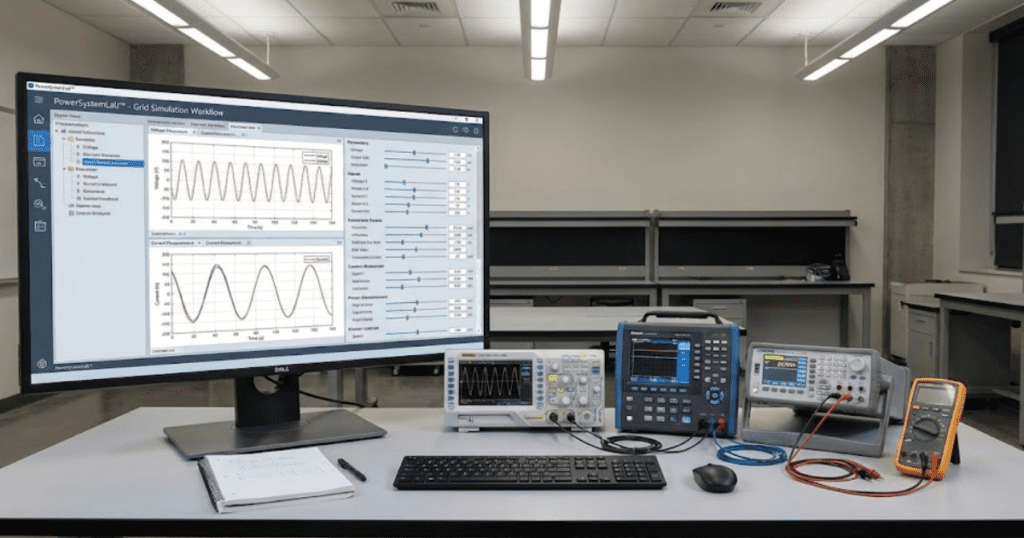
Static manuals push copy steps, while a digital lab workflow forces evidence at each stage. A simple structure works well: run a baseline, change one variable, then explain the delta using plots and values. A workflow can live as a versioned model folder with a checklist and a results file. Students will submit the model plus labeled plots with units and captions, not screenshots.
A motor start lab can ask three runs: rated voltage, 90% voltage, and higher inertia. The checklist can require the same axes, the same time window, and one metric such as peak current. Setup time is the tradeoff because file naming and storage must be consistent. That effort pays back when grading speeds up and disputes drop.
2. Use open, inspectable models to teach system behavior step by step
Students learn faster when they can open a model, see assumptions, and trace cause to effect. Inspectable models teach debugging because students can follow signals and states instead of guessing during lab time. A good lab starts with a small readable model and adds one feature per step. Each step should include one check that proves nothing else changed.
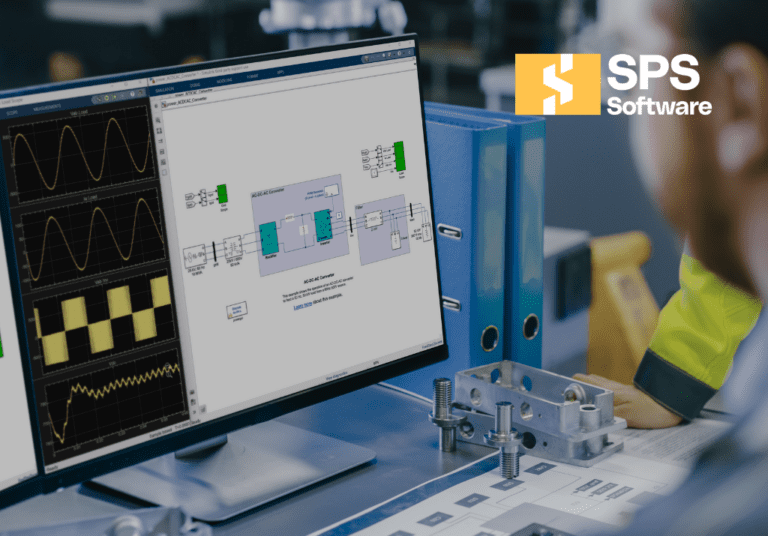
A converter lab can begin with an averaged switch, then add a switching bridge, then add a filter, and finally add control. Each step can require a power balance check or a ripple measurement. SPS SOFTWARE works well when students inspect structure and parameters instead of treating blocks as magic. Cognitive load is the constraint, so optional detail should stay hidden.
3. Design modelling activities that connect equations to system response
Modelling works best when students carry one equation from paper to plot, then explain the gap. The model becomes a test bench for assumptions about linearity, saturation, and time constants. Students will stop treating plots as truth and start asking what the model implies. That practice shows up later in design and fault finding.
An RL step response is a clean example: students compute the time constant, predict the 63% rise time, then measure it from the simulated waveform. A second run can add a sensor filter and ask for a revised calculation and plot. Scope control matters, so keep the math short and the measurement method explicit. Grading gets easier because the explanation matters more than a perfect value.
4. Scale student exercises from simple blocks to full system studies
Students build confidence when exercises scale in a planned sequence instead of big jumps. A scalable sequence reuses the same base model and grows it in layers, so students practice refactoring. Each lab should add one new concept and one new failure mode to diagnose. That structure also helps you pinpoint where a cohort gets stuck.
A protection sequence can start with a source and load, then add a line, then add a fault, and finally add relay logic. Measurements can stay constant, while each week adds one plot such as trip time or negative-sequence current. Planning is the tradeoff, because you’ll need the end state defined early. Students still struggle, but the struggle stays focused and teachable.
5. Blend offline simulation with controller and system validation tasks
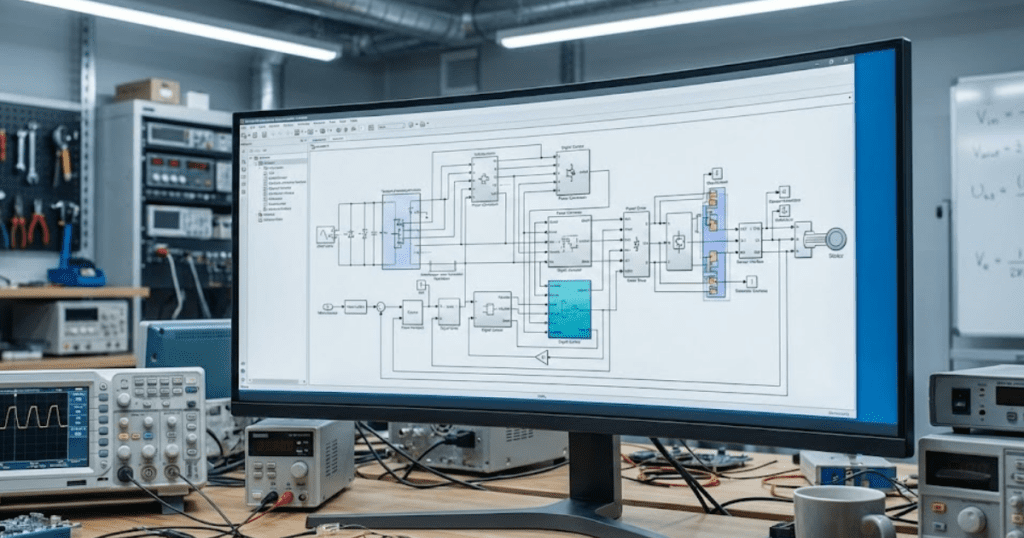
A modern lab treats the model as a place to validate control logic and system limits, not just to get waveforms. Students will think in test cases: nominal operation, disturbance, fault, and recovery. The controller can be simple, but timing and saturation need to be modeled. Students learn to ask what breaks first and why.
A grid-tied inverter exercise can ask students to tune a current controller, then test a voltage sag and a phase jump. A second pass can add measurement noise and a slower sampling rate, then require a justified retune. More variables are the tradeoff, so defaults must be fixed and changes must be limited. That discipline produces cleaner comparisons and better reasoning during grading week.
6. Support instructors with reusable templates and assessment-ready models
Teaching support keeps modelling labs teachable at scale. Templates make grading consistent, protect lab time, and help new instructors run the same lab with fewer surprises. Assessment-ready models also support integrity because student edits are visible and checkable. You’ll spend less time hunting files and more time reading explanations.
A template can include standard measurements, a plot generator, and a results page that pulls key metrics. A check script can flag missing labels, unit errors, and unsaved runs on submission. A starter model can keep the test bench fixed while students edit parameters and logic blocks in marked areas. Maintenance is the tradeoff, since templates need updates when objectives shift.
“Students will think in test cases: nominal operation, disturbance, fault, and recovery.”
Choosing the right mix of modelling activities for your course goals
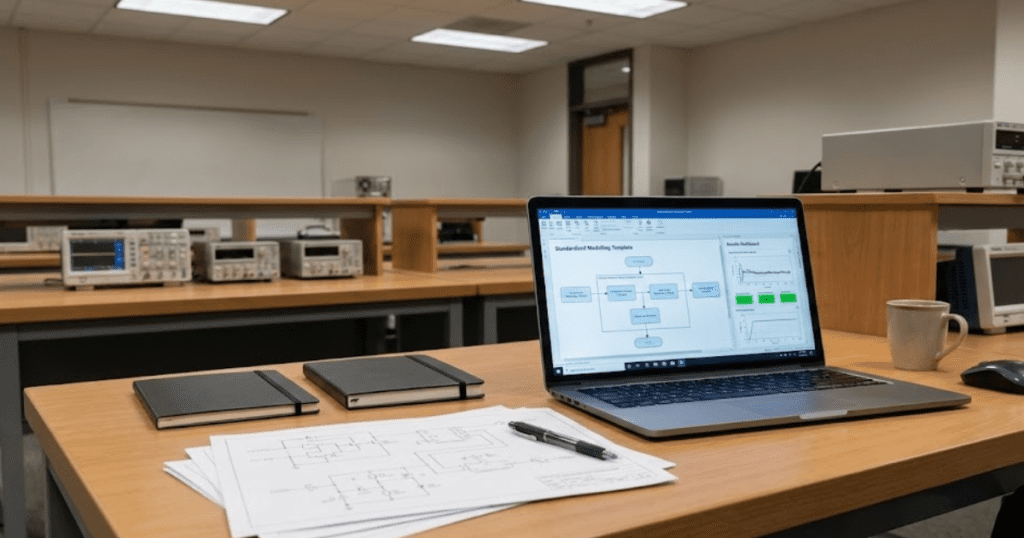
The right mix depends on what you want students to do without you nearby. Start with one outcome you can grade cleanly, such as explaining a waveform change using model evidence. Then pick the lab pattern that fits that outcome and keep everything else fixed for the first run. Students trust labs when the rules stay stable.
Class size and lab access matter. Large groups need templates and checks, while small groups can spend more time debugging. A one-page lab contract helps: allowed edits, required plots, one pass or fail check. A modelling platform only helps if your course rewards clarity and verification, and SPS SOFTWARE works best as the shared workspace that keeps labs consistent.