




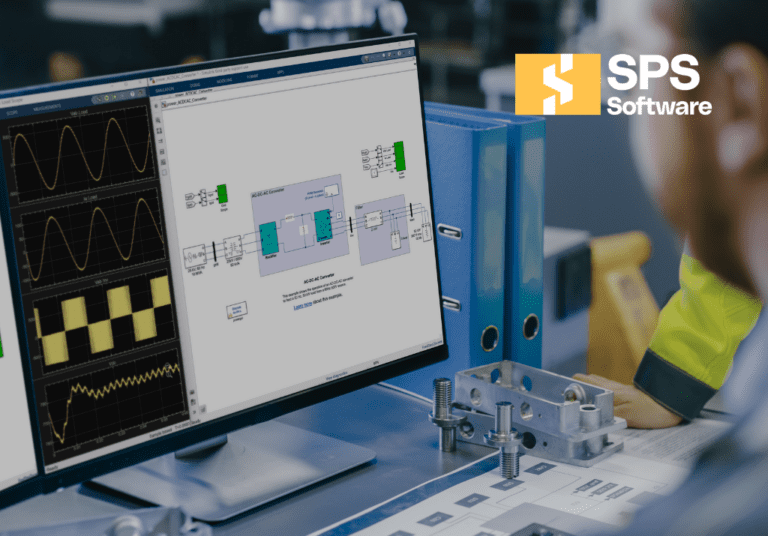


SimPowerSimulations is made for engineers, educators, and innovators who need fast, accurate, and intuitive simulation of power systems and power electronics — all within the familiar Simulink environment.Whether you’re designing next-generation converters, validating digital control strategies offline/real-time, or analyzing the stability of renewable-powered grids, SPS is built to support your workflow from prototype to deployment. For academics and researchers, SPS is easy to adopt, well-documented, and widely used in over 3,500 engineering institutions.For industrial users, SPS combines speed, openness, and real-time compatibility — with seamless integration into Simulink and OPAL-RT platforms. Already using SimPowerSimulations through The MathWorks? SPS now continues its journey independently with OPAL-RT — with active support, frequent updates, and a roadmap aligned with engineers’ real needs. SimPowerSimulations is more than a legacy toolbox. It’s a powerful, forward-looking simulation platform designed for those who build the future of power.
Role1 is built to serve a broad range of professionals and researchers who advance the state of power and systems engineering. For academic researchers and students, it provides a platform to publish innovative algorithms, prototype ideas, and train with real-time validated models that bridge theory and practice. Program directors and deans can rely on SPS to modernize curricula, equip labs with flagship simulation tools, and position their institutions as leaders in engineering education and research.
In industry, utility engineers use SPS to analyze renewable integration, HVDC systems, and protection schemes with the fidelity required for critical infrastructure. OEM developers leverage it to validate drives, converters, and control systems before physical prototypes are built—saving time and reducing cost. For advanced simulation specialists, SPS unlocks the ability to tackle large-scale or high-frequency projects with FPGA acceleration, ensuring accuracy and performance at the highest level of engineering challenge.
Role2 is built to serve a broad range of professionals and researchers who advance the state of power and systems engineering. For academic researchers and students, it provides a platform to publish innovative algorithms, prototype ideas, and train with real-time validated models that bridge theory and practice. Program directors and deans can rely on SPS to modernize curricula, equip labs with flagship simulation tools, and position their institutions as leaders in engineering education and research.
In industry, utility engineers use SPS to analyze renewable integration, HVDC systems, and protection schemes with the fidelity required for critical infrastructure. OEM developers leverage it to validate drives, converters, and control systems before physical prototypes are built—saving time and reducing cost. For advanced simulation specialists, SPS unlocks the ability to tackle large-scale or high-frequency projects with FPGA acceleration, ensuring accuracy and performance at the highest level of engineering challenge.
role3 is built to serve a broad range of professionals and researchers who advance the state of power and systems engineering. For academic researchers and students, it provides a platform to publish innovative algorithms, prototype ideas, and train with real-time validated models that bridge theory and practice. Program directors and deans can rely on SPS to modernize curricula, equip labs with flagship simulation tools, and position their institutions as leaders in engineering education and research.
In industry, utility engineers use SPS to analyze renewable integration, HVDC systems, and protection schemes with the fidelity required for critical infrastructure. OEM developers leverage it to validate drives, converters, and control systems before physical prototypes are built—saving time and reducing cost. For advanced simulation specialists, SPS unlocks the ability to tackle large-scale or high-frequency projects with FPGA acceleration, ensuring accuracy and performance at the highest level of engineering challenge.
role4 is built to serve a broad range of professionals and researchers who advance the state of power and systems engineering. For academic researchers and students, it provides a platform to publish innovative algorithms, prototype ideas, and train with real-time validated models that bridge theory and practice. Program directors and deans can rely on SPS to modernize curricula, equip labs with flagship simulation tools, and position their institutions as leaders in engineering education and research.
In industry, utility engineers use SPS to analyze renewable integration, HVDC systems, and protection schemes with the fidelity required for critical infrastructure. OEM developers leverage it to validate drives, converters, and control systems before physical prototypes are built—saving time and reducing cost. For advanced simulation specialists, SPS unlocks the ability to tackle large-scale or high-frequency projects with FPGA acceleration, ensuring accuracy and performance at the highest level of engineering challenge.
role4 is built to serve a broad range of professionals and researchers who advance the state of power and systems engineering. For academic researchers and students, it provides a platform to publish innovative algorithms, prototype ideas, and train with real-time validated models that bridge theory and practice. Program directors and deans can rely on SPS to modernize curricula, equip labs with flagship simulation tools, and position their institutions as leaders in engineering education and research.
In industry, utility engineers use SPS to analyze renewable integration, HVDC systems, and protection schemes with the fidelity required for critical infrastructure. OEM developers leverage it to validate drives, converters, and control systems before physical prototypes are built—saving time and reducing cost. For advanced simulation specialists, SPS unlocks the ability to tackle large-scale or high-frequency projects with FPGA acceleration, ensuring accuracy and performance at the highest level of engineering challenge.

SPS Software maintains seamless integration with the latest releases of MATLAB and Simulink, while offering full compatibility with OPAL-RT’s real-time simulation platforms – including ARTEMiS – ensuring a reliable and future-proof modeling environment.

Over 30 high quality professionally designed pre-built website concepts to choose from.

Build your website using a fully visual interface, using our revolutionary page builder.
Crafted with care by the authors of Oshine, a best seller with over 25K customers.
A European research consortium used SPS to validate inverter-based resources and microgrid islanding strategies in real time. By simulating fault events before deployment, they ensured compliance and reduced commissioning risks

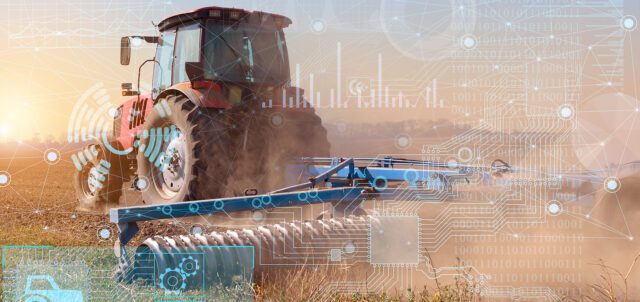
An Asian OEM leveraged SPS for controller-HIL testing of their next-generation electric drive inverter. Using FPGA acceleration, they captured high-frequency switching dynamics—cutting prototyping costs and accelerating time-to-market.
A North American utility applied SPS to test wide-area protection schemes for HVDC links and renewable integration. Real-time EMT validation revealed edge cases that traditional offline studies missed, boosting system reliability.
Lorem Ipsum
Lorem Ipsum
Lorem Ipsum
Lorem Ipsum
Lorem Ipsum
Lorem Ipsum
Lorem Ipsum
Lorem Ipsum
Lorem Ipsum
Lorem Ipsum
Lorem Ipsum
Lorem Ipsum
Lorem Ipsum
Lorem Ipsum
Lorem Ipsum
Your subscription is just the beginning. Join the global SPS community, explore tutorials, and access the resources you need to accelerate your work.
Yes. SPS is designed specifically for electrical systems, power electronics, and real-time validation. Unlike multi-domain tools, it focuses on electromagnetic transients, FPGA switching, and HIL workflows — making it the most direct path from modeling to real-world validation.
Yes. SPS supports single-device studies up to full grid-scale EMT models. Multi-core CPU and FPGA acceleration (eHS) allow partitioning and scaling without losing fidelity.
Absolutely. SPS integrates seamlessly with OPAL-RT real-time targets, enabling SIL, CHIL, and PHIL workflows. It’s used worldwide for validating relays, controllers, converters, and full system behavior under real-time constraints.
Subscribers have access to:
Tutorials and documentation.
A global SPS community forum.
Webinars and training resources.
Direct support channels depending on plan level.
This ensures both newcomers and experts can maximize the platform
Yes. SPS has a 20+ year history in research labs, utilities, and OEM development teams worldwide. It’s cited in publications, used in classrooms, and validated in industry pilots across sectors like energy, automotive, aerospace, and manufacturing.