

Key Takeaways
- Keep beginner power models scoped to one question, with written assumptions and quick sanity checks that expose errors early.
- Build skill in a sequence that stays consistent in math and meaning, moving from source load to per unit and phasors, then adding transformer, line, and fault elements.
- Practise with repeatable validation habits such as bounds, power balance, and sign conventions so larger network studies stay explainable and defensible.
You’ll learn faster when you limit power system models to one concept at a time.
Students often struggle because they mix too many modelling choices at once, then can’t tell which assumption caused which result. A simpler approach works better: choose a narrow model, predict the result, run the numbers, then check the prediction. Average exam scores rise about 6% with active learning, and failure rates drop by about 55% when learners practise instead of only listening.
“Simple models are not “toy” models if they preserve the physics tied to your learning goal.”
The discipline is picking what to ignore, stating it plainly, and validating that the model still answers the question you care about. Once you can do that, moving up to larger networks becomes an extension of the same habits, not a fresh restart.
Define what a simple power system model includes and excludes
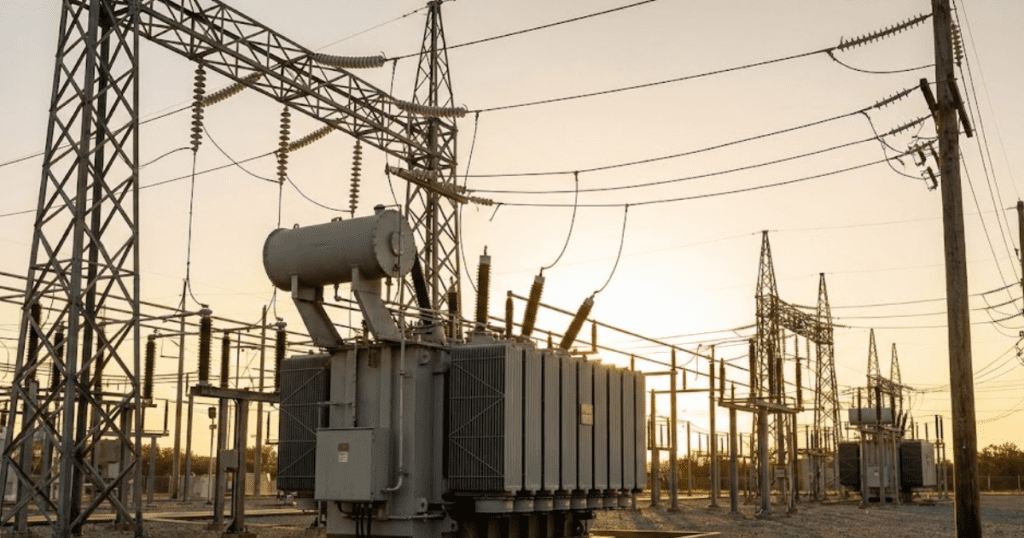
A simple power system model keeps only the components and equations needed to answer one question with confidence. It includes explicit assumptions about frequency, balance, and linearity. It excludes details that add parameters but do not change the answer you’re checking. It produces a small set of outputs you can sanity-check quickly.
Start each model with three choices that you write down before you calculate anything: the time scale, the variables you will observe, and the error you will tolerate. Time scale drives everything else. Phasor and per-unit work fits steady-state studies, while switching and fast controls require electromagnetic transient detail. Observable variables should be few and meaningful, like bus voltage magnitude, current, and complex power flow on one branch.
Keep the “simple” label honest by testing it against a short checklist. If you can’t explain why a feature is present, it probably should not be.
- State the operating condition clearly, including frequency and steady-state intent.
- Choose one primary output and two supporting checks, then ignore the rest.
- Limit parameters to values you can justify from a nameplate or standard.
- Use one consistent sign convention for power and stick to it.
- Confirm the model behaves correctly at two limiting cases.
Start with a single-phase source load model for basics
A single-phase source and one load is the fastest way to practise voltage, current, impedance, and power factor without distractions. You will see how phase angle changes current, how that alters real and reactive power, and how small sign errors show up immediately. The model is small enough that you can compute the answer two ways and compare.
Take a 240 V RMS source at 60 Hz feeding a series 10 Ω resistor and 15 mH inductor. The inductive reactance is about 5.7 Ω, so the impedance magnitude is about 11.5 Ω with a positive angle near 29 degrees. Current is roughly 20.9 A and lags the voltage, so real power is about 4.4 kW while reactive power is about 2.4 kVAr. Those numbers give you a compact target you can verify again using complex power, \(S = VI^*\), and the power triangle.
This one model teaches two habits that carry into every larger network. First, you learn to predict the direction of change before computing, such as current dropping when reactance rises. Second, you learn to validate with units and bounds, since power factor must sit between 0 and 1 in magnitude for passive loads. If you can’t reconcile the phasors and the power results here, bigger systems will only hide the same confusion.
Use per-unit and phasor models to simplify calculations
Per unit and phasors reduce the arithmetic burden while keeping electrical meaning intact. Per unit rescales voltages, currents, impedances, and power to chosen base values, so components at different voltage levels become comparable. Phasors replace time-varying sinusoids with complex numbers, so steady-state network calculations become algebra. Both methods push you toward consistency and away from memorized shortcuts.
Per unit works best when you select base power and base voltage once, then convert every element without exceptions. That forces you to track where turns ratios belong and prevents “hidden” unit mistakes. Phasors work best when you treat angle as a first-class quantity, not a decoration at the end. When you keep the reference direction fixed, the signs of reactive power and voltage drop stop feeling arbitrary and start feeling mechanical.
Tooling matters because beginners need transparency, not mystery numbers. SPS SOFTWARE is useful here because you can inspect component equations and parameter meanings directly, then match your hand calculations to the same assumptions. That feedback loop helps you learn what a model is doing, not just what it outputs.
| Model focus | What you should be able to answer from it | Fast check that catches common mistakes |
| Single-phase source and passive load | Current magnitude and angle, plus real and reactive power | Power factor stays within physical bounds for a passive impedance |
| Phasor network with a few buses | Voltage profile and branch power flow under steady-state conditions | Power balance closes when you include losses with a consistent sign |
| Per-unit network across voltage levels | Comparable impedances and voltage drops across transformers | Converted impedances scale correctly when base voltage changes |
| Transformer equivalent circuit | Voltage regulation trends and how impedance affects load voltage | Secondary voltage decreases as load current rises with positive series impedance |
| Thevenin source plus fault impedance | Fault current magnitude and what reduces it | Fault current increases when source impedance decreases |
Add a transformer and line model to study voltage drop
A transformer and line model lets you study voltage drop and losses with just a few parameters. You include series resistance and reactance, a turns ratio, and a clear reference direction for current. You exclude saturation, frequency dependence, and detailed capacitance unless the question demands them. You will be able to explain why load voltage moves when current changes.
The key is to separate what is physically happening from what is being approximated. Series impedance produces drop and losses, while shunt elements matter more for long lines and higher voltages. If the goal is teaching fundamentals, a short-line series model often gives the cleanest connection between current, impedance angle, and receiving-end voltage. Keep the transformer model consistent with your per-unit base so you do not mix secondary and primary quantities accidentally.
Losses are not an academic footnote, and a simple model can make that visible without extra complexity. Electricity transmission and distribution losses in the United States are about 5% of the electricity transmitted each year. A beginner model that includes resistance shows exactly where that 5% comes from and what design levers, like conductor resistance and current level, control it.
“Discipline matters more than tool choice, but the right tool reduces friction in practice.”
Introduce fault and protection models with clear learning goals

Fault and protection models should start with the simplest fault-current calculation that still matches your learning goal. You include a source equivalent, the impedance up to the fault, and the fault type you intend to study. You exclude detailed breaker dynamics and relay filtering until you can predict fault current direction, magnitude, and sensitivity to impedance. You will gain confidence faster when each model answers one protection question.
A good progression is to compute three-phase bolted fault current using a Thevenin equivalent, then add fault impedance, then address unbalanced faults using symmetrical components. Each step adds one idea and one new failure mode, which is exactly what beginners need. When you keep the network small, you can also check your result against physical constraints, like fault current rising when system impedance falls, and voltage collapsing closest to the fault.
Protection logic can stay simple and still teach the right instincts. Focus on pickup, time delay, and coordination margin, and treat measurements as ideal at first. That keeps attention on selectivity and sensitivity, not on a long list of settings. Once the fundamentals are stable, more detail becomes meaningful instead of overwhelming.
Practice exercises that build confidence and avoid common mistakes
Entry level exercises should repeat the same core checks until they feel automatic. You practise setting bases, keeping consistent signs, and validating results with limits and conservation. You avoid jumping to large networks until you can explain each number in a small network. Confidence comes from repeatable habits, not from completing the biggest model you can open.
Choose exercises that force the same three questions every time: what stays constant, what changes, and what must be true physically. That structure catches the common beginner errors, like mixing line-to-line and line-to-neutral voltage, flipping the reference direction on complex power, or converting per-unit values with mismatched bases. When you fix those issues early, your later studies stop feeling like guesswork, and your results become easy to defend in a lab or design review.
Discipline matters more than tool choice, but the right tool reduces friction in practice. SPS SOFTWARE fits teaching and learning when you want physics-based models that stay readable, so students can connect equations to outputs without extra layers hiding assumptions. Keep the focus on choosing the smallest model that answers the question, then checking it hard, and you’ll build skills that hold up when systems get larger and stakes get higher.