


Key Takeaways
-
-
Legacy files should be rebuilt around verified study intent so you keep useful engineering knowledge and remove opaque software constraints.
-
Open software matters most when engineers can inspect equations, parameters, and component behaviour after the move.
-
A staged cutover with clear validation targets will replace an aging tool without interrupting active studies, teaching work, or model maintenance
-
A planned move to open power system modeling software will preserve the engineering value in legacy models and make that work easier to inspect, test, and reuse.
More than 70% of transmission lines and power transformers in the United States are over 25 years old. Old assets leave behind old study files, protection settings, and teaching cases that still shape present work. Those files often hold tuned parameters and study assumptions your team still needs. When an aging tool hides model logic or limits access, an open rebuild will recover that knowledge instead of leaving it trapped.
Old models still hold value if you migrate them
Legacy models still matter because they store tested assumptions, tuned settings, and study logic your team has already used. You should keep that knowledge when the original package blocks access or review. A careful rebuild will protect useful work. A full reset will throw away context you still need.
A transient stability case for a 230 kV corridor shows the point. The old file might open only on one workstation, yet the generator controls, disturbance sequence, and line data still reflect solid engineering work. You’re preserving tested intent when you move that case. You aren’t keeping every old block just because it exists.
That difference will shape the migration. Some parts of a legacy file will move cleanly, some will be simplified, and some won’t survive review. Your target is a model that still answers the study question with cleaner structure and visible logic. That is how you modernize old power system models without losing the parts that matter.
Start with the studies your team still uses
Migration order should follow current engineering use, compliance pressure, and teaching need. Start with studies people still run and trust. That sequence will cut risk early. It will also focus effort where delays hurt most. Your team will see value sooner.
A feeder fault study used every month deserves attention before a case from a retired unit. The same applies to a lab model students still use each term or an interconnection study still supporting approval work. You’ll usually find that a small set of files carries most of the workload. That short list should go first.
- Studies linked to current operating limits
- Files used for protection setting reviews
- Models tied to repeatable teaching or research work
- Cases that only one person can still open
- Files with source data you can still verify
This order keeps migration practical. It also exposes hidden risk, such as a relay file saved in a format your current computers can’t run. Teams that start with active studies build trust faster because engineers can compare familiar outputs. That makes it easier to replace an aging power system simulation software package without freezing work.
Choose open power system modelling software for traceability
Open power system modelling software matters because migrated models must stay readable after the move. Engineers need to inspect equations, parameters, and solver choices without guessing.
“Traceability will matter more than convenience here.”
Consider an exciter model from a locked legacy library. If the new file shows only a sealed icon and a few top level settings, your team still can’t check gains, limits, and saturation. An editable version exposes the transfer function, parameter values, and control logic. That visibility gives reviewers something concrete to verify.
Tool selection should reflect that need for traceability. If two power system simulation software options can run the same disturbance, choose the one that keeps model logic visible and reusable. That standard matters in utility work, research, and teaching. You can trust a result more when you can read how the model produces it.
Map each legacy model to required system behaviour
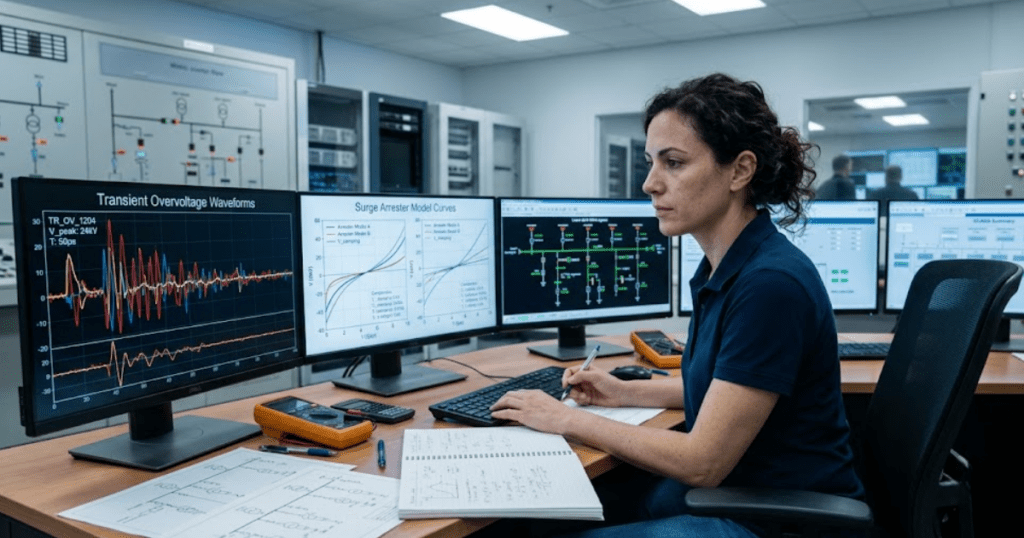
A legacy file should be mapped to required system behaviour before it is rebuilt. List the disturbances, controls, protections, and outputs the study must reproduce. That map will keep the rebuild tied to evidence. It will also stop teams from copying obsolete structure.
A wind plant interconnection case makes this concrete. The rebuilt model must reproduce voltage ride through, reactive power control, current limiting, and post-fault recovery within the study limits you use today. It does not need every hidden flag from the old package. You’re defining what the model must do under test.
Skipping this step usually creates false comfort. A diagram can look familiar and still fail the one disturbance your study actually cares about. A behaviour map gives you a clean target for rebuild, review, and signoff. It also gives hesitant engineers a fair basis for comparison when they ask why a legacy structure was simplified.
|
Checkpoint |
What needs to be true before you move on |
|---|---|
|
Study selection |
The file supports current planning, protection, teaching, or research and has a clear owner. |
|
Behaviour map |
The disturbances, controls, protections, and outputs are written in plain terms. |
|
Component choice |
The rebuild uses editable components that expose equations, limits, and parameter values. |
|
Parameter check |
Base values, units, and initial conditions trace to verified source data. |
|
Validation target |
The pass criteria match the study goal, such as clearing time, relay pickup, or voltage recovery. |
Open component libraries make rebuilding faster for engineers
Open component libraries speed migration because you reuse tested building blocks instead of decoding each old device from scratch. Engineers can inspect a block and adapt it to plant data. That will shorten rebuild time. It will also make peer review easier.
A turbine governor case shows why this matters. The old model might depend on a vendor object with hidden limits and undocumented defaults, while the rebuilt version can use editable control blocks linked to clear parameters. SPS SOFTWARE fits this step because engineers can inspect component logic as they rebuild machine, line, converter, and control models. That makes the finished file easier to review and teach.
Reuse only works when the reused part stays visible. If a library saves time but hides equations, you will recreate the same trust problem in a new package. Open components turn migration into a repeatable modelling method instead of a one time rescue job. That difference matters for faster work today and cleaner maintenance later.
MATLAB-based workflows reduce friction during model transfer
A MATLAB-based workflow reduces migration friction because legacy data often already lives in scripts, spreadsheets, and parameter files. You can move values, plots, and test routines with less manual reentry. That will reduce transcription errors. It will also keep engineers in familiar habits.
A converter model often arrives with a script for base values, control gains, filter data, and test disturbances. When the rebuilt case still uses that parameter source, you don’t need to type every value twice or maintain two versions of the same plant data. It’s a simple gain in consistency. It also makes plot checks easier after each edit.
This matters most when you rebuild legacy power models across many files. Shared scripts keep units aligned, plant variants consistent, and the same tests easy to rerun after each revision. Engineers still need to review assumptions carefully. The transfer work just becomes cleaner and easier to repeat.
Validation must match study intent before software retirement
Validation should prove that the rebuilt model answers the same engineering question as the old study. You do not need perfect waveform overlap when the study only cares about clearing time, voltage recovery, or relay pickup.
“Study intent sets the pass criteria.”
A relay coordination case is a good example. If the old and new models trip at the same current and within the same time band, small differences in internal traces will not change the study outcome. The wider stakes are serious because weather-related outages cost the U.S. economy $18 billion to $33 billion each year. Validation has to respect that context without chasing visual perfection.
Clear pass criteria will also stop debate. A transient fault study might require voltage recovery within a defined band after a set clearing time, while a protection study will care more about pickup level and timing. If a rebuilt file fails those targets, it is not ready. If it passes them, you can retire the old package with confidence.
A staged cutover keeps engineers working during migration
A staged cutover keeps your team productive because old and new models can run side by side until the new set earns trust. You should retire the old package only after key studies pass, users are trained, and ownership is clear. That approach will protect ongoing work. It will also fix accountability.
A practical cutover often starts with one pilot study, then a small group of repeated cases, then all new work in the open tool. A utility team might keep the old package for archive checks during the first phase, while updated feeder and protection studies move to the rebuilt set. SPS SOFTWARE supports that handover because engineers can rebuild files into editable models that stay readable for the next person who maintains them. That visibility will outlast the migration itself.
This is the judgement that matters most. Legacy models should stay only as long as they help you answer present engineering questions and train the next engineer who inherits the work. A staged cutover respects the effort already spent without letting old software hold it hostage. When the move is disciplined, you’ll keep the useful physics, drop hidden clutter, and end with models you’ll trust.