

Free Trial
Free Trial
Simulation
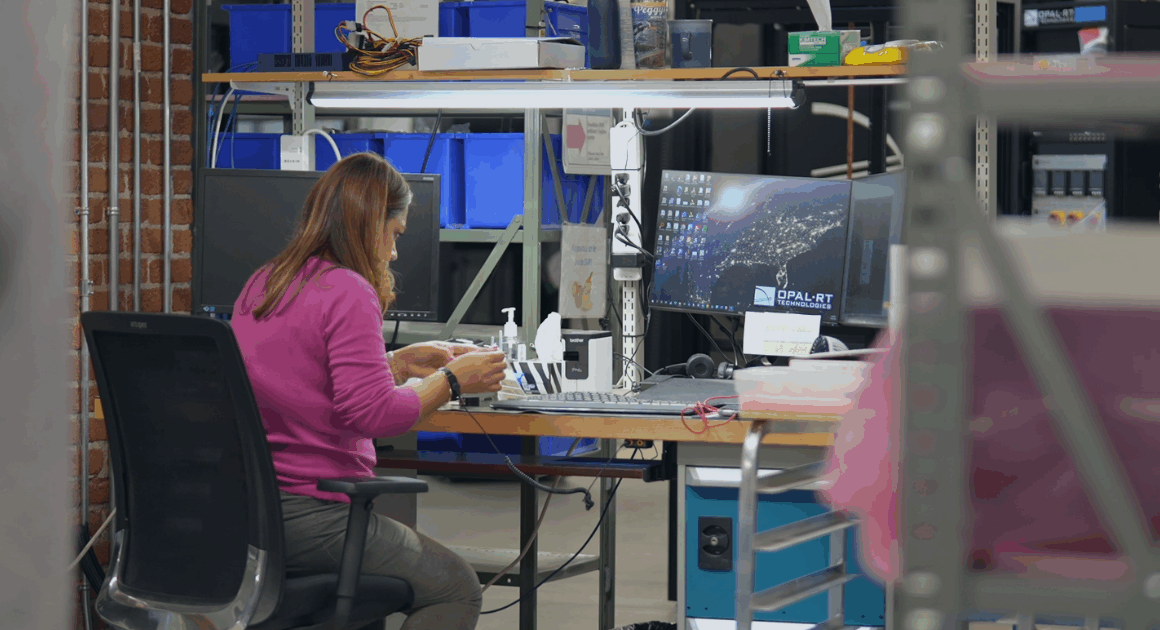
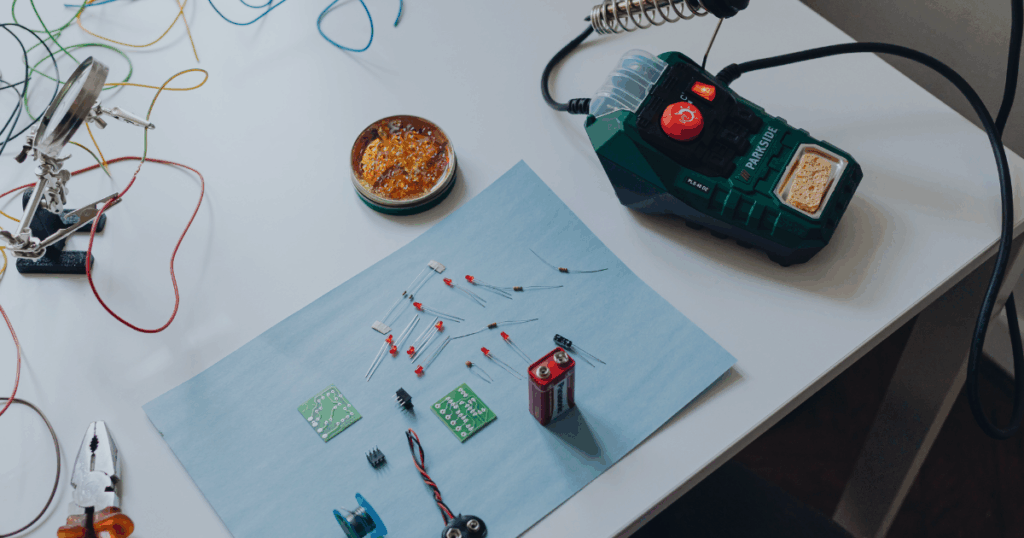
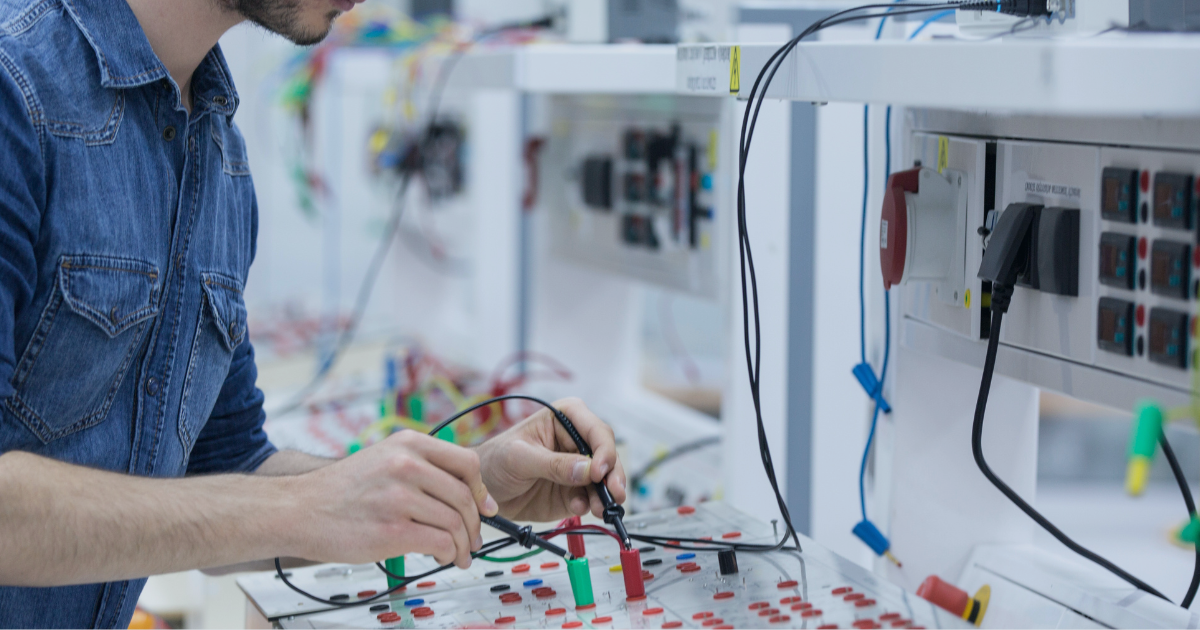
Engineer assembling real-time simulation hardware for SimPowerSystems testing in a technology lab.
Industry Application, Simulation

Differences & Applications Between Electrical Modeling vs  Simulation Software

Great testing starts when your models and simulations tell the same story. Missed physics, hidden latencies, or solver limits can mislead your design choices. Teams that separate description from execution spot risks earlier and cut lab time. That is why understanding modelling tools and simulation engines matters to every power project.

Power engineers, hardware-in-the-loop (HIL) testers, and researchers face the same tension. You need rich models to capture control intent, and you need fast simulation to exercise edge cases. Tool selection shapes requirements flow, lab architecture, and test coverage. The right mix gives you speed, confidence, and room for future changes.

Why engineers compare electrical modeling and simulation tools

Power projects rarely fail because a single component looked wrong; they fail because interactions were misunderstood. Comparing modelling suites and simulation engines helps you decide how to represent those interactions with the fidelity your team can maintain. Modelling focuses on structure, parameters, and control intent so that everyone shares the same electrical story. Simulation focuses on numerical behaviour across time so that you can probe stress, stability, and safety. You compare tools to balance model readability, solver performance, reproducibility, and lab integration.

Budget and schedule also force tradeoffs that are easier to manage with the right pairing. High-fidelity models with slow solvers stall project gates, while fast solvers with incomplete models hide integration risk. Comparing toolchains early keeps measurement, automation, and version control aligned across design, software, and testing. That alignment limits rework, clarifies ownership, and shortens the path from concept to field trials.

What electrical modeling software does for power system design

Electrical modeling software helps you capture design intent as consistent, shareable representations of your system. It lets teams encode schematics, control logic, and ratings as data their simulators can execute. Good models separate parameters from structure, which improves reuse, reviews, and change tracking. Clear models shorten onboarding for new teammates and make subsequent simulation runs meaningful.

Topology capture and parameter management

Modelling tools help you define buses, branches, converters, and sensors without jumping into solver settings. You assign ratings, impedances, delays, and limits as parameters that can be versioned and reviewed. Named parameters feed bill-of-materials estimates, protection studies, and controller targets. Structured topology also makes it easier to maintain variants for different power levels, grid codes, and suppliers.

Parameter sets let you switch between rated, cold-start, and faulted conditions without redrawing the circuit. Templates reduce copy‑paste errors, improve consistency, and speed up peer review. When models track units and ranges, you catch mismatches early, before those numbers reach the lab. That discipline improves traceability from requirements to simulation cases and hardware settings.

Control design scaffolding

Control engineers need a place to express state machines, PWM strategies, and observers alongside the plant. Modelling suites let you partition plant and control while keeping signal names, timing, and interfaces consistent. You can lock interfaces, share test vectors, and keep clear change logs between control and plant teams. This scaffolding shortens handoff to firmware, reduces ambiguity, and increases reuse across projects.

When the model already reflects quantization, saturations, and delays, later simulation behaves more like the bench. Control gains can be tied to parameter sets, which supports sweep studies and autotuning workflows. Clear structure also allows formal reviews, static checks, and lightweight unit tests of control pieces. Those practices reduce integration issues and improve safety margins during field trials.

Physics-based component libraries

Component libraries give you validated blocks for machines, converters, lines, and protective elements. Good libraries document reference equations, assumptions, and applicable operating ranges. When those details are present, reviewers can judge fitness for use and predict limits. Shared libraries also keep multi‑team projects consistent, since everyone pulls from the same sources.

Library quality matters because subtle modelling choices change controller robustness and loss estimates. For example, saturation and hysteresis treatment in machines can affect current ripple and torque prediction. Clear options for ideal, average, and switching models let you trade speed for fidelity as needed. Documentation that cites validation data builds the trust you need for later certification steps.

Interoperability with design toolchains

Modelling is more useful when portable across toolchains, code bases, and labs. Support for Functional Mock-up Interface (FMI) and Functional Mock-up Unit (FMU) formats lets teams exchange models without rewriting code. Clear import and export options cut time spent on glue code between analysis tools, automation scripts, and test equipment. Interoperability also helps with vendor audits, since reviewers can execute models in their preferred tools.

Version control hooks and diff‑aware formats simplify change review and traceability. Structured data makes parameter sweeps reproducible, which benefits certification and internal quality checks. Shared model repositories reduce duplicated effort across teams, sites, and partners. The result is a smaller set of models that serve more use cases, with fewer surprises.

Electrical modeling software should make structure explicit, standardize parameters, and clarify control interfaces. Strong modelling practices set the baseline for every later experiment. Teams that invest here enjoy faster reviews, cleaner handoffs, and fewer late fixes. That foundation makes subsequent simulation runs faster to set up, easier to audit, and more predictive.

Great testing starts when your models and simulations tell the same story.

How electrical simulation software improves testing and validation

Simulation converts your static models into time‑domain behaviour you can interrogate before you touch hardware. Electrical engineering simulation software brings solvers, schedulers, and tooling that mirror conditions you care about. Good simulation helps you surface edge cases, size components, and prepare protection settings. It also makes lab sessions more productive, since you arrive with known risks, extracts, and scripts.

Scenario exploration and edge cases

Simulation lets you vary topology, loads, and operating points without touching the lab bench. You can sweep temperature, aging factors, and sensor errors to see how margins shift. Event scheduling allows precise sequencing of faults, reclosers, and controller failovers. Those sequences reveal interactions that are hard to stage physically, such as rare overlaps of delays and thresholds.

Monte Carlo runs expose combinations that manual testing misses, while keeping seed control for reproducibility. Parameter sweeps generate response surfaces that guide sizing choices for inductors, capacitors, and heat sinks. Time compression lets you preview slow processes like thermal drift and state of charge. Records from these runs become living documentation for safety reviews, field support, and future upgrades.

Closed-loop tests with HIL

Hardware-in-the-loop (HIL) connects the simulator to your controller so that code sees realistic signals. Low latency digital input and output, plus accurate timing, makes switching behaviour and protection logic meaningful. Plant models can run at fixed steps or real time, depending on scheduling and available compute. You can stage faults, dropped packets, and sensor failures while keeping hardware safe.

Software-in-the-loop (SIL) and model-in-the-loop (MIL) complete the chain before HIL, which reduces risk at each stage. Field programmable gate array (FPGA) support brings microsecond timing that suits power electronics, motor control, and grid studies. Power hardware-in-the-loop (PHIL) adds actual power flow for converter testing, with careful management of stability and ratings. Closed‑loop practice yields better tuned controllers, safer startups, and shorter trips to the field.

Faster iteration with compiled solvers

Compiled solvers accelerate long runs so you can evaluate more scenarios within a fixed test window. Switching models that support average mode let you trade waveform detail for cycle‑accurate dynamics. Adaptive step logic focuses effort where transitions occur, which saves compute while preserving key effects. Batch execution with parallel workers turns nightly runs into next‑day plots and metrics.

Careful solver selection also avoids the numerical artefacts that sometimes appear with stiff systems. You can keep frequencies of interest in band, and still finish runs within practical time limits. Clear reporting on solver settings makes those results defensible during peer review. This pace of iteration improves confidence when projects hit gate reviews, audits, and design freezes.

Regression and compliance validation

Simulation suites track scenarios as test cases, complete with pass and fail criteria. You can script waveform checks, limit violations, and settling times so that results are repeatable. Those checks align with standard ranges and customer targets, which saves time later. Versioned scenarios also help during supplier changes, since you can re‑run the same tests and compare metrics.

When the lab turns up a corner case, the scenario can be reproduced in simulation and then widened. That loop shortens mean time to fix, improves traceability, and teaches the team which margins matter most. Compliance bodies appreciate documented evidence that links requirements to traces, tables, and scripts. Regression suites prevent silent drift, especially when multiple teams contribute to the same code base.

Simulation pays off when it shrinks uncertainty before you book lab time. Electrical engineering simulation software should expose edge cases, support closed‑loop testing, and scale across solvers. A thoughtful setup gives you repeatable results that hold up in design reviews and safety audits. That discipline turns models into evidence you can trust in production decisions.

Key differences between electrical modeling and simulation software

The main difference between electrical modeling software and simulation software is that modelling defines the system’s structure and parameters, while simulation executes those definitions over time to predict behaviour.

Modelling captures topology, control intent, and constraints as a portable description. Simulation brings numerical methods, scheduling, and data capture that turn that description into waveforms and metrics. Treating them as distinct reduces confusion when teams discuss accuracy, performance, and ownership.

Most projects use both, often within the same suite, but the roles still differ. Clarity about the handoff keeps parameters in one source of truth, and keeps solver settings tied to test plans. The table below summarizes contrasts that frequently matter during tool selection and process reviews. Use it to align expectations across modelling leads, test engineers, and reviewers.

AspectModelling softwareSimulation softwareValue to teams
Primary purposeDescribe structure, parameters, and control intentExecute models over time to produce waveforms and metricsKeeps responsibilities clear and reduces disputes over results
Typical usersSystem architects, control engineers, reviewersTest engineers, analysts, automation staffImproves collaboration and handoffs
OutputsSchematics, parameter sets, interface definitionsTime traces, logs, statistics, limitsLinks design to measurable outcomes
Time baseStatic or configuration‑orientedDiscrete time, continuous time, or mixedMatches solver to the physics of interest
Performance focusMaintainability, reuse, claritySpeed, numerical stability, throughputBalances readability with compute efficiency
Integration pointsRequirements, version control, documentationHIL rigs, data stores, reporting toolsSupports both governance and testing
Risks from misuseOut‑of‑date parameters, unclear interfacesMisleading results from wrong solver settingsGuides reviews to catch the right issues

Applications of electrical power system analysis software in engineering projects

Electrical power system analysis software ties models and simulation to actionable engineering studies. Engineers use it to calculate flows, stress, and stability across operating points and events. Clear studies guide settings, hardware selection, and safety reviews for projects of many sizes. These applications show how analysis tools cut risk, shorten lab time, and inform commissioning.

Microgrid planning and protection studies

Projects that mix generation, storage, and loads need steady‑state and transient checks. Power flow, short circuit, and protection coordination studies come from the same data model when set up well. Voltage regulation and islanding require attention to limits, droop settings, and reserves. Analysis tools help teams define operating modes, ride‑through settings, and safe reconnection paths.

Disturbance cases reveal how converters share current during faults, and how relays see events. Renewable variability affects state of charge and feeder voltage, so studies include profiles and contingencies. Detailed models of inverters, filters, and lines make protection settings both selective and robust. The outputs inform controller tuning, feeder hardware choices, and operator playbooks.

Vehicle powertrain and energy storage

Traction systems involve converters, machines, and batteries with tight timing and thermal limits. Analysis runs sweep drive cycles to estimate losses, temperatures, and lifetime effects. Fault cases test isolation, contactor sequences, and limp‑home strategies that protect occupants and assets. Battery models track ageing, state of charge, and impedance, which shapes performance and warranty.

Motor control strategies are assessed for stability, noise, and efficiency across speed and load. Hardware sizing depends on cooling assumptions, packaging, and expected duty cycles. Control and plant teams share a single model, so firmware changes reflect into energy and thermal projections. That link keeps program risks visible and supports sign‑off across engineering, quality, and safety.

Aerospace power distribution and redundancy

Aircraft power systems prioritize weight, fault tolerance, and clear isolation during abnormal events. Analysis software evaluates bus transfer logic, load shedding, and generator limits under multiple failures. Transient cases examine arc risks, contactor timing, and converter overshoot. Studies also assess electromagnetic compatibility ranges that affect sensors and communication.

Redundancy planning includes alternate feeds, hot spares, and preferred fault clearing paths. Thermal and altitude effects are represented so that ratings reflect actual service conditions. Results feed system safety assessments, including failure modes and effects. This rigour supports certification evidence and gives project leads defensible margins.

Academic teaching and research labs

Education benefits when students see models, waveforms, and hardware react to the same scenario. Analysis software linked to HIL allows safe exposure to faults, controller mistakes, and corrective strategies. Open interfaces and standards help labs pair new algorithms with existing rigs. Repeatable studies make grading easier, and promote careful lab practices.

Researchers need flexible workflows that move from simulation to small‑scale rigs without uprooting models. A single source of parameters keeps papers and lab results aligned. Scripted studies let students compare control strategies using consistent metrics and plots. These habits carry into industry projects, where clarity and repeatability are valued.

Power studies work best when they reuse the same models that drive simulation and HIL. Electrical power system analysis software should organize data so that planners, control teams, and testers share context. Teams gain quicker sign‑off, clearer safety cases, and fewer late surprises. That consistency keeps design, testing, and commissioning aligned from first sketch to final acceptance.

Choosing the right electrical system design software for your project goals

Tool selection affects speed, traceability, and budget from day one. Electrical system design software must suit your solver needs, model structure, and lab plans. Clarity on constraints saves time later, especially when audits and certification arrive. Use these criteria to focus on fit, not hype or convenience.

  • Modelling fidelity you can maintain: Pick the highest fidelity you can validate and keep current. Consistency beats complexity that no one can review.
  • Solver performance where it counts: Match step sizes and latency to your control bandwidths and switching speeds. Confirm with trial cases that run times fit your schedule.
  • Closed‑loop testing support: Confirm I/O timing, jitter, and range for HIL, SIL, and MIL workflows. Look for tools that make it easy to script scenarios and log data.
  • Interoperability and standards: Favour FMI and FMU exchange, open file formats, and straightforward APIs. That choice reduces glue code and protects your process from tool lock‑in.
  • Governance and traceability: Ensure requirements, parameters, and results live in systems that support reviews. Look for readable diffs, change logs, and signed baselines.
  • Usability for your team: Prioritize features your engineers will use daily, not rare corner features. Short learning curves and clear diagnostics keep productivity high.
  • Support and roadmap you trust: Choose a vendor that answers technical questions with substance, and listens to feedback. Ask for release notes, long‑term support options, and example projects that match your domain.

Fit beats feature count when teams face schedules, gates, and audits. Map priorities to your risks, then confirm through trials that the tool meets them. When Electrical system design software aligns with process, results arrive sooner and with fewer surprises. That approach reduces stress on people, preserves budgets, and leaves room for growth.

Benefits of integrating electrical circuit simulation software into development workflows

Integrated workflows reduce friction between design, firmware, and test roles. Electrical circuit simulation software connected to your repositories and rigs turns lab time into planned experiments. Shared scenarios, parameter sets, and scripts travel from desktop to HIL without rework. That continuity improves reproducibility, saves setup time, and protects team focus.

Data captured from simulation and HIL produces comparable metrics that management can review quickly. Automated checks catch regressions early, and keep quality records tidy for audits. Engineers spend less time moving files, and more time improving controls, protections, and safety. The payoff shows up as cleaner releases, fewer urgent fixes, and calmer commissioning.

How OPAL-RT helps engineers build confidence in electrical system testing

OPAL-RT builds real-time digital simulators that run detailed plant models with microsecond timing. You can drive controllers through analogue and digital I/O, or connect over common protocols for networked tests. Open interfaces support model exchange standards and common scripting approaches, so teams keep their tools. Scalable platforms let you move from model-in-the-loop to HIL and power stages without rewriting models. Teams count on low latency I/O, clear timing control, and reliable execution to make tests repeatable.

For power system studies, OPAL-RT supports phasor, electromagnetic transient, and electric machine models that match the fidelity you need. Engineers can stage faults, replay captured field waveforms, and script acceptance checks that match standards. Integration with lab equipment keeps capstone tests safe, traceable, and affordable. Support staff with deep simulation expertise stay available to help troubleshoot models, iterate setups, and interpret results. That combination gives leaders confidence that each test stands up to scrutiny.

FAQ

You want tools that match the physics you care about, the solvers you can trust, and the reports your reviewers expect. Look for clear model structure, reproducible cases, and support for standards like Functional Mock-up Interface (FMI) and Functional Mock-up Unit (FMU). Prioritise timing, latency, and data logging that suit protection, control, and safety checks. OPAL-RT helps you assess fit with real-time execution and closed-loop testing so your team gains confidence faster.

Modelling captures topology, parameters, and control intent as a consistent description you can review and version. Simulation executes that description across time to produce waveforms, limits, and metrics you can compare and sign off. Treating them separately keeps ownership clear, improves traceability, and speeds audits. OPAL-RT supports both roles with open interfaces, real-time performance, and scalable rigs that keep results actionable.

Use average and switching models where they make sense, then validate with Hardware-in-the-Loop (HIL) at the correct time steps. Run batch sweeps and scripted pass or fail checks to focus bench hours on high-value cases. Keep parameters in one source of truth so simulation, software-in-the-loop, and HIL share identical scenarios. OPAL-RT streamlines that flow so your lab sessions start with known risks, cleaner data, and tighter timelines.

Define versioned scenarios with limits, settling times, and event sequences that mirror standards and project targets. Capture solver settings, seeds, and parameter sets so results are repeatable across teams and suppliers. Export plots and structured logs that reviewers can compare without guesswork. OPAL-RT helps you stage faults, replay traces, and script checks so evidence holds up during reviews.

Yes, provided models, parameters, and scenarios move cleanly from desktop to HIL without rewrites. Instructors and junior engineers benefit from the same structure that senior testers need for audits and commissioning. Shared libraries and FMU exchange let you reuse work across labs, prototypes, and field support. OPAL-RT maintains that continuity with portable models, reliable timing, and support that focuses on outcomes, not just features.

Simulation, University

Why University-Industry Partnerships Define the Future of Simulation Education

Key Takeaways

  • Partnerships turn theory into practice with real-time simulation and hardware-in-the-loop so students graduate ready to contribute.
  • Modern lab experiences improve when academics and industry co-design curricula, training, and scenarios that mirror current projects.
  • Collaborative programs create a hiring pipeline through internships, mentorship, and aligned workflows that shorten ramp-up time.
  • Industry input accelerates educational innovation, adds authentic project data, and keeps course content current with emerging methods.
  • A phased approach lets departments upgrade labs with clear goals, measurable outcomes, and repeatable models for wider adoption.

Many aspiring engineers graduate with top marks only to find their education hasn’t prepared them for the challenges of a modern engineering workplace. This disconnect exists because academic curricula often lag behind industry advancements in real-time simulation and hardware-in-the-loop (HIL) technologies. Universities still rely on outdated equipment and isolated theoretical exercises, leaving graduates underprepared to apply their skills in complex, interdisciplinary projects. In one survey, only 5% of new engineering graduates felt very prepared in emerging technical areas, and just 9% in business acumen—clear evidence of gaps in practical training.

When academic programs partner with simulation technology leaders, students gain hands-on experience with the same cutting-edge tools and real-time simulation workflows used in industry. This approach turns theoretical coursework into experiential learning, so graduates step into their careers ready to contribute from day one. As a leader in real-time simulation, we have witnessed firsthand how university-industry partnerships empower students and faculty alike. The future of simulation education lies in this collaborative model, which produces engineers prepared to advance innovation as soon as they graduate.

Bridging the gap between classroom theory and simulation practice

Traditional engineering programs excel at teaching theory but often struggle to provide equally robust practical training. Students might ace their simulations on paper or simplified software, yet still be unprepared for the complexity of deploying those solutions on real systems. The result is a gap where new graduates must spend time retraining or catching up once hired. It often takes about two years for a new engineering hire to become fully productive in the workplace. This lag represents a costly delay for companies; one analysis estimated that lost productivity during this ramp-up period costs the U.S. chemical industry around $320 million per year.

The key to closing this gap is giving students more hands-on practice with industry-grade simulation tools during their studies. Real-time digital simulation and HIL technology let students safely experiment with high-fidelity models of complex systems, effectively bridging theory and practice. Instead of just solving equations in a textbook, a student can deploy a controller model on a real-time simulator and watch how their design would behave in an actual power grid or vehicle.

This experiential learning cements theoretical knowledge by demonstrating how it applies to real engineering challenges, dramatically shrinking the learning curve for new graduates. Industry collaborations already show this impact—by working on the same research and testing platforms, ABB and Aalto University were able to “narrow the gap between academic and industrial research” and accelerate adoption of new technologies. When students train on the same advanced simulators used by professionals, they enter the workforce much more prepared to hit the ground running.

“The key to closing this gap is giving students more hands-on practice with industry-grade simulation tools during their studies.”

Modern lab experiences require academic and industry teamwork

Keeping university labs up to date with the latest simulation technology is not a one-sided effort. It requires close teamwork between academia and industry. Many engineering faculties recognize they need support to give students modern, relevant lab experiences that mirror professional engineering settings. The simulation learning market in higher education is projected to expand by over $2.3 billion from 2025 to 2029, reflecting how schools are investing in advanced tools. Yet universities get the most value from these technologies when industry experts guide their implementation and use.

  • Cutting-edge equipment integration: Industry partners provide advanced simulation hardware (such as real-time digital simulators and HIL platforms) for university labs, ensuring students train on up-to-date technology.
  • Curriculum co-development: Academic and industry experts design lab exercises together, aligning projects with complex engineering challenges companies are tackling. This makes classroom theory immediately relevant and teaches students how to approach problems the way professionals do.
  • Faculty training and support: Through partnerships, professors gain training on new simulation software and methods introduced by industry. This professional development helps faculty confidently teach emerging technologies and incorporate the latest tools into their courses.
  • Authentic project scenarios: Companies contribute case studies, data sets, and design problems to university labs. Students work on realistic scenarios that reflect the complexity of projects in industry—from integrating renewable energy into a power grid to tuning an electric vehicle’s control system.
  • Shared resources: Universities gain access to industry-grade software licenses, cloud computing resources, and technical support that would otherwise be cost-prohibitive. These shared resources allow students and researchers to experiment freely with high-end simulation tools.
  • Continuous lab upgrades: Collaboration ensures that lab equipment and software are regularly updated to match current industry standards. This proactive refresh of technology prevents educational labs from falling behind and keeps student training aligned with contemporary practice.

When universities and companies collaborate in these ways, the campus lab stops being an isolated academic space and becomes a training ground for next-generation engineers. Students not only gain technical know-how with industry-standard tools, but also learn collaborative and problem-solving skills by working with experienced partners. By jointly enhancing lab experiences, schools produce graduates who can step into industry roles with confidence, requiring far less on-the-job training.

Building a talent pipeline through collaborative simulation programs

One of the biggest benefits of university–industry partnerships is the steady pipeline of talent they create. By collaborating on simulation-based programs, companies get early access to skilled students, and students get a foot in the door of their future careers. These joint initiatives prepare students to be industry-ready by the time they graduate.

Internships and co-op programs

When universities partner with engineering firms or technology providers, internship and co-op opportunities naturally follow. Students who have been learning on industry-standard simulation tools in class can hit the ground running during internships at the partner company. They contribute to ongoing projects and gain exposure to real engineering workflows. These experiences often lead to full-time job offers after graduation, effectively turning classroom collaboration into a direct hiring pipeline. About 70% of employers offer full-time positions to their interns, and roughly 80% of those interns accept. Many students transition from internship to permanent roles.

Mentorship and skill development

Collaborative programs often include mentorship from industry professionals. Company engineers may help supervise student projects or offer guest lectures in advanced simulation courses. This guidance gives students insight into industry best practices and standards. Beyond technical knowledge, students develop soft skills like communication, teamwork, and project management by working closely with seasoned engineers.

Job-ready graduates

The end result of these partnerships is a cohort of graduates who are truly job-ready. Having trained on the same simulation platforms used by companies, these students are already familiar with industry tools and processes. They enter the workforce with confidence and usually require minimal additional training to contribute meaningfully. For employers, this means new hires can start solving problems almost immediately, dramatically shortening the typical ramp-up period.

This continuous exchange of knowledge doesn’t just benefit students’ careers—it also sparks new ideas in the classroom and keeps academic programs on the cutting edge of innovation. Industry involvement in education encourages faculty to explore emerging technologies, adopt current methodologies, and constantly refine the curriculum to stay relevant.

“When universities and companies collaborate in these ways, the campus lab stops being an isolated academic space and becomes a training ground for next-generation engineers.”

Fostering innovation in engineering education with industry input

When academia and industry collaborate, engineering education becomes more innovative and future-focused. Companies at the forefront of technology can alert universities to emerging trends—whether it’s advances in electric vehicles, renewable energy integration, or AI-driven control systems. Incorporating this industry insight into curricula means academic programs can quickly include new, cutting-edge topics. Students get to experiment with the latest ideas and tools, often before they appear in standard textbooks, giving them a creative edge.

These partnerships also open up joint research opportunities. Universities might work with industry sponsors on research projects or competitions, allowing students to solve pressing engineering problems with tangible impact. Such experiences encourage creative thinking and even entrepreneurship—on occasion, a student project will evolve into a startup or a patent with industry support. By infusing practical perspective into academic research, collaboration ensures educational innovation isn’t happening in a vacuum but instead aligns with the needs of the wider world.

Academic–industry partnerships are crucial because they directly connect theoretical learning with practical application. Without industry input, university programs can fall behind the continuous advances in simulation technology. Partnerships ensure that students use the latest tools and tackle relevant problems, which better prepares them for jobs. They also keep academia aligned with industry needs, so graduates can contribute immediately in their roles.

Joint programs with simulation technology providers equip university labs with state-of-the-art tools and expertise. When a company co-develops lab activities or donates equipment, students get hands-on experience with industry-standard hardware and software. Lab exercises become more engaging and realistic, often mirroring scenarios that professionals face. This not only deepens students’ understanding but also increases their confidence as they work on complex engineering systems.

Working with real-time simulation tools in class gives students practical skills that purely theoretical courses can’t offer. They learn by experimenting in a safe, virtual environment where mistakes are low-risk and informative. For example, a student team can build and test a control system on a digital twin of a power grid or vehicle and see instant feedback. This kind of interactive learning builds a deeper intuition for engineering concepts and prepares students to handle actual equipment and scenarios in their careers.

Industry collaborations make graduates far more job-ready by giving them early exposure to professional tools, projects, and culture. Through internships, mentorship, and industry-aligned coursework, students gain hands-on project experience and workplace skills while still in school. They become familiar with teamwork, deadlines, and problem-solving in context. By graduation, they can contribute productively almost immediately, instead of spending months in entry-level training.

To start a partnership, universities can reach out to simulation technology companies that align with their teaching and research goals. It often begins by identifying a common interest — for example, incorporating the company’s tools into a power systems course or collaborating on a research project. Both parties then define a collaboration plan, which might include donated equipment or software licenses, co-developed curriculum modules, or internship placements for students. Clear communication and shared goals from the outset help ensure the partnership will enrich student learning and deliver value for both the university and the industry partner.

Simulation

6 Simulation Tools Every Electrical Researcher Should Know

Key Takeaways

  • Advanced simulation software provides a controlled, cost-efficient way to test electrical systems under complex conditions long before hardware is built.
  • Real-time and hardware-in-the-loop testing connect digital models directly with controllers, revealing timing and stability issues that static analysis cannot expose.
  • Selecting the right power system simulation software depends on study goals, fidelity requirements, and integration with existing toolchains.
  • OPAL-RT provides real-time precision, flexible integration, and trusted technical support that help researchers validate and scale electrical projects with accuracy.

You should not have to guess if your model will hold up in the lab. Electrical projects move on tight schedules, and every test needs repeatable, defensible results. Simulation is where ideas meet measurable behavior, long before hardware budgets are committed. When your models are trusted, you move faster, reduce risk, and deliver with confidence.

Teams ask a lot of their tools, from high‑fidelity solvers to real-time execution under tight hardware‑in‑the‑loop (HIL) constraints. That pressure only grows as grids become more distributed, converters switch faster, and controllers get more complex. The right setup gives you clarity on performance limits, corner cases, and interoperability, without wasting lab time. Clear, trusted results come from tools that fit how you test, share, and scale.

Why electrical researchers rely on advanced simulation software

Complex power and control systems cannot be validated on intuition alone. Field trials cost money, disrupt schedules, and rarely cover every relevant fault path. High‑fidelity electrical simulation software lets you observe the consequences of parameter changes, topology decisions, and control updates before you commit. You can sweep operating points, probe edge cases, and compare solver options, all while capturing evidence that stands up to review.

A good toolchain also supports collaboration, traceability, and reuse. Teams can store models in version control, review diffs, and align on a common set of assumptions. Test engineers can reproduce controller bugs with shared seeds and inputs, then hand verified fixes back to design. That workflow tightens feedback loops and keeps your effort focused where it delivers the most value.

How simulation supports real-time power system testing and validation

Offline studies guide architecture and component sizing, but closed‑loop confidence comes from real-time testing. With hardware‑in‑the‑loop (HIL), your physical controller runs against a digital twin that reproduces the plant response on a deterministic schedule. That setup exposes timing sensitivities, interrupt-handling issues, and interface errors that static analysis misses. You learn how the controller behaves under noise, transients, and fault events, with logs you can replay frame by frame.

Real-time platforms give you the speed to hit sub‑millisecond time steps, the I/O to connect safely, and the tooling to script repeatable test sequences. You can perform protection studies, power electronics validation, and grid‑connected converter tests without putting equipment at risk. When a case reveals a weakness, you iterate on the model and re‑run the test without waiting for scarce lab slots. The result is stronger designs and cleaner compliance evidence.

“Simulation is where ideas meet measurable behavior, long before hardware budgets are committed.”

6 simulation tools every electrical researcher should know

Choosing a platform shapes how you model, the solvers you trust, and the test coverage you achieve. Your selection also affects how easily you share work across research groups, labs, and suppliers. Many teams standardize on a few tools to balance depth with interoperability. A careful pick today saves rework when projects scale.

1) SPS Software (formerly SimPowerSystems)

SPS Software is a dedicated library for building, simulating, and analyzing electrical power systems and power electronics. It provides ready‑made blocks for machines, converters, transformers, transmission lines, and measurement devices, which speeds up model assembly without custom code. The powergui block controls solver settings so you can switch between phasor‑domain studies for long duration dynamics and discrete electromagnetic transient simulation for waveform‑level detail. That flexibility lets you move from topology choices to controller validation using one model and a consistent interface. As electrical simulation software, it fits researchers who want tight alignment with workflows and a short path to scripting and automation.

Researchers use SPS when they need a mix of network‑scale studies and device‑level detail without leaving Simulink. Phasor simulation scales well for large feeders and long time windows, while discrete electromagnetic transient (EMT) captures switching behavior, commutation, and protection timing with higher fidelity. For hardware‑in‑the‑loop (HIL) or real-time targets, setting the network to discrete mode with a fixed sample time is important, and trimming stiff parasitics keeps simulations stable. When switching‑level fidelity is required in HIL, many teams pair SPS circuit models with OPAL‑RT RT‑LAB using ARTEMiS or eHS so computation runs predictably on central processing unit (CPU) or field‑programmable gate array (FPGA) targets. It remains a practical power system simulation software for feeder studies and converter validation across many project stages.

Many researchers begin with MATLAB simulations and build full systems in Simulink using block diagrams that align with control thinking. This toolset supports time‑domain studies, frequency‑response analysis, and code generation when you need to move to embedded targets. Model libraries speed up common tasks such as pulse‑width modulation (PWM) generation, sensor modeling, and filter design. You also gain tight scripting for test automation, parameter sweeps, and results management.

For power systems, Simscape Electrical and related libraries provide sources, machines, power electronics, measurements, and network elements. You can prototype converters, drives, and grids with detailed switching or averaged models, then switch solver modes to match your time‑step constraints. Co‑simulation with other tools helps when you need EMT detail in one domain and faster dynamics elsewhere. The ecosystem supports a wide range of toolboxes, so you can extend capabilities without rebuilding your workflow.

“A balanced toolkit lets you combine offline speed, EMT detail, and real-time HIL.”

3) OPAL‑RT RT‑LAB

OPAL‑RT RT‑LAB focuses on real-time execution for HIL and controller prototyping. You build models in familiar tools, then partition and deploy them to central processing unit (CPU) and field‑programmable gate array (FPGA) targets with deterministic scheduling. That approach lets you run sub‑microsecond switching models, interface with physical input/output (I/O), and script repeatable test scenarios. Engineers use it to exercise protections, verify control stability, and stress power converters without risking hardware.

RT‑LAB integrates with Functional Mock‑up Interface (FMI) and Functional Mock‑up Unit (FMU), Python, and Simulink for flexible model import and automation. Teams benefit from low‑latency I/O, rich signal capture, and utilities for scenario playback, fault insertion, and data export. You can map compute budgets to the right hardware, starting small and scaling as complexity grows. The emphasis on real time accuracy gives you confidence when moving from offline studies to closed‑loop tests.

4) PSCAD

PSCAD is widely used for electromagnetic transient (EMT) studies where switching detail, waveforms, and fast events matter. The interface centers on schematics, playback, and time‑series instrumentation, which supports careful validation of converters, machines, and protection. It shines when you need to study steep front transients, insulation stress, and detailed network interactions. Many utility and research teams rely on it for point‑on‑wave studies and high‑fidelity replication of fault events.

You can construct detailed models of power electronic interfaces, high‑voltage direct current (HVDC) links, and complex grids, then capture the effects of control interactions and non‑linear devices. Parameter sweeps and scripted studies help quantify sensitivities and margins. Import and export options support broader workflows with planning software, controller models, and custom scripts. The focus on EMT fidelity makes it a strong choice for projects where waveform detail drives decisions.

5) DIgSILENT PowerFactory

DIgSILENT PowerFactory serves planning, operations studies, and detailed analysis across transmission and distribution. It offers load flow, short‑circuit, protection, small‑signal, and time‑domain simulations under a single model representation. You can maintain study cases for multiple scenarios and seasons, then compare results with consistent data sets. Engineers value the rich library of elements and the ability to customize models for advanced tasks.

The platform supports scripting, data exchange, and co‑simulation when you need to link to external solvers or controller models. Time‑series analysis helps quantify hosting capacity, voltage regulation strategies, and distributed energy resources (DER) integration. Protection coordination studies benefit from device models, selectivity checks, and automated reports. That breadth allows a single model to answer many study questions across a project lifecycle.

6) OpenDSS

OpenDSS is an open-source power system simulation engine maintained for distribution studies. Researchers use it for feeder analysis, hosting capacity, voltage control, and time‑series scenarios with large sets of distributed energy resources. The scripting interface, Component Object Model (COM) automation, and Python bindings support repeatable workflows and batch studies. You can build validation pipelines that import feeder models, apply profiles, and export results for dashboards.

Because OpenDSS is open, you can inspect algorithms, modify source code, and create extensions that match your study needs. That transparency helps with peer review, reproducibility, and long‑term maintenance. Many teams pair OpenDSS with data science tools to process advanced metering infrastructure (AMI) data, weather inputs, and inverter schedules. It is a practical way to stand up scalable studies without costly licenses when budgets are tight.

A balanced toolkit lets you combine offline speed, EMT detail, and real-time HIL. Some projects rely on one platform from start to finish, while others split tasks across solvers and platforms. Interoperability reduces friction as models pass from concept to lab and back again. Your selection should reflect the studies you run most often, not just the features that look impressive at first glance.

How to choose the right power system simulation software for your project

Picking power system simulation software feels easier when you anchor on study goals, constraints, and team skills. Start with the physics that must be captured, then match solvers to the time scales involved. Map the path from offline analysis to real-time validation if HIL is on your roadmap. Treat integration effort as a first‑order requirement, not an afterthought.

  • Study type and fidelity requirements: Decide if you need phasor‑domain speed, EMT waveform detail, or both. The required time scales drive solver choice, time step targets, and model complexity.
  • Real-time and HIL readiness: Confirm that models can be partitioned and executed deterministically with your controller and I/O. Verify that the tool supports your latency limits, scheduling, and safety interlocks.
  • Toolchain compatibility and standards: Check Functional Mock‑up Interface (FMI) or Functional Mock‑up Unit (FMU) support, Python or MATLAB APIs, and co‑simulation hooks. Interoperability protects prior work, helps with peer review, and reduces rewrite risk.
  • Licensing model and total cost: Account for licenses, support, hardware, and training. Include the opportunity cost of slow iteration, long debug cycles, and blocked lab time.
  • Model management and reproducibility: Look for scripting, headless runs, and clean integration with version control. Reproducible studies save time, improve trust, and simplify collaboration across teams.
  • Performance and scalability: Assess multi‑core, graphics processing unit (GPU), or FPGA acceleration options, along with profiling tools. Growth headroom matters when models expand or real-time targets tighten.
  • Support, learning, and community resources: Evaluate documentation quality, example libraries, and responsiveness of support teams. Strong resources shorten onboarding and reduce mistakes.

A clear decision framework prevents tool sprawl and duplicated effort. Your choice should shorten the path from study idea to verified result, not add friction. Keep a small set of primary tools, and define when to hand a case to a specialized solver. Revisit the decision annually to confirm your needs are still being met.

“Best” depends on what you need to study, the fidelity required, and how far you plan to go into real time testing. Many teams start with MATLAB and Simulink for control design, add switching‑level detail with an electromagnetic transient platform, and move into HIL as controllers mature. Planning and protection groups often favor tools that keep one network model across load flow, short‑circuit, and time‑series studies. Distribution researchers may add OpenDSS for feeder‑scale analysis with flexible scripting. The strongest setup is the one that reduces rework, preserves traceability, and gets you to defensible results faster.

Real time targets require deterministic execution, low‑latency I/O, and tooling that partitions models across CPU and FPGA. Platforms such as OPAL‑RT RT‑LAB are designed for this use case and integrate with controller hardware, test automation, and signal capture. The key is matching solver selection, time steps, and I/O timing to your controller limits. Offline tools can still contribute by preparing models that convert cleanly into real time subsystems. A good decision keeps the modeling effort portable, so you do not rebuild when you move into HIL.

Hardware‑in‑the‑loop connects your controller to a digital twin that runs on a fixed schedule, then measures how the controller behaves under stress. You can inject faults, vary operating points, and test protections without risking equipment. Latency, jitter, and communication behavior become visible, which often reveals issues hidden in offline runs. Because scenarios are repeatable, teams can reproduce bugs and confirm fixes with confidence. The process turns lab time into structured evidence rather than one‑off experiments.

The main difference between EMT and phasor‑domain simulation is waveform detail versus averaged behavior. EMT solvers compute instantaneous voltages and currents at small time steps, which capture switching, high‑frequency dynamics, and steep transients. Phasor‑domain studies represent signals as magnitudes and angles, which run faster and suit planning, load flow, and many time‑series tasks. Projects often use both, reserving EMT for cases where waveform detail drives design choices. The right pick depends on the physics you must see and the time you can spend per case.

Open source tools can handle feeder models, time‑series profiles, and batch studies while keeping costs contained. Many researchers use OpenDSS for distribution analysis, then link results to data science notebooks for scenario generation and plotting. The transparency helps with peer review and long‑term maintenance, especially in academic and public‑sector projects. When real time testing is required, models can be exported or recreated in platforms designed for HIL. The mix keeps budgets under control while still meeting study needs.

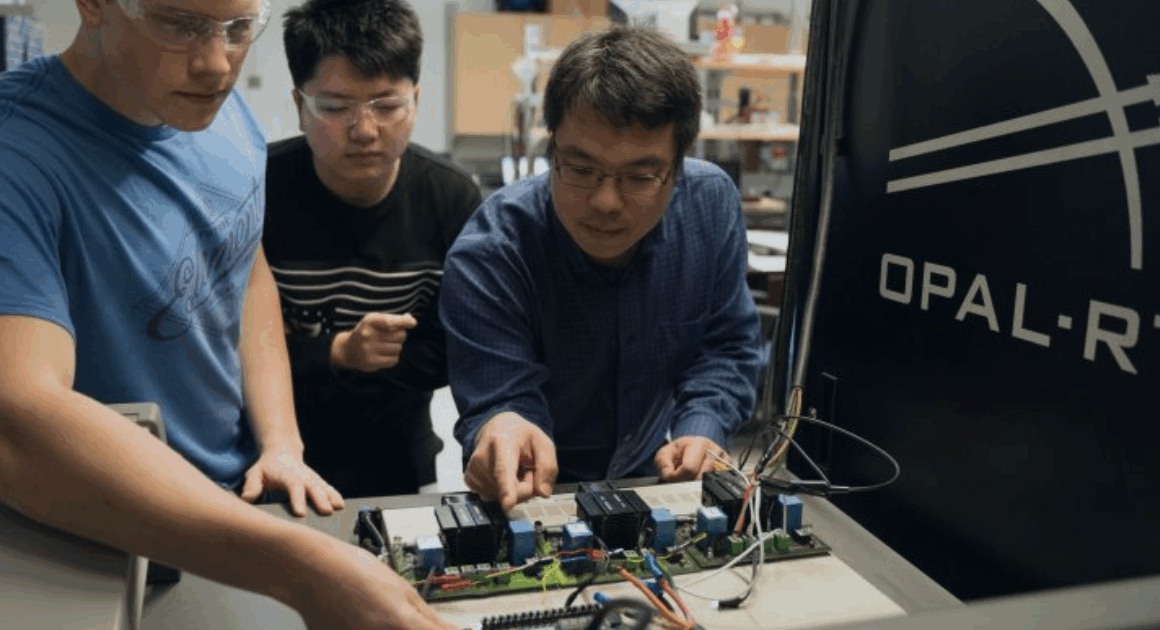
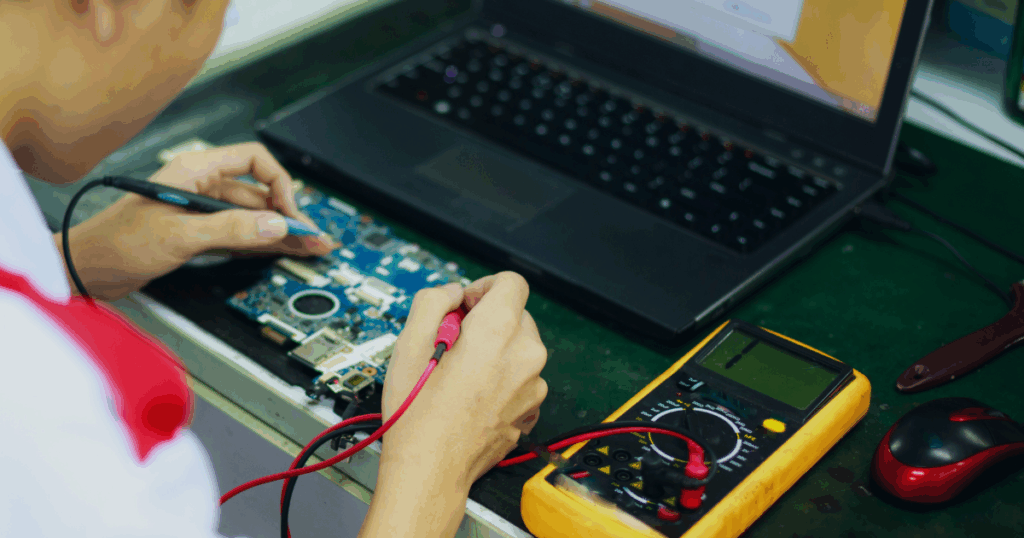
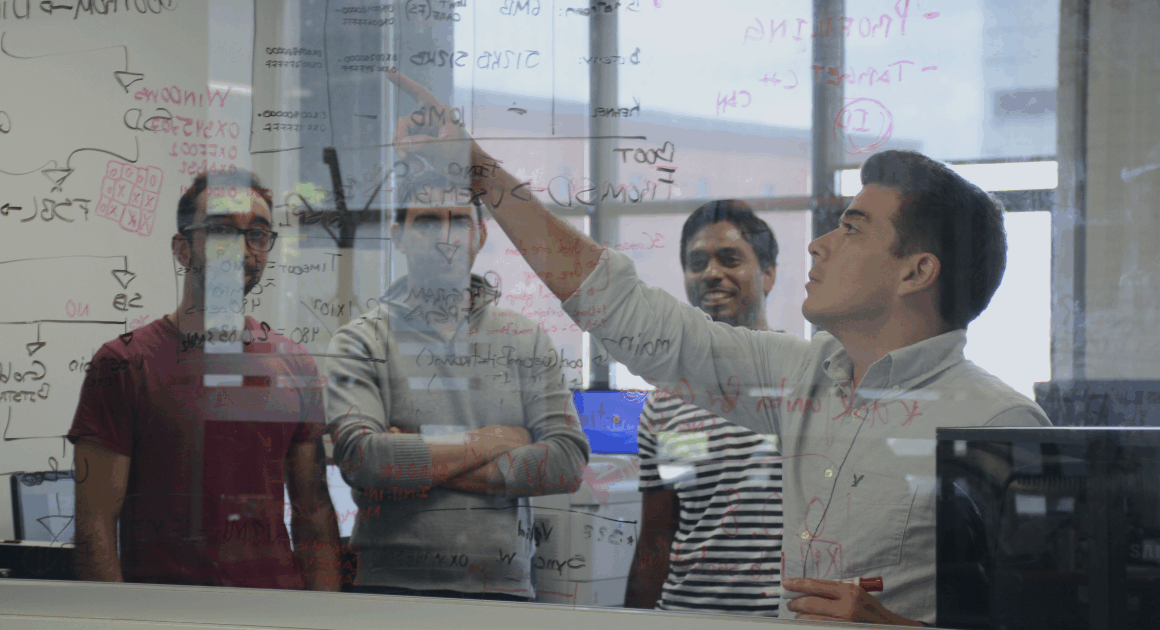
OPAL-RT engineers discussing real-time power system models at a whiteboard filled with electrical calculations.
Simulation

9 Benefits & Applications of Electrical Simulation

Electrical simulation lets you test, tune, and trust your design long before hardware arrives. When you can iterate in software, you remove guesswork and cut back on costly rework. Your data gets stronger, your confidence grows, and your team stays focused on outcomes that matter. That is how programmes stay on schedule and projects move from idea to validated system.

Engineers, researchers, and technical leads across energy, aerospace, automotive, and academia need proof under constraints. Budgets are tight, lab time is scarce, and hardware is never as early as you want it. Simulation closes those gaps by giving you a safe, rapid, and measurable path from concept to controller. With the right tools, you gain repeatability, traceability, and clarity across every phase.

Why electrical simulation is essential for power system design

Electrical simulation strengthens engineering workflow at every step of power system design. Early in a project, it clarifies requirements and boundary conditions, so your team avoids costly false starts. As designs mature, it offers a controlled setting to test controls, study interactions, and predict response to faults or unusual operating points. Late in the cycle, it supports validation against standards and improves handoff to test rigs and field trials.

For electrical power systems, the stakes are high because interactions between components can be nonlinear, fast, and tightly coupled. Grid codes, safety constraints, and performance targets create a narrow window for acceptable behaviour. Simulation lets you probe outside that window without risk, then guide the design back into a safe and efficient zone. The result is less uncertainty, faster learning, and higher assurance when hardware finally arrives.

9 benefits of electrical simulation for engineers and researchers

Effective teams rely on repeatable methods, trusted data, and rapid feedback that keeps projects on track. Electrical simulation delivers those qualities through validated models, real-time execution options, and rich analysis workflows. You reduce reliance on scarce lab resources and gain the ability to test many more scenarios than physical hardware would ever allow. Stronger coverage, better insight, and clear traceability translate into measurable gains across quality, cost, and schedule.

1. Improves accuracy in electrical power systems analysis

Accurate models sharpen your understanding of electrical power systems and reduce surprises during integration. With parameter identification and system identification methods, you can calibrate models against measured data. That process helps expose hidden assumptions, fix unit errors, and align control targets with physical limits. When models match reality, your simulations become a trustworthy guide for design choices.

High fidelity is not only about detailed component equations but also about the quality of operating scenarios. Load profiles, network contingencies, and switching events must reflect plausible conditions to produce reliable results. Simulation lets you sweep through parameter ranges to stress the design and quantify margins. You end up with traceable evidence that supports safety cases, standards compliance, and internal reviews.

2. Reduces cost and time of physical prototyping

Virtual prototypes let you evaluate architecture decisions before committing to boards, cabinets, or field wiring. You can compare topologies, control strategies, and component ratings with minimal expense. That early clarity avoids excess capital tied up in hardware iterations and saves lab time for the most promising options. Teams that simulate first also find integration issues sooner, when fixes are cheaper and quicker.

Procurement delays and supply constraints often limit how fast a physical prototype can advance. Simulation keeps progress moving while parts ship, reducing idle time for engineers and testers. You can refine control code, validate protection settings, and build automated test suites that later run on hardware. When the prototype shows up, many issues are already resolved, and the build stage moves faster.

3. Enhances performance validation with Electrical modeling software

Electrical modeling software brings structure and consistency to how you validate performance. From block-based modelling to equation-level tools, you can create repeatable test benches that probe efficiency, response time, harmonic content, and stability. These test benches capture requirements as executable checks, so performance expectations remain clear as designs change. Your validation work becomes transparent, reviewable, and easy to audit.

Tool-integrated solvers support multi-rate, switched, and stiff systems that appear often in power electronics and drives. You can pair average models for controls exploration with detailed switching models for waveform accuracy. That mix helps you converge faster, then confirm edge cases with precision. With the right configuration, performance evidence is easy to regenerate and share with technical leaders and auditors.

4. Supports safer electrical system testing before deployment

Testing safety features on physical systems can expose people and equipment to risk. Simulation lets you trigger faults, miswire conditions, and extreme operating points without harm. Protection logic, alarms, and failsafes can be evaluated thoroughly, including timing, selectivity, and recovery behaviour. This approach raises confidence that safety functions will respond correctly under stress.

Hardware-in-the-loop (HIL) adds another layer by running controls against a real-time digital plant. You can validate trip thresholds, isolation states, and restart sequences while hardware sees realistic signals. The test setting stays controlled, repeatable, and observable, which helps teams diagnose issues quickly. Safer experiments lead to quicker learning, fewer incidents, and stronger compliance outcomes.

Electrical simulation lets you test, tune, and trust your design long before hardware arrives.

5. Optimizes renewable energy integration into power systems

Renewable assets introduce variability, inverter-driven dynamics, and grid code requirements that change project complexity. Simulation supports sizing, dispatch strategies, and control tuning for photovoltaic arrays, wind generation, and storage. Grid studies, including short-circuit levels and voltage stability, are easier to conduct repeatedly with consistent conditions. You can analyse impacts at feeder, plant, and transmission levels to guide planning.

Converter control is central to renewable performance, and its tuning benefits from many trials under different conditions. Simulation allows targeted sweeps of irradiance, wind speed, and state of charge to quantify margins. You can test ride-through capability, frequency response, and reactive power support with clarity. The end result is a better plan for interconnection that reduces risk for operations teams.

6. Provides flexibility through advanced Electrical system design software

Electrical system design software gives you the flexibility to adapt models, interfaces, and workflows to each project. Open standards, support for scripting, and import of third-party formats help teams reuse assets they already trust. That flexibility reduces friction between research and test groups, so models stay useful across the programme. When tools adapt to your process, productivity improves naturally.

Integration across design, verification, and HIL is most effective when models serve multiple purposes. The same plant model that guides architecture discussion can feed controller tests and later power hardware tests. With careful configuration, you maintain a single source of truth from concept to validation. That continuity reduces rework, shortens onboarding time, and improves knowledge transfer.

7. Strengthens reliability with predictive fault analysis

Reliability grows when you study failure modes before they show up on a bench. Simulation lets you stage faults at different locations, durations, and severities to learn how systems respond. You can measure recovery time, thermal stress, and control stability after disturbances. That evidence supports design updates that improve robustness without oversizing.

Predictive analysis pairs well with statistical methods that quantify confidence in performance. Monte Carlo studies reveal which parameters drive risk, guiding sensor selection and tolerance targets. You can also evaluate maintenance strategies by testing detection thresholds and alarm logic. The combination of foresight and data reduces unplanned downtime and costly service events.

8. Delivers real-time insights for hardware-in-the-loop applications

Real-time execution brings controller code into contact with a digital plant that behaves like the intended system. Hardware-in-the-loop (HIL) exposes timing bugs, interface quirks, and corner cases that desktop runs may miss. When plant models run on dedicated processors, you can evaluate control tasks at their actual rates. That visibility helps you tune gains, adjust filters, and refine sequencing based on measured response.

Real-time platforms support communication buses, I/O conditioning, and timing that mirror lab setups. Engineers test start-up, shut-down, and fault handling with accurate latency and deterministic behaviour. The work produces evidence that software, hardware, and protection act as a coherent whole. With clearer insight, teams reduce risk before power-up on a high-energy test bench.

9. Expands opportunities for innovation in electrical power systems

When simulation lowers risk and cost, teams have space to try new ideas. You can experiment with novel topologies, adaptive control strategies, and different component mixes without committing to builds. Evidence from these trials helps justify investment in prototypes that truly merit fabrication. Creativity grows when iteration is fast, safe, and measurable.

Innovation also benefits from collaboration across engineering groups, research teams, and labs. Shared models, standard interfaces, and reproducible tests keep everyone aligned on targets. A healthy modelling culture makes it easier to compare approaches and converge on stronger designs. Over time, this practice raises the quality bar across electrical power systems projects.

Effective use of simulation is not only about tools but also about method. Clear requirements, validated models, and disciplined test plans build a steady pipeline of trusted results. Teams that invest in these habits see gains across quality, cost, and schedule. Strong methods, paired with capable platforms, deliver the outcomes stakeholders expect.

Common examples of electrical systems that benefit from simulation

Engineers often ask for practical context, and examples help crystallize where simulation brings the most value. Power electronics, grid applications, and complex controls share similar modelling needs that reward careful study. Effective planning calls for clear test objectives, well-defined operating points, and realistic disturbances. A short sampling of applications shows how these patterns play out from lab to field trials.

  • Microgrids with distributed energy resources: Coordinating storage, photovoltaic arrays, and controllable loads calls for studies of islanding, reconnection, and protection selectivity. Simulation helps size assets, tune droop controls, and verify black start sequences before installation.
  • Electric vehicle powertrains and charging systems: Traction inverters, battery management, and onboard chargers require detailed studies of efficiency, thermal headroom, and electromagnetic compatibility. Simulation supports control development, charger interoperability, and grid impact analysis for depots.
  • Aerospace power distribution and actuation: Weight, redundancy, and strict safety constraints create tight margins for power conversion and distribution. Simulation provides evidence for fault clearing, load sharing, and transient response under flight profiles.
  • Industrial motor drives and converters: High performance speed and torque control relies on precise models of machines, sensors, and power stages. Simulation validates control laws, switching strategies, and protection limits across duty cycles.
  • Protection and control systems for substations: Coordination of relays, breakers, and communication links must be proven for many contingencies. Simulation tests zone boundaries, timing, and sensitivity to ensure dependable clearing without nuisance trips.
  • High-voltage direct current and flexible AC transmission: HVDC links and FACTS devices influence stability, power flow, and voltage regulation across networks. Simulation validates controller interactions, filter design, and converter behaviour across operating ranges.
  • Wind and solar inverter systems: Variable resources introduce fast dynamics and grid code requirements that must be addressed in design. Simulation confirms ride-through capability, reactive power support, and curtailment policies with confidence.

Examples of electrical systems like these demonstrate how careful modelling supports better engineering choices. Strong coverage of operating conditions keeps risk low when projects move to lab tests and field trials. Evidence from simulation also helps align stakeholders on budgets, timelines, and acceptance criteria. Clarity at this stage shortens the path to commissioning and improves long-term reliability.

Real-time execution brings controller code into contact with a digital plant that behaves like the intended system.

How OPAL-RT supports your electrical system simulation needs

OPAL-RT focuses on the challenges you face every day in energy, aerospace, automotive, and academia. Real-time digital simulators with CPU and field-programmable gate array (FPGA) resources give you deterministic performance, precise timing, and repeatable I/O conditions. The RT-LAB software suite connects modelling tools you already use, including MATLAB/Simulink, FMI/FMU, and Python, so teams can keep trusted workflows. Toolboxes such as HYPERSIMeHS, and ARTEMiS help you move from averaged models to switching detail, then into hardware-in-the-loop (HIL) without rework.

For teams building complex controls, OPAL-RT supports model-in-the-loop (MIL), software-in-the-loop (SIL), and HIL validation across power electronics, protection, and grid studies. Open interfaces, broad protocol coverage, and modular I/O let you integrate new rigs or extend existing labs with confidence. Cloud and AI workflows are available for test automation and data management, which speeds analysis and improves repeatability. You get a practical path from concept to physical testing, supported by a partner known for precision and reliability.

FAQ

Electrical simulation lets you compare topologies, test control ideas, and size components before any purchase order. You avoid extra board spins, compressed lab schedules, and emergency rework that sprawl budgets. You also create test benches that carry into hardware, so effort spent early keeps paying off. OPAL-RT helps you reduce cost-to-validate with real-time digital simulators and Electrical modeling software that shorten cycles, improve reuse, and keep teams focused on the best build.

You need fidelity, repeatability, and workflow fit across modelling, verification, and hardware handoff. Look for open interfaces, support for FMI/FMU, and strong latency performance for controller studies. Real-time options matter when you want to move from desktop runs to Hardware-in-the-loop (HIL). OPAL-RT offers open, scalable platforms that slot into your toolchain, helping you cut test time, raise confidence, and preserve traceability across phases.

Start with models that reflect grid codes, protection logic, and realistic disturbance cases. Build automated checks for timing, selectivity, and recovery behaviour, then stress them with fault studies. When the same plant models run in real time, your controllers face conditions that match lab equipment. OPAL-RT supports this path with HIL-ready simulators and Electrical power systems libraries, so you can produce clear evidence, minimise risk, and accelerate approvals.

It clarifies inverter control, energy storage interactions, and plant-level coordination, all before site work. You can assess ride-through, reactive support, and dispatch strategies under changing resource conditions. Detailed sweeps show margins that inform protection, sizing, and interconnection. OPAL-RT provides tools for high-fidelity studies and real-time execution, helping you raise performance while keeping commissioning smooth and predictable.

Once control timing, I/O behaviour, and communication buses affect outcomes, desktop runs stop telling the whole story. HIL exposes task jitter, sensor scaling, and start-up sequences under conditions that feel like the lab. You keep the safety of software while gaining timing accuracy for controllers. OPAL-RT makes this step practical with real-time hardware and RT-LAB integration, so you shorten debug, improve coverage, and reach sign-off sooner.

Team working at computer desks in a modern office environment, focusing on a visible workstation.
Simulation

How to Simulate Smart Grids & Renewable Energy Systems Effectively

Modern power grids are integrating renewable energy, and the only way to do it confidently—without blackouts or budget overruns—is by testing every scenario in high-fidelity simulation beforehand. Renewable capacity is surging worldwide; by 2025, renewable energy is expected to surpass coal as the leading source of electricity globally. Engineers are racing to connect more solar panels, wind farms, and battery systems to the grid, but they face a critical challenge: traditional testing methods cannot keep up with the complexity and speed of these new systems. 

Variable generation and power-electronics-driven resources introduce fast transients and intricate control interactions that static studies or slow simulations often miss. The result? Costly surprises like instability, equipment damage, or project delays can emerge late in development. High-fidelity, real-time simulation has therefore become not a luxury but a necessity for modern grids as it provides a safe, realistic proving ground to catch issues early, optimise designs, and ultimately deploy renewable technologies with confidence in grid stability.

Renewable Grid Complexity Outpaces Traditional Testing Methods

Power grids were once relatively predictable, but the surge in renewables and distributed energy resources has introduced a level of complexity that conventional testing can’t handle. Unlike the slow-moving mechanical generators of the past, today’s inverter-based solar and wind systems react to grid disturbances in milliseconds. A fault or fluctuation in one corner of the network can trigger unexpected behaviour in these fast-acting devices, something many legacy planning models fail to predict. Most utilities have not fully adjusted their studies or equipment settings to account for this new reality, leaving blind spots in reliability planning. In fact, a single line fault in California knocked nearly 1.2 GW of solar generation offline, an incident underscoring how older simulations missed inverter control nuances.

Traditional off-line simulations and sparse field tests struggle to capture such rapidly unfolding events. That’s why grid regulators are now pushing for more advanced modelling approaches. The North American Electric Reliability Corporation (NERC), for example, urges utilities to adopt electromagnetic transient domain analysis, as it can portray fast grid events far more accurately than phasor-type models ever could. In short, renewable-rich grids are outpacing old testing methods, and without new strategies, engineers risk flying blind as they integrate high levels of renewables.

Real-Time Digital Twins Offer a Risk-Free Testing Ground

The solution gaining momentum is the use of real-time digital twins of the power system as a risk-free testing ground. A real-time digital twin is essentially a high-fidelity software replica of the grid (or a portion of it) that runs in sync with actual time. This setup allows engineers to plug in real controller hardware or detailed models of equipment and observe true-to-life performance without any danger to people or infrastructure. Engineers can provoke rare faults, crank up a wind farm’s output abruptly, or simulate a battery inverter’s rapid switching, all to see how the integrated system responds.

It’s no wonder that hardware-in-the-loop (HIL) simulation has become a go-to approach for integrating renewables into the grid. This technique merges physical devices with the digital twin so that new controllers, protection relays, or even power electronics can be tested under realistic grid conditions early in development. HIL lets utilities and vendors refine complex control algorithms in a controlled, repeatable environment long before equipment is installed in the field. Critically, this method also exposes how devices behave during extreme conditions that are impossible or impractical to test on an actual grid. With no risk to actual equipment, teams can iterate endlessly to iron out bugs and optimise settings, confident that the real network will be stable from day one.

High-fidelity, real-time simulation has therefore become not a luxury but a necessity for modern grids—it provides a safe, realistic proving ground to catch issues early, optimise designs, and ultimately deploy renewable technologies with confidence in grid stability.

Best Practices for Effective Smart Grid Simulation

Effective smart grid simulation is not achieved by technology alone as it also requires a thoughtful strategy. Seasoned engineers follow a set of best practices to make sure their simulations truly de-risk projects and yield actionable insights:

  • Use high-fidelity models for critical components: Represent the grid’s behaviour in detail by using electromagnetic transient (EMT) models for anything involving power electronics or fast dynamics. High-fidelity modelling captures fast transients and control nuances that simpler models overlook, ensuring the simulation reflects reality for complex renewable interactions.
  • Incorporate HIL testing early: Don’t wait until final prototyping to involve real hardware. Connect controller hardware or even power equipment to the real-time simulator during development; running real devices in the loop uncovers integration issues in a safe environment instead of during on-site commissioning. Early HIL testing keeps costly surprises out of later project stages.
  • Simulate a wide range of scenarios: Push your digital twin through scenarios ranging from normal operations to worst-case disturbances. This includes sudden loss of generation or load, extreme weather events, and multi-fault scenarios. By exploring these “what if” cases methodically, engineers ensure the grid’s control and protection schemes are robust against extreme conditions.
  • Ensure multi-vendor interoperability: Modern grids often mix equipment from many manufacturers. Use simulation to verify that these components work together. For instance, plug a physical sensor or relay into a real-time simulation to see how it communicates with the grid model. This reveals protocol or timing issues early, ensuring different vendors’ devices truly work in concert.

Following these best practices turns simulation from a theoretical exercise into a powerful decision-support tool. When models are accurate, scenarios exhaustive, and hardware integration tested early, the results of a simulation become something project teams can firmly trust. This rigorous approach directly translates to greater confidence when it’s time to implement changes on the actual grid.

Building Confidence in Grid Innovation with HIL Testing

Catching issues before they hit the grid

Hardware-in-the-loop testing shines at catching problems long before any new grid equipment goes live. Integrating real controllers or control code into a simulated grid lets engineers see how their systems respond under realistic conditions. Software bugs, tuning errors, and hidden interactions often surface during HIL trials—issues that otherwise might only appear during a costly field deployment. Identifying and fixing these problems early means fewer emergency fixes and retrofits later on. This early debugging approach directly shrinks development cycles. HIL simulations have been shown to significantly cut overall development time while still ensuring high system reliability. After HIL testing, teams know their design has been battle-tested virtually, boosting confidence as they move to implementation.

Mastering rare and extreme scenarios

HIL also lets engineers tackle extreme grid scenarios that would be impossible to test on an actual system. For example, operators can simulate a once-in-a-century storm impact on the grid to see how their systems cope. In a controlled real-time simulation, they can trigger a sudden voltage collapse or rapid frequency swing and then fine-tune the control response accordingly. This stress testing reveals how new components behave under duress and whether fail-safes kick in as expected. Engineers can then adjust settings or add safeguards long before such conditions ever occur. In short, even rare “edge case” events are anticipated in these trials, leaving far less uncertainty on the real grid.

Accelerating innovation cycles

Integrating real-time simulation and HIL into the workflow accelerates innovation cycles. Traditionally, developing a new grid control or protection device could take years of repeated design, lab tests, and cautious field trials. Real-time simulation compresses this timeline by allowing concurrent development and testing. Engineers can try new ideas in the digital twin, iterate rapidly, and validate concepts without waiting for hardware prototypes at each step. This approach is already standard in aerospace and automotive development, yielding faster results without sacrificing safety. Now the power sector is following suit—using HIL platforms to prototype complex controls and inverter algorithms in months instead of years. And it’s not just about speed—HIL produces better outcomes. Developers can run far more test cases than would ever be feasible physically, gaining a much deeper understanding of system behaviour. In the end, innovative solutions—move from concept to deployment with full confidence in their reliability.

Following these best practices turns simulation from a theoretical exercise into a powerful decision-support tool.

OPAL-RT Enabling Confident Renewable Integration

That same commitment to rigorous real-time testing drives our work at OPAL-RT, where we’ve always believed engineers should be able to push boundaries in the lab without fearing unforeseen failures. We develop open, high-performance real-time simulators and HIL technology that let users replicate complex electrical networks with high fidelity. These tools give engineers and researchers a safe space to experiment with new control strategies, validate multi-vendor integrations, and prove out designs under all conditions. The goal is simple: when it comes time to implement solutions on the actual grid, nothing comes as a surprise.

This perspective—that real-time simulation is fundamental rather than optional—has guided us from the start. As grids incorporate more renewables, we collaborate with utilities and manufacturers to ensure our simulation platforms meet their most demanding needs. By providing flexible hardware-in-the-loop systems and high-fidelity digital models, we help projects deploy new technologies. Ultimately, our mission is to empower energy innovators to move forward with confidence, knowing thorough simulation paved the way for success.

FAQ

You can usually tell if real-time simulation is needed when your system involves power electronics, inverter-based resources, or complex multi-vendor integrations. Traditional testing often misses fast transient responses, leaving gaps that only high-fidelity models can capture. Real-time simulation allows you to uncover these hidden risks before field deployment. With OPAL-RT, engineers gain a safe testing ground that validates designs under realistic conditions while reducing costly surprises.

Digital twins create a living replica of your system that reacts to inputs and disturbances in real time. This means you can safely test faults, extreme conditions, or new algorithms without risking physical equipment. A properly built digital twin makes it easier to validate interoperability across different devices and manufacturers. OPAL-RT provides digital twin platforms that give you this clarity, helping ensure that grid integration efforts succeed the first time.

Hardware-in-the-loop testing bridges the gap between theory and practice by connecting physical devices to a simulated grid. This exposes hidden interactions, communication issues, and performance shortfalls long before the equipment is deployed. It’s a reliable way to stress test controllers and relays under extreme scenarios. OPAL-RT helps you do this with flexible, open systems that make HIL a core part of grid project workflows, reducing delays and protecting investments.

Yes. When you use simulation to test control strategies, validate protection schemes, and evaluate interoperability early, you avoid late-stage rework. Iterating virtually is faster and safer than waiting for prototypes or field trials. This approach allows you to try out far more scenarios than you could physically, accelerating design cycles. OPAL-RT supports this acceleration with high-fidelity tools that let you deliver renewable integration projects on tighter schedules with confidence.

The outcomes you should expect include improved stability, fewer commissioning issues, and smoother integration of renewable resources. Engineers can catch hidden issues early, validate multi-vendor setups, and fine-tune responses to rare events. The net effect is better reliability and reduced costs over the project lifecycle. OPAL-RT helps you achieve these outcomes by providing proven real-time simulation platforms that give you confidence from development to deployment.

1 2 3

Get started with SPS Software

Contact us
Cart Overview