
Free Trial
Free Trial
Grid

7 techniques to build accurate grid models

Key takeaways

  • Accurate grid modelling protects engineering projects from costly surprises by aligning simulation behaviour with what hardware will show later in the lab.
  • Clear distribution feeder modelling, with realistic topology and device representation, helps planning, protection, and operations teams share a common view of the same network.
  • Consistent practices around validated component data, per unit systems, and steady state configuration strengthen confidence in study results across many scenarios and projects.
  • Representing protection, control logic, and solver settings with the right level of detail turns grid models into practical tools for coordination studies, teaching, and research.
  • SPS SOFTWARE supports these modelling habits with transparent, physics based components that fit naturally into MATLAB and Simulink workflows and scale from classroom models to complex grids.

Accurate grid models quietly protect your time, your budget, and your engineering reputation. Small mismatches between what the model predicts and what the hardware later shows can trigger long nights of debugging. Voltage levels that look comfortable in simulation can suddenly sag, trip protection, or upset converters once a project reaches the lab. Careful attention to how you build, validate, and use grid models keeps those surprises rare and makes every study more useful.

Power system engineers, protection specialists, researchers, and students all rely on simulation to understand how networks behave before equipment moves anywhere near a test bench. Simple errors in grid modelling, such as incorrect base values or missing control settings, can silently distort results and hide issues that later appear in the field. Clear modelling practice turns each study into a reusable asset that supports future projects, training, and research. Stronger habits around data, structure, and study setup give you more confidence in every waveform and report that your models produce.

Why accurate grid modelling supports better engineering outcome

Accurate grid modelling acts as a bridge between theory, laboratory testing, and field performance. When component parameters, line impedances, and control settings reflect reality closely, the simulated response to faults, switching events, and load changes looks much closer to what users will later observe on hardware. That alignment means you can size equipment with more confidence, tune controllers more efficiently, and justify design choices with clear evidence. Projects then move through design reviews, procurement, and commissioning with fewer surprises because the studies already anticipate most important behaviours.

Precise models also support communication across engineering teams and with stakeholders who review study results. When a single, trusted model underpins protection coordination, stability assessments, and power quality checks, discussions shift from arguing about assumptions to deciding which mitigations make sense. Students and researchers benefit as well, because accurate parameter sets and transparent equations make it easier to relate classroom theory to what they see in simulation plots. Over time a well maintained model library becomes a shared reference that shortens future studies and helps new staff come up to speed faster.

How distribution feeder modelling improves study clarity

Distribution feeder modelling brings much needed structure to the part of the grid that sits closest to customers, equipment, and local generation. Accurate representation of feeder sections, phase connections, laterals, and grounding lets you see how voltage drops, unbalance, and fault currents spread across the network. Instead of treating the feeder as a single lumped impedance, you can study how individual devices such as voltage regulators, capacitor banks, and reclosers shape the response at different points. That extra clarity is essential when you compare options for connecting new loads or distributed energy resources, or when you investigate why protection devices operate unexpectedly.

Careful distribution feeder modelling also improves coordination between planning studies and protection studies. When planners, protection engineers, and operations staff all work from the same feeder model, each team can apply its own scenarios while trusting that the underlying electrical data remains consistent. Engineers then gain a clearer sense of where measurement points, new automation devices, or upgraded conductors will provide the most benefit for reliability and power quality. For teaching and research, a detailed feeder model offers a concrete setting where students can explore the impact of faults, switching, and new control schemes without touching physical equipment.

7 techniques to build accurate grid models

“Accurate grid models quietly protect your time, your budget, and your engineering reputation.”

Accurate grid models start with good data, clear structure, and deliberate choices about study scope. Engineers who treat modelling as a repeatable process instead of a one off task usually see fewer surprises and more reliable conclusions. Each simulation step, from component parameter entry to solver selection, either preserves physical realism or slowly pulls results away from what hardware will show later. Consistent attention to practical techniques for model validation, structure, and study setup helps you connect everyday modelling work to more useful insights, safer testing, and stronger designs.

1. Validate every component model with trusted electrical parameters

Component models form the foundation of any grid study, so each one needs parameters that reflect actual equipment behaviour. Start with manufacturer data sheets, nameplate ratings, and test reports, then cross check values such as impedances, time constants, and saturation levels against typical ranges. When values look unusual, a quick comparison with field measurements or past projects can reveal typing mistakes, incorrect units, or misapplied base quantities before they affect results. Loads, cables, transformers, machines, and converters all benefit from this simple validation loop, and small corrections at this stage often prevent misleading voltage or current waveforms later.

Good practice also includes documenting where each parameter set came from, so others can trace assumptions and decide when updates are necessary. Short notes that reference test dates, lab reports, or manufacturer versions give context that survives beyond the original modeller. Many teams maintain a central library of vetted component models, which reduces repetition and keeps study inputs aligned across projects. Students and new engineers gain confidence faster when they know the components in their diagrams reflect trusted electrical parameters instead of guesses.

2. Use feeder topology data to create a clear distribution structure

Accurate feeder topology turns a collection of buses and lines into a representation that matches how poles, cables, and switches exist in the field. Engineers often have access to geographic information system records, planning diagrams, or protection one line drawings that describe how sections of the feeder connect. Translating that information into clearly named buses, switches, and line segments reduces confusion during model reviews and simplifies future changes. Consistent naming, phase labelling, and section grouping make it much easier to discuss specific locations with colleagues and to match study results with equipment in the yard.

Distribution feeder modelling benefits greatly from including normally open points, alternate feeds, and major tie switches so that alternative configurations sit only a few clicks away inside the model. With that structure in place, planners can examine how load transfers impact voltage, losses, and fault levels, while protection engineers can test device settings under multiple switching conditions. Researchers and students can then apply automation schemes or distributed energy resource controls on top of a feeder that feels familiar to practising utility staff. This level of structural clarity turns the feeder model into a shared reference for planning, protection, and academic work instead of a private experiment on one engineer’s machine.

3. Build network representation using consistent per-unit systems

A consistent per unit system keeps network representation clean, scalable, and easier to debug. Selecting base power and voltage values carefully at the start of a project prevents confusion when models span multiple voltage levels, transformers, and study cases. Once bases are set, every component should use the same convention, with clear documentation of nominal ratings, connection types, and phase counts. Mixing nameplate values and per unit values without discipline almost guarantees mistakes in impedance, short circuit capacity, or thermal loading calculations.

Teams that work across several tools or subsystems often define a shared per unit policy so that models exchange data cleanly. That policy might specify base quantities for transmission, sub transmission, and distribution levels, along with examples that show how to convert vendor data into internal formats. Once engineers become comfortable reading and comparing values in per unit, spotting unrealistic line impedances or transformer reactances becomes much easier. Clear per unit practice also helps students bridge the gap between textbook exercises and larger system studies, since they can reuse familiar techniques at greater scale.

4. Apply a steady state configuration before running dynamic cases

Many simulation problems vanish when a model starts from a coherent steady state configuration instead of arbitrary initial conditions. Running a power flow and saving the resulting voltages, currents, and device operating points as initial states gives dynamic studies a realistic starting point. Machines start with correct rotor angles, controls begin near their normal operating values, and tap changers or regulators sit at plausible positions. This preparation reduces artificial transients that might otherwise obscure the true impact of a fault, switching event, or control change.

Without an agreed starting point, two engineers can build models that look similar yet respond differently because each one makes different assumptions about initial load or generation levels. Documented steady state configuration files or templates make that starting point explicit and repeatable across projects, courses, and research studies. Students who learn to set up these conditions early develop a habit of treating power flow, initial states, and dynamic runs as parts of one consistent workflow. Complex projects also benefit when offline simulations line up with hardware tests, because the hardware needs realistic initial voltages and currents from the moment trials begin.

5. Represent protection and control logic with transparent settings

Protection and control logic often decides how a grid responds to faults, switching, and abnormal conditions, so clear representation matters. Instead of modelling relays, reclosers, and controllers as abstract blocks, use settings that match field devices, including pickup levels, delays, and reclosing sequences. Aligning simulated logic with actual schemes lets protection staff verify grading curves, coordination margins, and zone coverage inside the same tool others use for power flow and dynamics. Transparent settings also make it easier for reviewers to trace why a device operated in simulation and to suggest adjustments without guessing at hidden parameters.

Educators can use these models to teach students how time current curves, inverse functions, and logic diagrams translate into actions on currents and voltages. Researchers gain a safe space to test new control algorithms while still grounding them in realistic device limits and communication delays. For utilities and large industrial plants, sharing protection and control models with equipment manufacturers can speed up joint studies and reduce misunderstandings. Over time, a library of transparent protection and control schemes becomes a valuable asset that supports audits, post event analysis, and training.

6. Match switching, sampling, and solver settings to the study needs

Switching behaviour, sampling rates, and numerical solver choices strongly influence how well a model captures fast electrical phenomena. High frequency switching events require smaller time steps, detailed device models, and sampling aligned with gate signals, while slower stability studies can tolerate larger steps and averaged models. Choosing a solver without considering these needs can either miss important waveforms or waste computational effort where it adds little insight. Careful alignment among switching patterns, controller sample times, and solver step sizes keeps numerical noise low and preserves the physics you care about.

Many teams define standard solver settings for classes of studies, such as power quality analysis, stability checks, or harmonic assessments, then refine them as experience grows. Documenting these defaults inside project templates saves time for students and engineers who build new cases, and it encourages consistent treatment across different projects. Where hardware in the lab will eventually connect to the model, aligning sample times with measurement and control hardware helps reduce integration issues later. Clear guidance on solver configuration turns what can feel like guesswork into a repeatable technical choice grounded in study objectives.

7. Use measurement points to verify responses at key locations

Measurement points convert a model from a static diagram into a source of insight that engineers can interpret quickly. Strategic placement of voltage, current, and power measurements at sources, key buses, and sensitive loads shows how events propagate through the system. Waveform viewers, phasor plots, and numerical logs all benefit from a consistent naming convention so that plots, screenshots, and reports tell a clear story. Without well placed measurements it becomes difficult to explain study outcomes, compare cases, or trace the origin of unexpected results.

Measurement points also support systematic validation, since you can compare simulated quantities at specific locations with field data or reference models. Once those comparisons look reasonable, engineers gain confidence that the model responds correctly to new scenarios such as different fault locations, loading patterns, or protection settings. Students can build intuition by observing how the same disturbance looks from different points in the system, reinforcing concepts like impedance, distance, and fault level. Over time, a standard set of measurement locations across projects simplifies study review, supports regression testing, and improves communication between teams.

Accurate grid models rarely come from a single clever trick and instead grow from disciplined habits that engineers apply every day. Careful parameter validation, clear topology, consistent per unit practice, and realistic starting conditions all work as a set to keep simulations close to physical behaviour. Thoughtful protection, solver, and measurement choices then turn raw simulations into studies that answer concrete engineering questions with confidence. When these techniques become standard practice across teams, grid modelling shifts from a source of uncertainty into a reliable way to support design, teaching, and research decisions.

“Accurate grid models rarely come from a single clever trick and instead grow from disciplined habits that engineers apply every day.”

How SPS Software supports more precise and more confident grid modelling

SPS SOFTWARE gives power engineers, researchers, and educators a modelling workspace that feels familiar yet is purpose built for electrical systems. You can represent grids, converters, feeders, and protection logic with physics based component models that stay transparent, so colleagues and students always see how equations and parameters link back to real equipment. The platform aligns offline electromagnetic transient studies, phasor based analyses, and teaching examples inside the same tool, which makes it easier to reuse models across courses, feasibility studies, and early product design work. For many users this fits directly into existing model based design workflows, so you can keep using familiar signal processing, control design, and scripting tools while focusing on system behaviour instead of file conversions.

OPAL-RT builds SPS SOFTWARE on experience with offline simulation, real time testing, and Hardware-in-the-loop (HIL), so the same models can support both exploratory studies and rigorous validation. The commercial strategy around the platform focuses on education, research, and industrial teams that need transparent, physics based models rather than black box components, which aligns well with grid and power electronics studies. Website plans and product resources emphasise clear documentation, example models, integration guides, and onboarding material, so new users can reach meaningful studies without spending weeks learning basic workflows. All of these choices position SPS SOFTWARE as a reliable, credible, and authoritative companion for precise grid modelling over the long term.

Simulation

5 Optimization Tips for Large-Scale SPS Models

Key Takeaways

  • Large SPS Software models only become useful for real-time work when structure, solver settings, and data handling are tuned with the same care as the electrical design itself.
  • Simplifying hierarchy, selecting the right solver strategy, and replacing non-essential detailed components with reduced models can cut run times significantly without sacrificing the physics that matter.
  • Profiling is a practical way to see where simulations actually spend time, which helps you focus optimization on specific subsystems, control loops, and logging choices that have the biggest impact.
  • Careful management of sampling rates, timing margins, and memory usage improves both numerical accuracy and throughput, so you can run more scenarios and gain clearer insight from each one.
  • SPS Software provides an integrated workflow for MATLAB model optimization, helping engineers, educators, and researchers move large simulation models from offline analysis to real-time targets with confidence.

Every engineer who has watched a progress bar crawl during a long simulation knows how painful a slow model feels. Large SPS Software models can be rich in detail, yet that complexity often causes missed real-time deadlines and stalled work. You might have controllers waiting on signals, processors pegged at full utilisation, and hardware-in-the-loop setups that simply cannot keep up. Tuning those large simulation models for speed and robustness turns frustration into predictable timing, cleaner results, and calmer test days.

Power systems engineers, power electronics specialists, grid planners, and researchers all feel this pressure when models grow beyond a few thousand states. You need accurate physics-based behaviour for feeders, converters, or microgrids, yet you also need simulations that finish before the lab closes. That balance becomes even more sensitive once SPS Software models feed hardware platforms for hardware-in-the-loop or real-time validation. Teams in academia and industry face offline queues, limited real-time access, and higher expectations for system studies, which puts extra weight on every modelling choice.

“Tuning those large simulation models for speed and robustness turns frustration into predictable timing, cleaner results, and calmer test days.”

Why optimizing large-scale SPS Software models is critical for real-time performance

Large-scale SPS Software models often start life as exploratory studies, with high detail everywhere and little thought given to solver cost. That structure works for overnight runs on a workstation, but the same model typically exceeds the time budget once you target a real-time processor. Every extra state, discontinuity, and algebraic loop adds work for the solver, and that effort shows up as missed step deadlines and jitter. During hardware-in-the-loop work, those overruns can stop tests, upset controllers, or hide faults that only appear when timing is correct. Optimizing large simulation models at this stage means shaping them so each time step finishes within the real-time window, while still reflecting the physics you care about.

Real-time performance is not just about raw speed, because accuracy suffers if the solver cuts corners to stay on schedule. Faster models let you sweep more scenarios, stress controllers over longer time spans, and test rare edge cases that might never show up in a single long run. Once results match across offline and real-time runs, you gain confidence that any failure you see comes from the design, not from numerical artefacts or overloaded processors. This combination of timing reliability and trustworthy waveforms is what turns SPS Software optimization from a pure performance exercise into a foundation for better engineering judgement.

5 optimization tips for large-scale SPS Software models

Effective SPS Software optimization starts with a clear view of where simulation time actually goes. Some of that cost comes from how you structure the model, and some comes from solver settings or data handling choices. Small structural changes in SPS, especially for large simulation models, often yield bigger gains than switching hardware or adding processing cores. Optimisation work that targets structure, solvers, components, profiling, and data handling usually fits directly into the way you already build and test models.

1. Simplify model hierarchy to reduce solver load

Complex hierarchy is often the first hidden source of cost in SPS models built on top of MATLAB and Simulink diagrams. Deep nesting of subsystems, conditional subsystems, and masked components forces the engine to manage many execution contexts, even when electrical behaviour remains simple. Bringing related blocks into flatter, well-grouped sections reduces that overhead and makes execution order easier to reason about. You still keep logical separation for teaching or documentation, while the solver sees fewer layers to walk through at each step. Many teams create a clean top level dedicated to power system structure, then push only essential reusable logic into subsystems with clear naming and minimal nesting.

Large grid or converter studies often include repeated feeders, load banks, or converter legs that share the same structure but differ in parameters. Creating parameterised subsystems for these patterns gives you one place to tune structures while avoiding extra depth from excessive grouping. You can also remove layers that only serve visual layout, such as subsystems used purely to box blocks on the screen, replacing them with annotations or area highlights. This type of clean up helps students and junior engineers read the model faster, which reduces modelling errors that later show up as unstable real-time runs. Structured hierarchy that stays shallow but clear becomes easier to port to hardware targets and to share across academic or industrial teams.
2. Use variable-step solvers efficiently for faster simulation

Variable-step solvers help accelerate offline SPS runs by adapting the time step when signals change slowly, yet they still require careful configuration. Loose error tolerances, stiff systems, or many fast switching elements can cause step chopping that undermines performance gains. Start from recommended solver settings for your mix of electrical and control components, then tighten tolerances only where they affect results that matter for your study. Engineers often see major MATLAB model optimization wins simply by measuring step sizes over time and avoiding extreme fluctuations that indicate solver stress. Once the offline model behaves well, you can switch to an equivalent fixed-step configuration for real-time work with fewer surprises.

For large simulation models that mix slow electromechanical dynamics with fast switching or protection logic, consider partitioning components across multiple solver rates. Slow states such as mechanical shaft dynamics or averaged grid equivalents can use longer effective steps, while switching and protection elements run on shorter steps only where needed. This type of multi-rate strategy reduces the number of tiny integration steps that otherwise propagate across the entire system. You can then validate accuracy with time-domain overlays, frequency-domain comparisons, or power balance checks to ensure that solver tuning has not hidden important behaviour. Iterating in this structured way keeps solver choice aligned with physics rather than chasing trial-and-error settings.

3. Replace detailed components with equivalent simplified subsystems

High fidelity component models feel comforting, yet full switching models for every converter leg or detailed network for every feeder quickly overload real-time targets. Averaged models, Thévenin equivalents, or reduced-order machines often capture the behaviour you need while cutting states and discontinuities dramatically. For example, a cluster of photovoltaic inverters feeding a common bus can share a single averaged interface plus a smaller set of detailed models used only where switching artefacts matter. When models support teaching, you can preserve detailed views in separate subsystems and offer simplified equivalents as the default for performance. Students still learn how the full circuit behaves, while lab sessions remain practical on shared real-time hardware.

Simplification works best when guided by clear questions about what outputs matter and which inputs drive those outputs most strongly. If your objective is to validate controller behaviour for fault scenarios, the model must preserve fault timing, voltage and current envelopes, and any nonlinearities that influence controller decisions. Fine detail in remote parts of the network or secondary subsystems often contributes little to those quantities and can move into simpler equivalents. Documenting these choices directly in the model, for example through annotations or variant controls, helps future users understand the limits of each configuration. Clear justification for each simplified subsystem also reassures reviewers and project sponsors that performance gains do not hide important physics.

4. Profile model execution to identify computational bottlenecks

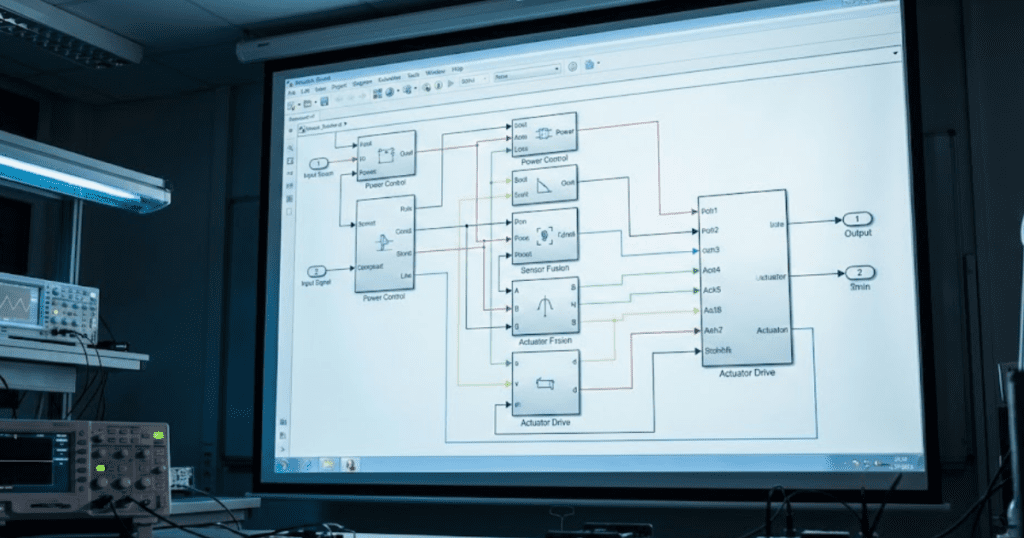
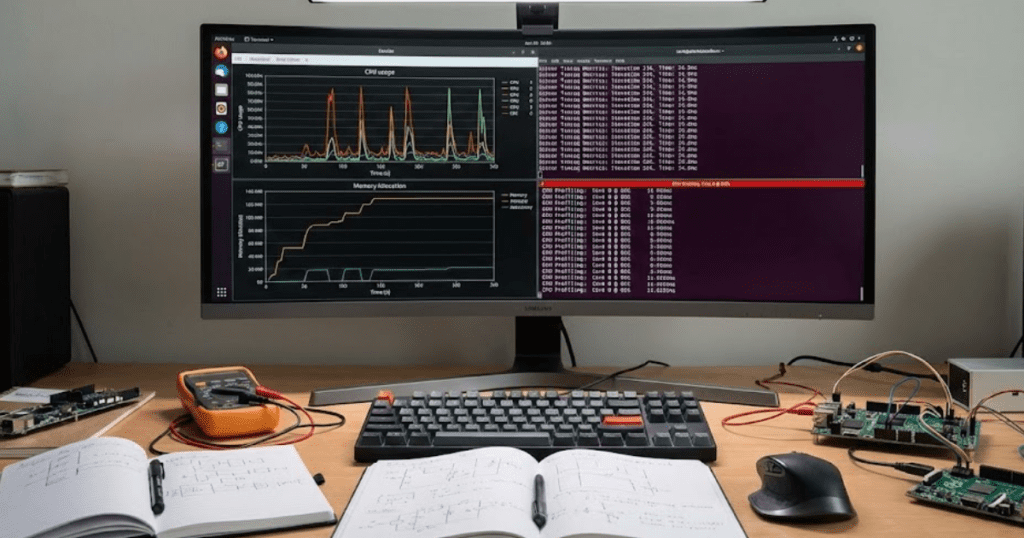
Profiling tools in MATLAB and Simulink give a concrete view of where simulation time is spent for SPS models. Instead of guessing which part of a large diagram is slow, you see exact functions, subsystems, and blocks that consume the most steps or CPU cycles. Engineers often discover that a few oscillating control loops, high-frequency measurement filters, or diagnostic scopes account for a large share of runtime. Removing unnecessary logging, simplifying control logic, or retuning filters in those locations typically delivers bigger gains than blanket changes to the entire model. Profiling also reveals parts of the model that never execute during a given scenario, which may signal dead code, unused protection paths, or features that should move into separate test cases.

Real-time preparation benefits from profiling across multiple test cases, such as normal operation, faults, and start-up sequences. Some bottlenecks only appear during limit cycles or edge scenarios, so it helps to profile those paths before deploying to hardware. You can store profiler results alongside the model, which lets team members review past decisions on solver choices and subsystem restructuring. This shared context prevents repeated tuning work and builds confidence that optimizations are based on measured data rather than intuition alone. Profiling becomes part of the modelling culture, much like unit testing for software, which improves quality across projects over time.

5. Pre-allocate data and manage signal logging for memory efficiency

Memory usage often limits large SPS models before pure computation does, especially when many signals log to the workspace or external files. Logging every waveform at full resolution for long scenarios creates enormous datasets that slow down both simulation and post-processing. You can usually keep only key currents, voltages, and controller states at full rate, while decimating secondary signals or logging them only around specific events. Model-based logging controls, signal groups, and conditional scopes make it easy to switch between lightweight debug configurations and richer traces used for detailed studies. Keeping memory footprints modest reduces the risk of overruns on real-time targets and shortens the delay between test runs in the lab.

Pre-allocating arrays in MATLAB functions or scripts connected to your SPS models avoids costly memory growth during simulation. Growing variables one sample at a time inside control logic or data logging callbacks forces the engine to request new memory repeatedly. You can estimate required sizes from expected simulation length and sample times, then allocate once and reuse buffers across cases. This approach keeps memory access patterns predictable and helps real-time schedulers maintain consistent performance. Clean memory management pairs well with good logging practice to support longer, more informative test campaigns without frequent resets or manual cleanup.

Consistent SPS Software optimization across hierarchy, solvers, components, profiling, and data handling turns large models into reliable tools rather than fragile experiments. Each improvement may appear small in isolation, yet taken across an entire project they often cut simulation time by factors, not just percentages. Shorter, more stable runs free scarce real-time hardware for more users, more scenarios, and more ambitious studies. That improvement in throughput and confidence pays off in smoother lab schedules, clearer teaching sessions, and stronger validation for industrial projects.

“Consistent SPS Software optimization across hierarchy, solvers, components, profiling, and data handling turns large models into reliable tools rather than fragile experiments.”

How optimization improves accuracy and simulation throughput in real-time systems

Model optimisation work often starts with performance targets, yet it has direct consequences for accuracy as well. Poorly tuned solvers, inconsistent sampling, or overloaded tasks can distort waveforms even when a run appears to finish on time. Careful SPS Software optimization keeps numerical error, latency, and jitter within known limits, so that comparisons between offline and real-time runs remain meaningful. The benefits show up in several concrete ways for engineers, students, and researchers working with real-time targets.

  • Higher numerical fidelity: Tight control of solver settings reduces integration error, so voltage and current traces stay closer to analytical expectations. This fidelity makes it easier to spot small controller issues, such as marginal stability or subtle overshoot, before hardware testing.
  • More consistent timing: Optimised models meet step deadlines with margin, which keeps sampling instants aligned with controller assumptions. Consistent timing avoids artificial oscillations introduced purely by jitter, so faults and events occur when you expect them to.
  • Greater scenario coverage per day: Faster simulations let you run more load levels, fault cases, and parameter sweeps within the same lab slot. Higher throughput translates into better statistics and stronger confidence when presenting results to peers, managers, or examiners.
  • Easier comparison between offline and real-time runs: When both versions of the model behave similarly, you can use offline studies to narrow down parameter ranges before moving to hardware. This alignment saves time on setup, reduces debugging effort, and clarifies which differences truly come from the target hardware.
  • Improved hardware utilisation: Efficient models make better use of limited real-time processors and chassis, so teams can share platforms without long waiting lists. Engineers spend more hours testing designs and fewer hours waiting for a free slot, which improves learning and project progress.
  • Clearer teaching and training outcomes: Students working with responsive models see the link between theory and waveforms within a single lab session. That immediacy helps concepts stick, encourages experimentation with settings, and builds confidence for future industrial projects.

Optimisation that improves both accuracy and throughput directly supports better engineering understanding and safer decision paths. You spend more time interpreting clear results and less time questioning solver behaviour or re-running unstable cases. Teams that measure these gains often find that simulation becomes a trusted part of design and validation, not just a preliminary check before experiments. Over time, well-optimised SPS workflows create a shared language of waveforms, timing margins, and performance targets that links classrooms, research labs, and industrial projects.

How SPS Software supports engineers in optimizing models

SPS Software gives modelling teams a familiar MATLAB and Simulink workflow with power-focused libraries that already reflect how electrical engineers think about systems. Open, physics-based component models let you inspect equations, adapt parameters for local grids or converters, and teach students exactly what each block computes. Because SPS Software integrates cleanly with model-based design flows, you can use the same diagrams for offline studies, automated parameter sweeps, and preparation for real-time targets. That continuity reduces rework and gives both professors and engineers a single modelling language to share across courses, research projects, and applied studies. When models scale toward real-time, SPS users can draw on established workflows for hierarchy management, solver tuning, and profiling that align with the optimization steps described earlier.

Engineers working with OPAL-RT hardware often pair SPS Software models with dedicated real-time solvers, so optimization work in SPS maps directly to gains on the target simulator. Academic labs can share example models, courseware, and profiling templates across institutions, strengthening teaching while keeping local setups affordable. Industrial teams benefit from the same transparency when they transfer models from feasibility studies into hardware-in-the-loop rigs, since every simplification or solver tweak remains visible and reviewable. This combination of open models, consistent workflows, and clear optimization practices positions SPS Software as a dependable companion for engineers who care about both understanding and performance. Teams can trust that time invested in tuning SPS models supports better teaching, more credible research, and safer industrial decisions year after year.

Simulation

How Real-Time Validation Accelerates Product Launches

Key takeaways

  • Simulation-first validation reduces late-stage surprises and speeds commissioning while improving grid reliability and grid code compliance.
  • Real-time simulation stresses systems with fault and abnormal scenarios safely, producing traceable evidence for regulators and operators.
  • Electromagnetic transient modeling captures fast inverter dynamics, revealing control interactions and fleet effects that steady state tools miss.
  • Hardware-in-the-loop connects real devices to a digital grid, exposing configuration issues before deployment and reducing on-site rework.
  • Treating simulation as a core practice leads to smoother renewable integration, fewer outages, and more predictable project outcomes.

Modern power grids run on complex software controls as much as physical wires, and relying on yesterday’s testing methods has become a risky bet. We believe that every new grid control scheme or device should prove its worth in a high-fidelity real-time simulation before ever touching live equipment. This simulation-first mindset stems from hard lessons: legacy testing often misses fast transients and control glitches, only for them to emerge later when the stakes are highest. The consequence is not just technical trouble. It’s project delays, reliability threats, and compliance headaches. Power disruptions already cost businesses around $150 billion annually, with storm-related outages alone accounting for $20–$55 billion per year. As electric generation becomes dominated by inverter-based sources and regulators tighten performance standards, the only sure path forward is to embed rigorous simulation into every stage of grid innovation. By doing so, operators can embrace new technology with confidence that reliability and regulatory standards will never be compromised.

Traditional testing fails to ensure reliability in today’s complex grid

Grid engineers must manage an unprecedented influx of inverter-based generation, which challenges traditional planning and test methods. Modern power systems are evolving rapidly, with renewable and inverter-based resources forming the bulk of new capacity. In one region, fully 95% of new generation is inverter-based, reflecting a seismic shift in grid dynamics. Unlike the steady behavior of older coal or gas plants, inverter-based sources run on software logic, and their interactions can be hard to predict with conventional studies. Grid planners who rely on simplified models or isolated field tests often miss critical fast transients and control instabilities lurking in these digital power plants. As a North American reliability report observed, inadequate modeling of new inverter plants has already led to unexpected outages during grid disturbances. Each solar farm or battery added brings unique software behavior that legacy testing approaches struggle to anticipate.

The fallout from these blind spots is felt in both project timelines and system reliability. Problems that were invisible in traditional tests tend to surface only during commissioning or early operation, forcing last-minute fixes that can derail deployment schedules. Today’s grid codes are also far stricter, requiring proof that equipment can ride through faults and meet performance standards under dozens of scenarios, but old testing regimes seldom provide this assurance. The rising complexity of reliability studies is one reason new energy projects now face drawn-out cycles; for instance, U.S. projects built in 2023 waited an average of five years from interconnection request to commercial operation. Such delays and late-stage surprises indicate a troubling gap: using conventional methods, teams lack a safe way to fully vet how new devices and control software will behave in worst-case grid events.

“Modern power grids run on complex software controls as much as physical wires, and relying on yesterday’s testing methods has become a risky bet.”

Real-time simulation offers a safer path to grid reliability and compliance

Real-time digital simulation is emerging as the grid engineer’s high-fidelity proving ground. It provides a risk-free setting to validate power systems under any conceivable condition. Instead of gambling on untested equipment or controls, teams can now model an entire grid (or plug actual devices into a simulator) and observe exactly how they behave during faults, surges, and abnormal events. When a problem is found in simulation, it means time to fix it early, not a costly surprise later. This simulation-first approach yields several critical advantages.

  • Stress any scenario without danger: Advanced simulators allow engineers to recreate lightning strikes, sudden outages, load spikes, and other extreme events without risking customer outages. For example, a hardware-in-the-loop testbed can impose severe voltage dips or frequency swings on a prototype inverter safely in the lab. This means grids are prepared for events that physical testing would never dare to induce on real infrastructure.
  • Catch hidden design flaws early: By linking real control hardware or protection devices into a real-time simulated grid, engineers expose their equipment to a wide range of conditions long before field deployment. Issues like unstable controller oscillations or protection settings that misbehave under certain transients can be identified and corrected upfront. Industry research indicates that a well-structured virtual testing process can uncover up to 50% of system issues before integration. This early insight is a huge win for project stability.
  • Provide proof of grid code compliance: Simulation delivers more than insight; it produces hard evidence. Every test scenario yields detailed waveforms and performance data, which can be archived to demonstrate adherence to standards. Utilities can show regulators that a new wind farm’s controls will ride through a 0.5-second voltage sag or meet frequency response requirements on paper, because they’ve already done it under simulated conditions identical to the real grid. This traceability streamlines the compliance process, turning grid code tests into a routine validation step rather than a leap of faith.
  • Accelerate project timelines with rapid iteration: In a simulator, making a change doesn’t require rewiring a substation or waiting for a weather event; it might be as simple as tweaking a parameter and re-running the scenario. This agility slashes development time. Grid integration studies that once took months can be compressed into days of intensive simulation. Engineers can iterate through controller settings or converter designs quickly, confident that if the simulation passes, the real system will likely follow suit. The result is faster commissioning and fewer on-site headaches.
  • Ensure reliable performance when going live: Perhaps the greatest benefit is the confidence that comes from thorough testing. When a system has survived every worst-case scenario in a high-fidelity digital twin, grid operators can proceed to deployment knowing there will be no unpleasant surprises. Real-time simulation bridges the gap between lab and field. If a solution works in the simulator under the same conditions, it will work on the grid. This leads to smoother integrations of renewables and new technologies, with reliability reinforced rather than jeopardized.

By making simulation a core part of planning and validation, utilities and developers shift from reacting to problems toward preventing them entirely. Investing in comprehensive real-time simulation may require effort up front, but it consistently pays off in avoided outages, met compliance benchmarks, and projects that stay on schedule. In practice, this is especially evident in renewable energy integration. This challenge is tailor-made for rigorous electromagnetic transient (EMT) simulation.

EMT simulation validates renewable integration under real conditions

Integrating renewable energy sources into the grid presents unique challenges that real-time EMT simulation is ideally suited to tackle. Using electromagnetic transient models, engineers can recreate the fast, intricate electrical phenomena associated with inverter-based generation and low-inertia systems. The following examples highlight how this approach ensures renewable projects operate smoothly and meet strict requirements from day one:

Capturing high-speed transients and faults

Renewable-heavy grids experience rapid fluctuations that traditional analysis tools often overlook. Inverter-based plants can disconnect in milliseconds during voltage spikes or frequency dips if their controls aren’t tuned perfectly. By using EMT simulation, utilities can simulate sub-cycle transients and fault events to see exactly how solar and wind inverters respond. For instance, industry investigators have replayed real disturbance events in simulation to pinpoint why certain photovoltaic farms tripped offline. NERC, the North American grid regulator, studied two major solar inverter disturbances in Texas where control software misbehaved amid grid fluctuations, risking the loss of hundreds of megawatts of generation. With a real-time simulator, engineers can replicate those precise conditions in a lab setting and adjust inverter control parameters or protection settings to prevent such incidents. This level of insight into microsecond-by-microsecond behavior is only possible with EMT tools, enabling more robust and fault-tolerant renewable integration.

Testing inverter control interactions at scale

It’s not just individual devices; the collective behavior of many distributed energy resources can create stability issues if not coordinated. High-fidelity simulation lets grid engineers model dozens or even hundreds of inverter-based resources operating together on a virtual grid. They can introduce fluctuations or control actions and observe how the entire fleet reacts. Using power hardware-in-the-loop techniques, researchers have connected actual solar inverter units to a simulated network to verify their performance in concert with many virtual ones. One such real-time simulation study demonstrated that coordinating the controls of numerous PV and battery inverters could provide valuable grid support, smoothing feeder voltages and reducing wear on equipment. By iterating different control strategies in the simulator, operators can discover the optimal settings that ensure stability even with high renewable penetration. This system-wide view is crucial. It reveals emergent oscillations or power quality problems that would be impossible to detect by testing components in isolation.

Validating new equipment with hardware-in-the-loop

When a manufacturer develops a new wind turbine controller or a utility invests in a novel battery inverter system, hardware-in-the-loop testing offers a critical final check before field deployment. Here, the physical controller or power electronic device is plugged into a real-time digital simulation of the grid. This setup drives the equipment through myriad operating scenarios (from normal conditions to extreme faults and grid disturbances), all while the device “believes” it is connected to a live network. Because the simulation runs in real time, the hardware reacts exactly as it would on an actual grid, allowing engineers to assess its performance and compliance. At facilities like the National Renewable Energy Laboratory, multi-megawatt grid simulators are used to subject full-size hardware to realistic grid waveforms and transients. This ensures that a new component meets interconnection standards and reliability expectations before it ever goes on the grid. Any tendencies to malfunction (for example, dropping out during a voltage sag or causing harmonics) are revealed and resolved in advance. HIL validation builds confidence for all stakeholders, equipment vendors, utilities, and regulators alike, that a renewable integration project will work as intended and satisfy grid codes from day one.

Real-time simulation is now indispensable for ensuring grid reliability and compliance

The modern grid has become far too complex to trust its reliability to guesswork or after-the-fact fixes. Real-time simulation is no longer a luxury; it is a necessity at the core of grid planning and operations. By integrating high-fidelity models and hardware-in-the-loop testing early and often, engineers move proactively instead of reactively. Issues that could cause outages or regulatory violations are identified and resolved in the virtual realm before they ever threaten the live system. The result is more than just fewer surprises; it’s a fundamental shift in how grid projects are executed. New technologies can be deployed with greater speed and confidence, backed by data that proves they will perform safely and in full compliance. In short, real-time simulation has become the indispensable bridge between bold grid innovation and the unyielding need for stability. It is what makes a resilient, regulation-ready power network possible.

“Real-time simulation is no longer a luxury; it is a necessity at the core of grid planning and operations.”

Uncategorized

Guide to Controller-HIL and Power-HIL for OEM Development

Key Takeaways

  • Controller-HIL and power-HIL testing each address distinct stages of development, yet both rely on precise real-time simulation to reduce design risk and cost.
  • Real-time simulation ensures deterministic timing, repeatable validation, and faster feedback, building confidence in every engineering phase.
  • Combining controller-HIL and power-HIL into one workflow helps OEMs validate embedded control software and hardware performance without redundant setups.
  • A structured validation plan—with clear requirements, model partitioning, safe interfaces, and automation—keeps projects efficient and traceable.
  • OPAL-RT empowers engineers with scalable platforms and real-time fidelity that deliver measurable confidence from controller design to power integration.

Real-time HIL gives you proof, not guesswork, before hardware reaches your bench. Control code meets plant behavior under tight timing, so you catch problems while changes still cost little. Teams move faster when models, controllers, and power interfaces speak the same language. Confidence grows as each test ties directly to requirements, signals, and limits.

Hardware-in-the-loop (HIL) shortens the path from concept to safe, confident release. Controller hardware-in-the-loop (C-HIL), commonly written as controller-HIL, focuses on the embedded controller with simulated plant signals. Power hardware-in-the-loop (PHIL), often shortened as power-HIL, introduces power flow between a power amplifier and the test hardware. Each method supports a different stage, yet both rely on real-time simulation to keep timing, fidelity, and safety under control.

Understanding how controller-HIL and power-HIL support OEM development

Controller-HIL connects a real controller to a simulated plant with electrical signals and communication buses. The controller runs production code or a near-final build, while the simulator produces sensor inputs and reads actuator outputs. You validate logic, timing, and I/O early, long before full prototypes exist. This approach reduces uncertainty around algorithms, diagnostics, and communication behavior.

Power-HIL adds a controlled power interface so hardware sees current and voltage as it would under operation. The simulator still computes plant dynamics, but a power stage drives or absorbs energy to exercise converters, drives, or protection functions. Engineers can stress limits, observe responses, and tune protections with safe boundaries. Combined use lets teams progress from software confidence to power-stage assurance without resetting their workflow.

Exploring the difference between controller-HIL and power-HIL testing

The main difference between controller-HIL and power-HIL is the presence of actual power transfer to the device under test. Controller-HIL uses signal-level interfaces to validate embedded control logic, timing, and communications. Power-HIL introduces a power amplifier so the device experiences current and voltage under controlled conditions. Each method targets distinct risks, complements the other, and reduces surprises during integration.

“Control code meets plant behavior under tight timing, so you catch problems while changes still cost little.

Scope of the test loop

Controller-HIL focuses on the embedded controller, I/O, and software state machines. Plant dynamics run on a real-time simulator, and all physical interactions remain at safe signal levels. This keeps hardware risk low while revealing timing jitter, task overruns, and fault-handling gaps. Engineers gain a repeatable way to test edge cases that would be difficult or unsafe on a bench with power.

Power-HIL expands the loop to include energy transfer between a power stage and the device under test. The simulator computes network or plant behavior while the amplifier emulates electrical conditions. This adds realism for converters, drives, and protection schemes that depend on true current and voltage. Teams observe thermal trends, saturation effects, and protection trips under controlled stress.

Typical signal levels and interfaces

Controller-HIL uses low-voltage interfaces such as analog inputs, digital outputs, controller area network (CAN), Ethernet, or pulse-width modulation (PWM). Signal conditioning replicates sensors and actuators, and latencies stay deterministic. Safety is easier to manage since energy remains minimal. Hardware remains protected while software is tested thoroughly.

Power-HIL uses a power amplifier sized to the target device and test envelope. Current loops, voltage limits, and hardware protections keep tests safe and repeatable. Cables, connectors, and measurement paths mirror those used on power benches. Engineers gain insight into impedance, switching behavior, and thermal margins under meaningful load.

Model fidelity and timing constraints

Controller-HIL relies on models that capture the dynamics needed for control decisions. Time steps, numerical methods, and solver choices focus on closed-loop stability with the controller. The simulator must meet strict deadlines to avoid overruns, so lean models are valuable. Fidelity targets controller needs, not full power-stage physics.

Power-HIL pushes fidelity further for switching effects, network interactions, and protection dynamics. The plant model must sustain small time steps and high bandwidth to drive the amplifier correctly. Field-programmable gate array (FPGA) acceleration often helps capture fast phenomena. The goal is safe, accurate power emulation within tight real-time margins.

Safety, cost, and risk posture

Controller-HIL carries lower risk and lower operating cost since tests run at signal level. Engineers iterate quickly on algorithms, diagnostics, and communications without expensive hardware damage. The method is ideal for early validation and regression testing. Coverage grows steadily, with low maintenance cost and high reuse.

Power-HIL introduces higher complexity and cost due to amplifiers, protections, and safety procedures. The payoff is deeper confidence in converters, drives, and protection settings. Teams reduce late-stage surprises that would otherwise appear during power-up. A planned handoff from controller-HIL to power-HIL keeps risk acceptable.

Aspectcontroller-HILpower-HILTypical OEM use
Energy in loopSignal level onlyActual current and voltageSoftware logic vs power-stage behavior
Primary goalValidate embedded control code and timingValidate hardware response under powerEarly design vs integration and stress
Safety postureLower, simpler proceduresHigher, needs protection and limitsFast iteration vs power assurance
Model demandsControl-oriented fidelityPower-oriented fidelity and bandwidthFunctional tests vs protection and performance
EquipmentI/O, real-time simulatorI/O, real-time simulator, power amplifierController benches vs power benches

Controller-HIL and power-HIL serve different needs across the same development path. Signal-level testing accelerates software quality and interface confidence. Power-level testing confirms hardware behavior, protection settings, and energy interactions. A coordinated plan uses both methods for full coverage without wasted effort.

Why real-time simulation matters for accurate validation and faster design cycles

Real-time simulation keeps models and hardware aligned at deterministic time steps. Timing certainty reveals scheduling conflicts that offline tools might hide. Engineers trust results when the simulator guarantees deadlines at each tick. Decisions become easier when a failure can be reproduced, measured, and fixed quickly.

  • Deterministic timing under load: Real-time execution holds deadlines as controller tasks run. You see missed cycles, overruns, and latency spikes while they are easy to fix. Confidence rises because behavior stays consistent across reruns.
  • Early exposure of edge cases: Faults, transients, and sensor dropouts can be replayed without risk. You verify monitoring, fallback modes, and alarms with clear pass or fail evidence. Teams adjust thresholds before hardware sees stress.
  • Protection of valuable hardware: Signal-level tests avoid damage during early logic checks. Power-HIL adds protections and limits so stressful cases remain controlled. Equipment lives longer, and budgets stretch further.
  • Faster calibration loops: Parameters change on the fly, then effects appear instantly. Engineers compare strategies quickly, and keep the best candidates. Real-time simulation reduces time spent waiting between iterations.
  • Scale across benches and teams: Scenarios run the same way in different labs using shared models and scripts. Versioned cases keep results consistent across releases. Collaboration improves because tests read like specifications.

Real-time simulation reduces uncertainty during design, verification, and integration. Problems surface at the moment they matter instead of weeks later. Teams reuse scenarios, compare builds, and trend metrics with less friction. Schedules improve without trading away quality or safety.

How controller-HIL strengthens embedded control design and verification

Engineers use controller-HIL to validate software logic against representative plant dynamics. Deterministic timing exposes scheduling issues that might slip through desktop runs. I/O behavior, communications, and fault handling get tested under tight control. Traceable evidence supports design reviews, audits, and signoff.

“Controlled stress reveals true margins. Teams tune thresholds for overcurrent, undervoltage, and thermal events.”

Algorithm prototyping with hardware timing

Control algorithms look sound on paper, yet timing can surprise you. Controller-HIL validates sampling, filtering, and estimator updates at target rates. The platform reveals missed deadlines, priority inversions, and jitter that degrade performance. You fix issues with a short loop between change, test, and result.

Model-based design (MBD) workflows benefit from quick turnarounds. Engineers push builds to the controller, execute scenarios, and collect metrics for trend charts. Parameter sweeps run overnight with clear pass conditions. Teams keep only strategies that hold timing margins under stress.

I/O integration and interface validation

I/O paths shape controller behavior as much as algorithms do. Controller-HIL exercises analog scaling, PWM alignment, and sensor quantization. Communication buses such as controller area network (CAN) or Ethernet get loaded to realistic rates. You confirm message timing, queue sizes, and diagnostic flags with clean evidence.

Interface mismatches surface early while fixes stay simple. Engineers adjust pin maps, edge polarities, and filter constants without risking hardware. Test scripts keep coverage consistent across versions and branches. Integration later feels predictable because small issues were handled early.

Fault injection at the controller boundary

Fault injection builds confidence in monitoring and response functions. Controller-HIL can simulate short circuits, overcurrent flags, sensor freezes, and invalid frames. Each fault is repeatable, timed, and captured for review. You learn how the controller responds at thresholds, and then refine the logic.

Safety functions gain evidence with traceable results. Teams verify detection times, fallback modes, and recovery sequences. Logs show timing, states, and outputs for quick review. Stakeholders see proof that faults were considered, measured, and handled.

Regression and requirements traceability

Controller-HIL fits naturally with automated regression. Each requirement maps to one or more scenarios with clear pass criteria. Nightly runs catch behavior drift that might follow refactoring. Failures come with data, not guesswork.

Traceability makes audits straightforward. Requirements link to tests, logs, and version tags. Reviewers see consistent evidence for each claim. Engineers spend less time gathering proof, and more time improving code.

Controller-HIL focuses attention on software quality, timing discipline, and interface correctness. The method keeps risks low while building a base of repeatable tests. Teams arrive at integration with fewer blind spots and stronger evidence. Confidence carries forward as hardware complexity increases.

How power-HIL improves hardware testing and system integration

Power-HIL adds power exchange so devices see current, voltage, and real switching effects. Tests run within safe limits while capturing interactions that signal-level setups cannot show. Protection schemes, thermal behavior, and converter dynamics receive focused attention. The result is fewer surprises during power-up and commissioning.

Power-stage stress testing with safe limits

Converters and drives face stress when loads shift, faults occur, or commands step. Power-HIL recreates those conditions with current and voltage limits in place. Protections on the amplifier and device keep the test safe and repeatable. Engineers collect waveforms, temperatures, and event logs with each run.

Controlled stress reveals true margins. Teams tune thresholds for overcurrent, undervoltage, and thermal events. Confirmed margins help avoid nuisance trips and damaged parts. Confidence rises before larger systems get involved.

Converter and grid interaction studies

Power electronics interact with grids, microgrids, or other sources. Power-HIL models these networks while the amplifier imposes electrical conditions. Engineers observe impedance effects, oscillations, and controller cross-coupling. Findings feed back into filters, gains, and rate limits.

Interaction studies reduce integration risk. Teams validate ride-through behavior, droop settings, and synchronization. Corner cases receive attention under repeatable conditions. Launch schedules benefit because fewer issues appear during onsite tests.

Thermal, protection, and compliance checks

Thermal paths set a safe operating space. Power-HIL allows longer runs at controlled loads to watch the temperature rise. Protection thresholds are verified with clear timing and sequence evidence. Compliance goals stay visible without full-scale facilities.

Engineers use the same setup for firmware updates and rechecks. Changes get verified against past results with identical scenarios. Documentation stays clean because scripts and logs match prior versions. Audits move faster thanks to consistent records.

System integration with mechanical and plant models

Complex systems involve mechanics, fluids, and thermal behavior. Power-HIL couples these models with electrical dynamics so devices see realistic behavior. Mechanical limits and filters shape electrical responses and vice versa. Integration feels measured and predictable, not improvised.

The same framework supports incremental integration. Subsystems enter the loop as soon as models exist. Interfaces improve step by step with repeatable evidence. Teams meet performance targets with fewer late changes.

Power-HIL provides grounded confidence in hardware under energy flow. Results reach beyond controller logic into protection, losses, and thermal comfort zones. Integration gains momentum because major risks receive attention early. Engineers close gaps before full prototypes arrive.

Key advantages of combining controller-HIL and power-HIL in one test workflow

A combined workflow reduces handoffs, preserves test intent, and keeps teams aligned. Signal-level work builds software quality, then power-level work confirms hardware behavior. Shared models, scripts, and reports keep results consistent. Costs drop because scenarios and assets carry forward without rework.

Using both methods inside one plan also improves coverage. You inspect logic first, then test energy interactions with the same cases. Stakeholders see a single line of evidence across the development cycle. Findings move smoothly from requirement to test to signoff.

Combined workflow advantages

AdvantageWhat it looks likeValue for OEMs
Shared models across phasesSame plant models feed controller-HIL, then power-HILLess duplication, consistent behavior
Reusable scenariosOne test definition runs at signal and power levelsClear traceability, faster audits
Early fault-proof, later power-proofFault injection first, stress testing laterLower risk, fewer late failures
Single data pipelineUnified logging and KPIs across benchesEasier trending, stronger decisions
Stepwise coverageStart with software, add power when readyShorter cycles, higher confidence

Practical steps OEM engineers can take to plan a real-time validation setup

Clear planning aligns requirements, models, hardware, and safety from day one. Real-time constraints shape models and I/O choices, so early agreement matters. Teams benefit from shared definitions for timing, accuracy, and pass criteria. A good plan reads like a testable specification, not a wish list.

Define requirements and acceptance criteria

Start with measurable outcomes tied to system purpose. Specify timing budgets, accuracy targets, and recovery expectations. Map each requirement to a scenario that proves or disproves the claim. Keep wording unambiguous so tests can pass cleanly.

Acceptance criteria must be practical to verify. Use thresholds, durations, and tolerances that a test rig can observe. Include fault and recovery behavior with clear timing expectations. Stakeholders sign off when evidence meets the agreed limits.

Map the model architecture and partitioning

Decide which dynamics must run in real time, and which can stay offline. Partition models for CPUs or FPGAs based on bandwidth needs. Keep interfaces stable so components can update without breaking others. Document time steps, solver choices, and data types.

A clean partition eases maintenance and scaling. Teams add detail where needed without slowing everything down. Hardware targets stay clear because each block lists timing and I/O. Reuse improves as models follow the same structure across projects.

Select I/O and power interfaces with safety

List all signals, buses, and power paths with expected ranges. Choose I/O modules that match voltage, current, and resolution needs. For power-HIL, size amplifiers for the envelope, with protections and interlocks. Safety plans include e-stops, isolation, and procedure checklists.

Well-chosen interfaces save time later. Wiring stays tidy, and measurements stay reliable. Safety gear and processes keep people and equipment protected. Audits pass smoothly when limits and tests are documented.

Automate tests and data management

Script scenarios, pass criteria, and reports so results stay consistent. Version control test assets beside models and code. Store logs with metadata, and compute key performance indicators automatically. Dashboards help teams see trends, not just single runs.

Automation reduces manual effort and errors. New builds run through known tests without delay. Failures carry data that points to root causes quickly. Managers see progress with clear numbers and traceable artifacts.

A strong plan aligns requirements, models, interfaces, and safety practices. Teams build confidence step by step with results that hold up. Automation turns evidence into insight without extra labor. Projects finish sooner with fewer late surprises.

Controller-HIL focuses on embedded control logic with signal-level inputs and outputs. Plant dynamics run on a simulator, and the controller sees realistic sensors and actuators without power flow. Power-HIL adds a power amplifier so the device experiences current and voltage under safe limits. The first improves software and interface quality, and the second confirms power-stage behavior and protections.

Real-time simulation guarantees timing so tests hit reliable pass conditions. Engineers connect controllers to plant models, run scenarios for faults and transients, and log key metrics. Automated scripts replay tests after each software change to catch regressions. The combination of deterministic timing, repeatability, and traceability gives strong evidence for signoff.

Controller-HIL needs models that capture dynamics relevant to control decisions at the chosen sample rate. Emphasis is placed on stability, estimator performance, and realistic sensor behavior. Power-HIL adds requirements for switching effects, impedance, and protection timing that drive the amplifier. Teams often start with control-oriented models, then refine fidelity for power studies.

A consistent data pipeline helps results stand up to review. Store raw logs, computed indicators, and scenario metadata for each run. Reports should link requirements, scenarios, thresholds, and outcomes with clear plots. Version tags for models, code, and tests complete the trace.

Grid, Simulation

How Simulation Strengthens Grid Reliability and Compliance

Key Takeaways

  • Simulation-first testing catches hidden control and protection issues before they reach the field, which protects uptime and shortens schedules.
  • Real-time platforms provide auditable evidence for grid code compliance, so approvals rely on measured behavior instead of assumptions.
  • Electromagnetic transient studies reveal inverter interactions in weak grids and fast transients, guiding settings that keep assets online through faults.
  • Hardware-in-the-loop fuses software models with physical devices, producing confidence that the integrated system performs as intended.
  • Treating simulation as a daily practice turns commissioning into confirmation, not discovery, which improves reliability and project predictability.

You cannot trust any new inverter or control scheme on the grid until it has proven itself in a high-fidelity simulation first. Modern electric grids have become so complex and software-driven that traditional testing methods are struggling to keep up. Operators face a delicate balancing act, integrating fast-acting renewable energy systems while meeting strict grid code requirements meant to maintain stability.

Relying on outdated planning studies or minimal field tests often leaves dangerous blind spots. In fact, regulators have warned that doing only the bare minimum can leave the grid vulnerable, potentially losing critical resources during disturbances. We believe a simulation-first approach is now essential to bridge innovation with assurance. It is the only way to catch hidden issues early and deliver upgrades that improve reliability and meet every compliance standard.

Traditional testing fails to ensure reliability in today’s complex grid

Legacy planning tools and one-off field tests cannot fully predict how today’s grid innovations will behave under stress. Many of the newest inverter-based resources operate on control timescales measured in microseconds, far faster than the phenomena captured by traditional transient stability studies. Conventional simulations assume idealized conditions and slower dynamics, so they miss the high-frequency switching effects and control interactions that occur when solar farms and battery systems respond to grid events. As a result, issues like oscillations, unexpected trips, or harmonics can slip through design reviews unnoticed.

The consequences are being felt during commissioning and live operation. Engineers are often surprised by sudden inverter shutdowns or protection mis-coordination when new equipment is first energized on the grid. In one recent analysis, nearly 27% of utility-scale solar plants were found to be running with non-compliant fault ride-through settings. This is precisely the kind of hidden flaw that simplistic tests failed to catch. Last-minute fixes to such problems can derail project timelines, and worse, they undermine grid reliability by leaving the system prone to unnecessary outages. Without a more rigorous pre-deployment test environment, teams have no safe way to validate new devices and control schemes against worst-case scenarios before public service, creating a risky gap between innovation and dependable operation.

Real-time simulation offers a safer path to grid reliability and compliance

A real-time simulation environment gives engineers a controlled, risk-free playground to prove out their designs. Instead of hoping that a new control or device will work as intended, teams can stress-test it exhaustively in a digital twin of the grid. Key advantages of this simulation-first approach include

  • Extreme scenario testing: Engineers can recreate rare but dangerous grid events (such as multi-phase faults, sudden loss of generation, or surges from lightning strikes) without any danger to actual customers or equipment. Even the most severe transients can be introduced in the simulator to see how a design holds up, all with zero risk of causing an outage.
  • Early flaw detection: High-fidelity models reveal instabilities and control bugs that would have gone unnoticed in cursory tests. Developers catch oscillations, timing errors, and misconfigured settings during simulation so that these issues can be fixed long before installation. This means no more unpleasant surprises during commissioning.
  • Grid code compliance validation: Detailed simulator outputs help confirm new systems meet stringent standards. For example, an inverter’s low-voltage ride-through behavior can be verified against regulatory requirements by observing its full waveform response. The recorded waveforms and performance metrics provide traceable proof that interconnection rules are satisfied.
  • Faster project cycles: Real-time simulation significantly accelerates testing and iteration. Tuning a control algorithm against a live digital grid reduces validation time from months to days. Utilities can evaluate multiple scenarios back-to-back in software, compressing what used to be weeks of trial-and-error into a much shorter development loop.
  • Hardware-in-the-loop realism: Simulation platforms can integrate physical hardware (such as actual inverter controllers or protection relays) directly into the test environment. This means the real devices “think” they are connected to a live grid, letting teams verify that the hardware and software work together under all conditions. Any device that passes tests in the loop is essentially pre-approved for field deployment.

With this kind of rigorous trial run, new grid components come online with far greater confidence. Teams can embrace innovative solutions like renewables or advanced controls, knowing they have already been proven in a virtual power network. In fact, electromagnetic transient (EMT) simulation has become the go-to technique for vetting renewable integration before it ever touches the actual grid.

“You cannot trust any new inverter or control scheme on the grid until it has proven itself in a high-fidelity simulation first.”

EMT simulation validates renewable integration under real conditions

Electromagnetic transient (EMT) simulation reproduces the detailed waveform-level behavior of power systems, which is crucial for testing renewable energy sources that interact with the grid in complex ways. This approach allows engineers to see exactly how solar, wind, and other inverter-based generators will perform in realistic grid scenarios.

Validating renewables in weak grid conditions

Renewable plants are often connected in areas with limited grid strength, where low short-circuit levels and minimal spinning inertia make stability a challenge. EMT simulation enables precise modeling of these “weak grid” conditions so that engineers can fine-tune control settings and verify stability margins. For instance, a wind farm’s control system can be tested against severe voltage dips and frequency fluctuations to ensure it rides through faults instead of tripping offline. Through experiments in the simulator, developers can adjust inverter parameters (like phase-locked loop tuning or current injection logic) to optimize performance before the project ever faces a real grid disturbance. The result is confidence that even in a weak grid, the new renewable asset will comply with grid codes and maintain reliability.

Capturing fast solar and wind transients

Solar and wind outputs can change at a speed that pushes grid equipment to its limits. A passing cloud can cause a utility-scale solar farm’s output to swing by tens of percent within a minute, causing voltage swings that traditional models might gloss over. Real-time EMT simulation captures these rapid transients. In fact, solar farms can ramp at rates of around 30% per minute under certain conditions, and simulation tools allow operators to inject those sudden irradiance changes into their virtual grid to see how voltage regulators, inverters, and energy storage react. Likewise, abrupt wind gusts or turbine switching events are faithfully represented in an EMT model, revealing any flicker, harmonic distortion, or control oscillations that need mitigation. This level of detail ensures that renewable installations are robust against the fast fluctuations characteristic of nature.

Meeting interconnection requirements with simulation evidence

Every new wind or solar project must meet stringent interconnection requirements. These include fault ride-through capability, voltage support, frequency response, and proper protection coordination. EMT simulation provides a way to demonstrate these capabilities before field commissioning. Engineers can run official grid code compliance tests virtually, recording how an inverter responds to mandated test events (like low-voltage ride-through sequences or frequency drops) and then provide those waveforms as proof to regulators. In fact, many grid operators now insist on seeing EMT-based studies as part of the interconnection approval process. This high-fidelity approach smooths the path to regulatory compliance and greatly reduces the risk of late-stage design changes.

Real-time simulation is now indispensable for ensuring grid reliability and compliance

“A real-time simulation environment gives engineers a controlled, risk-free playground to prove out their designs.”

In modern grid operations, real-time simulation has shifted from a luxury to an absolute necessity. It is the linchpin that allows utilities to innovate with new technologies while still keeping the lights on and every regulation satisfied. When high-fidelity simulation is built into the core of planning and testing, engineers can deploy upgrades faster, avoid unforeseen outages, and document full compliance at every step. In short, projects no longer need to “hope for the best”; they have concrete proof of stability before equipment ever goes live.

This simulation-first mindset ultimately leads to a more resilient and adaptive power network. Grid operators can embrace ambitious renewable integrations and advanced control schemes without fear of unintended consequences, because every scenario has been vetted in advance. As power systems become more software-defined and dynamic, real-time simulation stands out as the bridge connecting bold innovation with unshakable reliability. By treating rigorous simulation as non-negotiable, the industry is ensuring that reliability and compliance remain uncompromised even as the grid undergoes rapid change.

OPAL-RT perspective on simulation-driven grid reliability

Building on the imperative for simulation-first practices, OPAL-RT has been a pioneer in making high-fidelity real-time simulation accessible to power engineers. For over two decades, the company has focused on open, high-performance platforms that allow users to recreate precise grid conditions in the lab, ranging from microsecond transients to multi-megawatt network events. We work hand-in-hand with utilities, manufacturers, and research institutions to ensure that every new control strategy or piece of equipment can be rigorously proven before deployment. In doing so, our technology directly addresses the pain points faced by modern grid teams. It provides a safe sandbox for extreme scenario testing, catches design flaws early, and delivers detailed evidence for compliance audits.

This commitment to a simulation-first point of view comes from practical experience. Time and again, we have seen that when a system passes our hardware-in-the-loop tests, it performs reliably on the live grid. That is why we design our solutions to integrate seamlessly into development cycles, so simulation isn’t an afterthought but a continuous support from concept to commissioning. By empowering engineers to experiment freely and validate thoroughly, we are helping drive a new era of grid innovation that never compromises on reliability or regulatory standards.

Compliance standards for the grid are exacting. They require proof that equipment and control systems will behave within specified limits during all kinds of disturbances. Real-time simulation provides a way to test against those standards in a controlled environment. Through simulation of faults, frequency drops, and other grid events, engineers can verify that a new device (like an inverter or relay) stays within mandated performance criteria. The results give utilities confidence and documentation that they meet grid codes before connecting new assets.

Electromagnetic transient (EMT) simulation is used by operators to model renewable energy sources with very high detail. For example, a utility can create an EMT model of a new solar farm or wind plant and then subject it to scenarios like rapid output fluctuations or grid faults. The EMT simulator shows exactly how the renewable plant’s inverters and controls respond in those scenarios. Operators use this insight to ensure the plant won’t cause instability – they can adjust control settings or add equipment (such as STATCOMs or storage) in the model until the renewable integration performs reliably. Essentially, EMT simulation lets them iron out any issues with a renewable project on a digital grid before it goes live.

Hardware-in-the-loop (HIL) testing means putting a real physical device into a simulated grid loop to see how it behaves. In power systems, this often involves connecting actual hardware – like a protection relay, controller, or even a solar inverter – to a real-time digital simulator. The simulator behaves like the power grid, feeding the device voltages and currents as if it were on a live system. This way, engineers can observe the hardware’s response to faults, fluctuations, and control signals in real time. HIL testing combines the best of both worlds: you get to test genuine equipment under myriad conditions safely, without any risk to the actual grid.

Traditional grid studies (such as off-line load flow and transient stability simulations) simplify many electrical details and often run slower than real time. Real-time simulation, on the other hand, models the grid with much finer time steps and can execute the simulation in sync with “wall clock” time. This means it can capture fast transients and control interactions that might be missed in conventional studies. Additionally, real-time simulators can interface with physical hardware or control systems directly. In short, traditional studies are great for long-term stability and planning analysis, but real-time simulation provides a closer, more dynamic replication of grid behaviour for testing and validation purposes.

Two OPAL-RT engineers collaborating at computer monitors while testing real-time power system simulations.
Power Systems

8 Top Power System Simulation Tools & Software

You need confidence that your model behaves like the hardware you will ship. Margins, safety limits, and schedules make that a high bar for every power systems team. A precise power system simulator helps you turn vague risk into measurable data, testable code, and repeatable results. You can stage fault cases, stress controls, and verify protections before any live equipment sees a transient.

Practical tool choices shorten the path from concept to verified design. Clear mapping between study goals and solver capability keeps projects on schedule. A good plan states what must run in real time, what can run offline, and how controllers will connect to a test rig. That plan starts with knowing where each power system simulator fits across component design, protection studies, and system validation.

Why power system simulation software is essential for engineers

Power system simulation software lets you test ideas without risking equipment, schedules, or safety. Engineers can run switching events, asymmetrical faults, and load steps that would be too risky or slow on a bench. The same model can support controller prototyping, design sweeps, and grid compliance checks. When models are consistent across teams, you avoid rework and keep a single source of truth for study data.

Real-time loops make the step from theory to hardware possible through hardware-in-the-loop (HIL) and power hardware-in-the-loop (PHIL) test setups. That path allows power system modelling and simulation to validate firmware, protections, and converters against realistic feeds. Accurate time steps, robust solvers, and disciplined I/O isolation matter more than flashy graphics or one-off demos. Teams end up with fewer lab surprises, stronger traceability, and faster design cycles.

A precise power system simulator helps you turn vague risk into measurable data, testable code, and repeatable results.

8 top power system simulation tools and software for today’s projects

Different tools shine at different tasks, from electromagnetic transients to steady-state planning. Solver choices, model libraries, and integration options often matter more than brand familiarity. Consider the level of detail you need, the time step you can afford, and the hardware you plan to connect. Keep an eye on validation needs such as hardware-in-the-loop (HIL), power hardware-in-the-loop (PHIL), and automated regression.

1. HYPERSIM

HYPERSIM focuses on electromagnetic transient studies at scale, with real-time execution when needed. Engineers use it for power system simulation of multi-terminal direct current links, microgrids, and converter-dense feeders. Large networks can be partitioned across processors to maintain microsecond steps while capturing switching detail. Models cover lines, transformers, machines, protections, and detailed power electronics, so studies move from single components to entire systems.

Tight HIL integration allows closed-loop tests with controller hardware, sensor interfaces, and programmable grid events. PHIL options let you couple a physical converter to a simulated grid with controlled impedances and limits. Automation through Python, FMI/FMU exchange, and regression tooling supports continuous verification across projects. For teams that need power system simulation software tied to lab hardware, the platform offers a clear path from model to test.

2. RTDS Simulator

RTDS Simulator provides purpose-built hardware for real-time electromagnetic transient studies. Utilities and labs use it to assess protection settings, test controllers, and study converter interactions under faults. Specialised I/O and timing features support deterministic loops with protective relays, PLCs, and embedded targets. The platform is well suited to scenarios where the power system simulator must stay synchronized with external devices.

Models capture network detail down to switching, with libraries for machines, FACTS devices, and transmission components. Test engineers can stage events, apply replayed measurements, and script long campaigns without touching a live feeder. Real-time constraints shape model size and fidelity, so early scoping helps align expectations and hardware resources. Many teams pair it with offline EMT tools during design sweeps, then migrate key cases to real time for HIL.

3. PSCAD

PSCAD excels at detailed electromagnetic transient studies in an offline setting. Engineers rely on it for converter design, HVDC links, and protection analysis where switching detail matters. The modelling approach supports custom components, readable schematics, and precise control logic. Because the solver is not constrained by real-time deadlines, you can push fidelity and try longer scenarios.

Project-wide parameter sweeps make sensitivity studies faster, and scenario variants help maintain traceability. Import options, measurement blocks, and scripting open the door to automated studies for power system simulation. Results guide controller gains, thermal margins, and filter sizing before any HIL setup begins. Teams often export key waveforms to validate HIL results against the offline reference.

MATLAB Simulink with Simscape Electrical supports model-based design across power electronics, machines, and controls. Block libraries help you assemble converters, motor drives, and grid interfaces with consistent parameter management. Tight integration with control design workflows shortens the loop from algorithm to testable code. Code generation and co-simulation options can move models to real-time targets, where appropriate.

Engineers appreciate the broad ecosystem of toolboxes, scripting, and data processing for power system modelling and simulation. This toolset suits teams that want plant models and controller logic in the same project for end-to-end verification. Interface standards like Functional Mock-up Interface (FMI) support model exchange with external power system simulation software. Clear documentation and wide adoption help new contributors get productive without rethinking the entire stack.

Treat hardware compatibility, regression scripting, and maintainability as first-class criteria, not afterthoughts.

5. PSS®E (Power System Simulator for Engineering)

PSS®E focuses on transmission planning studies such as power flow, short-circuit, and dynamic stability. Large network cases, generator models, and protection data support utility-grade assessments. Python scripting helps automate load-flow cases, contingency sets, and model updates at scale. For projects centred on long-term grid behaviour rather than switching detail, the tool is a strong fit.

Outputs can seed EMT studies by defining boundary conditions, set points, and credible contingencies. That link keeps high-level planning aligned with detailed power system modelling and simulation during later stages. Teams often keep a shared case library to match equipment records and switching schedules. Although not a real-time platform, it remains vital for screening scenarios before detailed studies.

6. ETAP

ETAP offers an integrated suite for industrial and facility power studies across design, operations, and maintenance. Short-circuit, arc flash, coordination, and energy management analyses live under one data model. Engineers can maintain equipment libraries, study variants, and reports in a consistent format. That single source helps audits, compliance checks, and change control.

For teams building a plant digital twin, the package ties calculations to drawings, schedules, and operational states. Power system simulation connects to protection settings, motor starts, and backup planning without losing context. While it is not an EMT-first solver, it complements those tools through data alignment and model import. Automation and dashboards can standardize study runs, so results are consistent across projects.

7. PowerFactory (DIgSILENT)

PowerFactory covers transmission and distribution studies with a strong RMS focus and options for EMT detail. It supports power flow, short-circuit, dynamic simulation, and protection assessment across large cases. Model libraries and scripting let you customise behaviour, assemble study variants, and persist data cleanly. Engineers value its network visualisation, calculation speed, and flexible reporting for planning tasks.

Interfaces bridge to EMT tools, controller models, and data historians for fuller power system simulation. The tool helps align long-term studies with converter detail when you need to validate stability margins around new equipment. Clear model organisation supports reviews, approvals, and traceability across a utility, a consultant, and a manufacturer. Licensing options and modular add-ons make it practical to size capability to the project at hand.

8. PSCAD EMTDC alternatives with real-time hardware integration

Some teams prefer EMT toolchains that target real-time execution from the start, then link directly to lab hardware. That approach treats the power system simulator as part of the test rig, not a separate calculation tool. Model partitions run on CPUs or FPGAs, while I/O bridges carry voltages, currents, and time stamps to controllers and power stages. The result is a combined path for modelling and simulation of power electronics systems that supports earlier control validation.

Teams that need very small time steps, repeatable HIL, and power amplifier coupling often select this route. To match search intent, phrases such as modeling and simulation of power electronics systems often signal this requirement set. Look for precise time synchronisation, latency guarantees, and robust protection layers around PHIL to protect equipment. Clear documentation, example projects, and I/O coverage make this category easier to adopt across lab staff.

A strong shortlist matches solver physics and time-step limits to your study goals. Pilot the workflow with a small but representative case before committing time or budget. Confirm model exchange paths, scripting options, and HIL timing early to avoid late surprises. Once those basics are proven, scaling studies and automating regression become straightforward steps.

How to compare power system simulators for your specific needs

Start with the physics you must capture, the size of the network, and the questions you need answered. Power system simulation requires clear tradeoffs between fidelity, run time, and connection to hardware. Power system modelling and simulation, often called power system modeling and simulation in search queries, spans electromagnetic transient and phasor methods, so match the method to each question. Define the worst-case time constants, then set acceptable step sizes and latency budgets for any HIL interfaces.

Focus on solver type, model exchange routes, and guarantees around latency when lab equipment is part of the plan. Check licensing scope for automation servers, consider training needs, and clarify support response times. Ask for a proof case that mirrors your constraints, including controller timing, data logging, and protection triggers. Treat hardware compatibility, regression scripting, and maintainability as first-class criteria, not afterthoughts.

ToolPrimary strengthBest use casesModelling approachReal timeHIL/PHILNotes
HYPERSIMReal-time EMT at scaleConverter interactions, protection testing, grid studiesEMT, partitioned networksYesYesPython and FMI/FMU support for automation and model exchange
RTDS SimulatorPurpose-built real-time EMTRelay testing, controller HIL, fault studiesEMT with deterministic timingYesYesSpecialised I/O for protection and embedded targets
PSCADDetailed EMT offlineConverter design, HVDC, protection analysisEMT with rich component librariesNoNot primaryStrong for parameter sweeps and sensitivity studies
MATLAB Simulink with Simscape ElectricalModel-based design and controlsPlant–controller co-design, code generationMulti-domain, discrete and continuous optionsPossible via targetsPossible via connectorsWide ecosystem, FMI support, extensive scripting
PSS®ETransmission planningPower flow, short-circuit, dynamic stabilityRMS phasor-basedNoNot primaryScales to large cases, strong Python automation
ETAPIndustrial power management and complianceArc flash, coordination, energy managementRMS steady-state and time-domain optionsNoNot primaryUnified data model and reporting
PowerFactory (DIgSILENT)Planning and operationsDistribution and transmission analysisRMS with EMT optionsPrimarily offlineNot primaryFlexible reporting, scripting, and case management
PSCAD EMTDC alternatives with real-time hardware integrationReal-time EMT with lab couplingConverter HIL, PHIL, controller validationEMT on CPU/FPGAYesYesPrioritise latency guarantees and protection layers

How OPAL-RT supports advanced power system modelling and simulation

OPAL-RT helps you move from idea to validated design with real-time digital simulators built for precision, speed, and flexible integration. Engineers use CPU and FPGA acceleration to hold tight time steps without sacrificing model clarity. Toolchain openness supports Simulink workflows, FMI/FMU exchange, and Python scripting, so you can automate sweeps and keep studies reproducible. For HIL, you can connect controllers and relays to realistic grids, scripted disturbances, and accurate measurement feeds. That mix helps teams reduce lab risk, standardize testing, and keep projects moving on schedule.

Complex projects often mix converter detail, protection logic, and grid behaviour, and OPAL-RT addresses those needs with scalable platforms and proven workflows. HYPERSIM and dedicated toolboxes support electromagnetic transients, while RT-LAB coordinates real-time execution and I/O with clear timing guarantees. PHIL options bring physical power stages into the loop with controlled impedances, safety interlocks, and thorough data capture. Open APIs let you build regression suites, plug into asset databases, and share models across teams. When accuracy, speed, and integration truly matter, OPAL-RT provides a partner you can trust.

Choosing the right tool depends on the type of studies you need, such as electromagnetic transient analysis, steady-state planning, or hardware-in-the-loop validation. You should compare solver methods, model libraries, and integration paths with your existing workflow. Real-time capability and hardware connections are key if your project requires closed-loop testing. OPAL-RT helps you match the right simulation approach with practical lab integration so you can move faster with less risk.

Offline simulators run detailed studies without time constraints, which makes them well suited for design and sensitivity analysis. Real-time simulators, on the other hand, execute models within strict time steps to stay synchronized with hardware and controllers. Both approaches often work best when paired, with offline studies guiding scenarios later tested in real time. OPAL-RT bridges this gap by supporting both offline modeling and real-time execution, giving you continuity across design and testing stages.

Hardware-in-the-loop (HIL) allows you to test controllers, relays, and converters against simulated grids before using live hardware. This approach improves safety, reduces test time, and exposes issues earlier when they are less costly to fix. With accurate models and tight timing, you can validate protections, controls, and fault cases with confidence. OPAL-RT offers purpose-built HIL platforms that give engineers a reliable way to test without putting equipment or schedules at risk.

Yes, consistent simulation models serve as a shared reference across design, testing, and planning teams. When everyone works from the same data sets, it reduces duplication, errors, and misalignment between studies. Shared libraries and automation also make it easier to reproduce cases and track changes over time. OPAL-RT supports open standards and scripting so you can integrate across groups while keeping models transparent and traceable.

The most effective way is to choose platforms that are open, scalable, and adaptable to new standards. You want flexibility to run larger networks, add new device models, or connect emerging hardware without starting over. Cloud-ready and AI-compatible solutions also ensure you can extend capabilities as projects grow. OPAL-RT designs its platforms to scale with your requirements so you can be confident your simulation setup will remain relevant.

Engineers discussing SimPowerSystems simulation workflows in an office meeting.
Power Systems, Simulation

Why Electrical & Power System Simulation is Critical in Engineering

Engineers can no longer design today’s complex power systems safely without advanced simulation. Modern electrical grids are complicated, integrating renewable energy and distributed generation. This soaring complexity introduces countless potential failure modes as cumulative distributed energy resource (DER) capacity in the U.S. will reach 387 GW by 2025, multiplying the elements engineers must manage. Development cycles are tighter than ever and reliability standards unforgiving, making it impractical and risky to test new designs directly on live power infrastructure. Real-time simulation offers a powerful alternative: it provides a safe, high-fidelity virtual environment to validate and refine power system designs, catching issues early, accelerating development, and ensuring systems will perform reliably – all without costly physical prototypes or dangerous in-field experiments. Simulation bridges the gap between concept and operation, enabling engineers to innovate swiftly despite rising complexity.

Complex power systems require simulation for safe testing

Electrical power systems have grown far too intricate to rely on trial-and-error field testing. A single grid involves thousands of components, any of which can behave unexpectedly. Physically testing extreme scenarios on the real grid or a prototype is not only expensive but potentially catastrophic. A misstep can cascade into equipment damage or widespread outages, and we know major power interruptions carry enormous economic costs. U.S. businesses lose around $150 billion annually due to outages. Simulation, by contrast, lets engineers safely recreate these scenarios in a controlled digital setting.

Using detailed power system models, an engineer can impose severe faults, rapid load fluctuations, or unusual configurations virtually, all without endangering real equipment or customers. High-fidelity simulators replicate electrical behavior down to microsecond transients, so even fast-acting phenomena like inverter trips or protection-system responses can be observed closely. This means you can explore worst-case events (a cascading line failure, a sudden surge of solar generation, etc.) and see how the system holds up long before any physical implementation. Such safe virtual testing reveals vulnerabilities early and prevents costly surprises later. As power systems become more complex and less forgiving, simulation has become the only practical way to test new designs and control strategies without putting people or infrastructure at risk.

Real-time simulation offers a powerful alternative: it provides a safe, high-fidelity virtual environment to validate and refine power system designs, catching issues early, accelerating development, and ensuring systems will perform reliably.

Simulation accelerates design and reduces failure risk

Engineering teams are under pressure to deliver better power system solutions on tighter schedules. Traditional build-and-test cycles – constructing prototypes, waiting for field tests, iterating after failures – are simply too slow and risky today. Simulation fundamentally changes this equation by allowing much faster, iterative development. You can model a new grid control algorithm or substation design and start testing it virtually within hours, not months, quickly refining the design without waiting for hardware. This accelerated design loop gets innovations to market faster and slashes development costs. Notably, one power plant project that leveraged high-fidelity simulator training saw a 15% reductionin commissioning time, illustrating how virtual testing streamlines deployment.

Simulation also helps you find and fix problems when they’re easiest (and cheapest) to solve. Catching a design flaw early can save tremendous hassle – an error found in operation can cost hundreds of times more to fix than one caught at the design stage. Real-time simulation makes this early discovery possible: engineers can subject control software or equipment models to thousands of scenarios (faults, load spikes, component failures) in the virtual world and identify weaknesses well before anything goes live. By the time you move to physical prototyping, you’re dealing with a far more mature and proven design. 

This dramatically reduces failure risk during development and after deployment. Instead of learning from costly mistakes in the field, your team learns safely from simulations. The result is a faster design cycle with fewer iterations wasted on rework, and far greater confidence that once the system is built for real, it will work as intended from day one.

  • Early virtual prototyping: Simulation lets you test conceptual designs and control strategies immediately, so you can iterate without waiting for physical prototypes.
  • Rapid scenario testing: Automated simulations can run hundreds of scenarios (grid disturbances or equipment outages) overnight. Engineers get instant feedback and can refine designs in days instead of months.
  • Safe failure exploration: You can push systems to the brink in simulation – creating rare faults or extreme overloads – without real-world consequences. This uncovers edge-case failures that traditional testing might miss while keeping hardware safe.
  • Fewer physical prototypes: By validating ideas in software first, teams often build far fewer hardware prototypes. Expensive testing is reserved only for final, well-vetted designs, cutting costs and development time.
  • Collaborative design: Simulation provides a shared sandbox where electrical engineers, control developers, and protection experts can experiment together. Issues at component interfaces are caught early, before they become costly integration problems.

With these advantages, real-time simulation has become a catalyst for both speed and quality in power engineering. It empowers your team to move fast but safely. Engineers can try bold ideas in a risk-free digital environment, refine them quickly, and avoid the nightmare of late-stage failures. Simply put, simulation-based workflows produce better designs in a fraction of the time of traditional methods.

High-fidelity simulation bolsters reliability and performance

Once a power system moves from design into operation, there’s zero room for error thus reliability and efficiency must be assured. High-fidelity simulation plays a critical role in meeting these goals. Because real-time simulators can model electrical behavior with extreme precision, engineers can fine-tune systems for maximum stability, efficiency, and robustness. Advanced electromagnetic transient (EMT) simulations let utilities study how inverter-based resources respond to grid faults in far greater detail than traditional models. The North American Electric Reliability Corporation (NERC) has even warned that these detailed simulations are necessary to identify and mitigate emerging reliability risks on modern grids. Engineers use high-fidelity models to verify that protective devices and controls react correctly to disturbances. Every subtle dynamic can be validated, giving operators confidence that the real system will perform as expected.

Ensuring system reliability

Real-time simulation allows engineers to apply countless “what-if” disturbances and verify the grid remains stable. They can simulate generator trips, short-circuits, or other faults and see how the system reacts, exposing and fixing weak links long before any real event. By the time a design is deployed, it has been proven through thousands of virtual trials which dramatically reduces the chance of unexpected outages.

Real-time simulation is now an engineering essential

The trajectory of power engineering has made real-time simulation indispensable. Faced with soaring grid complexity and uncompromising reliability demands, engineers worldwide have integrated simulation into every stage of development. In fact, leading researchers caution that without state-of-the-art simulation tools, utilities may struggle to maintain reliability as the grid undergoes change. High-fidelity, real-time models are no longer a luxury as they are central to how we design resilient systems today. Utilities and manufacturers now use real-time digital twins to validate designs before construction, knowing that every critical component should be vetted virtually. This approach has proven so effective it’s becoming standard across other high-stakes industries. Real-time simulation is the new benchmark for de-risking complex engineering projects.

High-fidelity simulators replicate electrical behaviour down to microsecond transients, so even fast-acting phenomena like inverter trips or protection-system responses can be observed closely.

The rise of real-time simulation doesn’t replace human ingenuity, so when every hypothetical scenario can be explored on a simulator, design teams gain a deeper understanding of system behavior and better decisions. And when projects go live, stakeholders have peace of mind knowing the system has already been through the digital wringer. Real-time simulation has become an engineering essential by bridging the gap between theory and practice. It allows us to tackle power system challenges swiftly and safely, delivering resilient, high-performance designs on tight timelines.

OPAL-RT empowering engineers with real-time simulation

Building on the understanding that real-time simulation is essential in modern power engineering, OPAL-RT has long focused on equipping engineers to meet these complex challenges. The company provides real-time simulation platforms that allow teams to model and test everything from individual power electronics devices to entire power grids with uncompromising fidelity. By using its Hardware-in-the-Loop and digital twin solutions, engineers can safely validate control strategies and equipment designs against all the scenarios – multi-source grids, fast transients, fault conditions – long before construction. This means you catch design issues early, refine system performance, and confidently achieve reliability targets without slowing development.

This approach aligns with the pain points and benefits outlined above. Its real-time simulators and software tools empower organizations to handle soaring system complexity on tight schedules while maintaining the highest standards of safety and reliability. Across the energy sector and beyond, the company is a trusted partner for innovators seeking to bridge the gap between concept and operation. From utilities adding renewables to R&D teams developing new converters, engineers can lean on this real-time simulation expertise to accelerate their progress. The result is not just faster design cycles, but more resilient power systems ready to meet real demands – which is why power system simulation has become critical in engineering

Electrical simulation lets you test extreme conditions without risking equipment or infrastructure. Instead of exposing assets to destructive scenarios, you can study performance in a controlled digital environment. This gives you confidence that your system can withstand faults and stresses. OPAL-RT provides simulation tools that help you reach this level of safe validation with accuracy and speed.

Simulation software helps you shorten design cycles while lowering costs by catching design flaws early. You can model grid behaviour, validate controls, and fine-tune settings before moving to hardware. This avoids wasted time and rework, ensuring smoother implementation. OPAL-RT supports these workflows with high-performance simulators designed to help you deliver reliable outcomes faster.

High-fidelity models capture system behaviour down to microsecond details, allowing engineers to validate protective responses and stability. Without this precision, hidden risks could pass unnoticed until operation. Using accurate simulations gives you confidence that your systems will perform as expected. OPAL-RT specializes in real-time platforms that bring this level of fidelity to your projects.

Renewables add variability and complexity to power grids that traditional testing cannot fully cover. Real-time simulation lets you model inverter dynamics, rapid output shifts, and grid interactions in detail. This ensures you can design controls that keep systems stable under changing input. OPAL-RT helps renewable project teams use real-time testing to accelerate integration and maintain reliability.

OPAL-RT provides real-time simulation platforms that engineers use to validate concepts and reduce development risk. These tools let you refine designs virtually and be confident before building prototypes. The result is faster project timelines and higher assurance of success. Engineers across energy and academic sectors trust OPAL-RT to support their most complex validation needs.

Electrical Engineering, University

Guide to Building a Modern Electrical Engineering Lab Curriculum

Key Takeaways

  • Link simulation in education with structured bench time to build prediction skills, safe practices, and clear reporting.
  • Focus a power systems lab on measurable competencies, portable models, and repeatable assessments aligned to electrical engineering education.
  • Use a unified workflow across models, HIL, and hardware to compare traces, manage latency, and standardize artefacts.
  • Select platforms that support power systems lab growth with CPU and FPGA options, flexible I/O, FMI or FMU, and training resources.
  • Treat feedback and outcomes as evidence, using scripts, logs, and rubrics to guide continuous improvement across terms.

Students learn best when labs mirror how modern grids and power electronics are built and tested. Clear outcomes, practical constraints, and iterative experiments give learners confidence before they touch high-energy rigs. Simulation, measurement, and control need to fit like puzzle pieces so that each session moves from idea to proof. You can shape that path with a plan that links course objectives to concrete lab time, model fidelity, and safe hardware access.

Faculty, lab managers, and technical leads ask for more than new equipment. They want reliable setups, repeatable exercises, and assessment data that shows where students grow. A modern lab balances software modeling, Hardware-in-the-loop (HIL), and hands-on wiring without stretching budgets. You can get there with practical steps, clear examples, and checklists that reduce rework and scale well across semesters.

Why modernizing your electrical engineering curriculum matters

Graduates now face systems that are software-defined, power-dense, and connected to advanced grids. Programs that treat labs as side notes miss critical skills like model validation, controller tuning, and test repeatability. Modern electrical engineering education centers on learning loops that go from design to verification, then back to refinement. Students build confidence when they can predict a response in simulation, reproduce it on hardware, and explain variances.

Safety, scheduling, and equipment availability also shape outcomes more than any single textbook. Faculty need options when classes are large, parts are back-ordered, or two teams need the same inverter rack. Mixing virtual experiments with structured bench time reduces idle minutes and builds professional habits around planning, logging, and peer review. Curricula that adopt these patterns deliver graduates who can contribute on day one in labs focused on renewable grids, electric drives, and power conversion.

Key competencies your lab curriculum should develop

Start with outcomes that match capstone projects, internships, and lab assistant roles. Each competency should map to specific experiments, models, and measurements that are feasible within your facilities. Coverage must span the signal chain from sensing and actuation to control and protection. This scope also respects safety limits while giving students repeated practice with prediction, testing, and reflection.

  • System modelling and verification: Students should translate specifications into plant and controller models, then compare predicted and measured responses. They learn to track assumptions, units, and tolerances throughout the model lifecycle.
  • Control design and tuning: Learners design regulators, tune gains, and validate stability margins across operating points. They justify choices using plots, time-domain checks, and frequency-domain reasoning.
  • Power electronics and conversion: Teams analyze switching behavior, thermal limits, and filter design for typical converters. They relate device parameters to efficiency, ripple, and electromagnetic interference.
  • Protection, fault studies, and standards: Students examine protection settings, fault clearing, and device coordination under constrained scenarios. They connect test outcomes to applicable codes and lab safety practices.
  • Hardware interfacing and protocols: Learners configure input and output (I/O), sensors, and communication links to close the loop with controllers. They practice wiring, calibration, and timing checks before energizing equipment.
  • Software craftsmanship for engineers: Students write clear scripts, follow version control, and build small test benches for repeatable runs. They package models and data so another team can reproduce results.
  • Data analysis, reporting, and reasoning: Learners process logs, compute key metrics, and argue conclusions with evidence. They present insights concisely with figures, tables, and a short discussion of limitations.

“Students learn best when labs mirror how modern grids and power electronics are built and tested.”

Competency-to-outcome map

CompetencyLab outcomes students should demonstrateAssessment signals
System modelling and verificationBuild and validate plant models against measured step responsesPrediction error within a stated band, versioned model files
Control design and tuningTune regulators that meet rise time and overshoot targetsGain rationale, stability margins, closed-loop plots
Power electronics and conversionSize filters and components for a target ripple and efficiencyCalculations match measured ripple, thermal headroom shown
Protection and fault studiesSelect settings that isolate faults with minimal service lossCoordination plots, event logs, and post-fault analysis
Hardware interfacing and protocolsCommission sensors and I/O chains with verified timingCalibration sheets, latency measurements, wiring diagrams
Software craftsmanshipAutomate runs and data export with documented scriptsReproducible logs, readable code, and commit history
Data analysis and reportingProduce concise reports tied to objectives and evidenceClear figures, traceable data, and limitation notes

Clear competencies help you sequence labs, set expectations, and allocate scarce bench time effectively. Students see how skills stack from week to week, then carry those habits into the capstone and research. Faculty gain rubrics that tie marks to observable behavior and artifacts. Lab managers get a path to maintain quality across semesters and new cohorts.

How simulation complements hands-on learning

Simulation in education offers more than a fallback for limited bench time. It gives students a safe place to test assumptions, isolate variables, and check boundary cases that would take hours on hardware. Models also help faculty stage complexity, starting with low-order blocks and growing to detailed representations. A thoughtful plan links virtual runs, Hardware-in-the-loop (HIL) sessions, and measured reports so that each reinforces the next.

Bridging theory and lab readiness

Learners often meet equations before they meet instruments, and the gap can slow progress. Simulation closes that gap by turning equations into predictions that feel concrete. When a student adjusts a transfer function or a switching duty cycle and sees a waveform shift, the math becomes a tool they own. That sense of control carries into the lab when they meet the same behaviour on a scope.

Structured pre-lab models also foster careful reading of requirements. Students define inputs, limits, and sampling choices, then state expectations in plain language. The habit of predicting before measuring changes how teams use bench time. They arrive ready to test a claim, not to hunt for a starting point.

Scaling complexity without extra hardware

Faculty can present a base case, then extend it with components that would be expensive or unavailable in the lab. A microgrid model can add distributed generation, energy storage, and load profiles without purchasing new rigs. Students learn to run parametric sweeps and examine sensitivities across realistic ranges. These insights guide which cases deserve physical tests later.

This approach also helps students understand interactions. They can observe controller coupling, saturation effects, or converter limits without risking parts. Teams document the boundary between expected and out-of-bounds behaviour, which is a vital professional skill. Hardware sessions then focus on representative cases where the stakes are highest.

Shortening the feedback loop

Quick iteration builds momentum. Students can run dozens of trials, log metrics, and check against success criteria in minutes. Short cycles encourage better questions and leaner designs, which improves use of lab slots. The process also reduces anxiety because progress is visible, tracked, and shared.

Faculty benefit from consistent artefacts. Scripts, configuration files, and data logs make review efficient and fair. Automated checks highlight common issues and free instructors to coach higher-level reasoning. That time shift raises the value of each lab hour.

Improving safety for high-energy topics

Some topics require energy levels that justify a careful approach. Simulation lets learners explore fault energy, protection timing, and unstable modes without risk. They see consequences, think through mitigations, and plan safe test steps. The exercise builds the habit of pausing to evaluate hazards before touching equipment.

A safer plan results when teams can preview challenges. They set current limits, verify interlocks, and confirm sequencing against a checklist. Bench sessions then follow a script that reduces surprises. Students learn that safety is a technical skill, not an afterthought.

Preparing students for industry workflows

Modern teams treat models and data as first-class project assets. Students who commit changes, write short test scripts, and tag results learn practices that transfer to internships. They also learn to discuss model limits, assumptions, and calibration in clear terms. Those habits matter as much as formulas.

Communication improves when results are traceable. A well-labelled plot and a link to a script save time and avoid disputes. Faculty can ask sharper questions because evidence is easy to find. Students see how to support decisions with proof, not opinion.

Balanced use of models and benches teaches accurate prediction, careful measurement, and clear reporting. Students practise a repeatable process that splits complexity into steps, ties each step to evidence, and shows where to improve. Faculty keep lab time focused on the parts that truly require power hardware, test stands, and protective gear. This structure builds capacity without adding new rooms, while still raising the quality of hands-on work.

“The goal is a single learning thread that starts with a prediction, passes through controlled tests, and ends in a short report.”

Designing experiments for a power systems lab

A power systems lab needs experiments that connect component behaviour to system effects. Start with clear learning goals, known input ranges, and expected responses that are easy to compare with models. Each activity should state required equipment, pre-lab modelling tasks, and safety notes that match your campus rules. This approach keeps teams progressing at similar speeds while giving space for stronger students to extend the task.

  • Three-phase fault analysis and protection coordination: Students model and then test single-line-to-ground and three-phase faults with current-limited sources. They compare device curves, relay timing, and clearing sequences to validate settings.
  • Inverter grid support under events: Teams implement voltage and frequency support modes, then evaluate recovery and stability. They examine how control choices affect power quality and compliance targets.
  • Microgrid power sharing with droop control: Students tune droop coefficients and observe active and reactive sharing across sources. They measure the tradeoff between stiffness, stability margins, and bus regulation.
  • Synchronous generator excitation and governor dynamics: Learners identify parameters, then test step responses for excitation and speed control. They relate overshoot, settling, and damping to equipment settings and constraints.
  • Harmonics, filters, and power quality: Students model harmonics for typical converters, then size and test filters. They capture total harmonic distortion, thermal effects, and compliance against lab thresholds.
  • State estimation with Phasor Measurement Unit (PMU) data: Teams fuse time-synchronized measurements with a simplified network model. They examine estimator residuals, bad data detection, and the impact of sensor placement.
  • Energy storage control for ride-through: Students implement charge and discharge limits, then test transient events. They assess performance metrics like response time, state-of-charge tracking, and thermal headroom.

Experiments that align with modern grid challenges keep students engaged and build practical confidence. Clear links between pre-lab predictions and measured traces strengthen scientific reasoning. Your safety plan, tool availability, and assessment rubrics turn these activities into repeatable systems that scale. The phrase power systems lab should signal to students that this is a place for careful planning, structured tests, and strong teamwork.

Selecting tools and platforms to scale real-time simulation

Choosing platforms starts with performance and fidelity, then moves quickly to portability and total cost. Real-time targets should support central processing unit (CPU) and, where appropriate, field-programmable gate array (FPGA) execution so you can match solver requirements to timing needs. Interfaces for input and output (I/O) must be flexible enough to connect to student-built rigs and commercial controllers. Reliability, maintainability, and a clear upgrade path matter as much as benchmarks.

Ease of use influences adoption. Support for MATLAB and Simulink, Functional Mock-up Interface (FMI) and Functional Mock-up Unit (FMU), Python, and C gives students and faculty flexible ways to work. Licensing models should scale for undergraduate labs, project studios, and research teams without friction. Documentation, examples, and training resources reduce lead time for new instructors and teaching assistants.

Selection factorWhy it mattersWhat to look forExample indicator
Real-time performanceMeets fixed-step deadlines with marginDeterministic scheduler, CPU plus FPGA optionsStable execution at target timestep with logged latency
Model portabilityReuse across courses and teamsFMI/FMU import, Simulink workflow, Python APIsSame model runs on desktop and target with minor changes
I/O breadthConnects to student rigs and controllersAnalogue, digital, encoder, serial, and Ethernet optionsQuick reconfiguration per experiment without rewiring chassis
HIL readinessSupports controller tests and rig protectionI/O fault insertion, safety interlocks, watchdogsSafe stop and reset procedures verified in lab scripts
ScalabilityGrows from one bench to manyMulti-user licensing, networked targets, cloud optionsMultiple groups run identical setups during peak weeks
Usability and trainingLowers onboarding timeTutorials, examples, and role-based guidesNew teaching assistants productive within one week
Support and updatesKeeps labs current and secureVersioned releases, clear deprecation policiesPredictable upgrade windows between terms

Integrating simulation and hardware testing in one lab

Integrated labs let students move from models to measurements without changing tools or habits. The goal is a single learning thread that starts with a prediction, passes through controlled tests, and ends in a short report. Teams gain confidence when results match within a stated tolerance and discrepancies have clear causes. Faculty gain efficiency because artefacts are consistent, review is faster, and safety steps are embedded.

Choosing test points that bridge models and rigs

Plan measurement locations that appear in both the model and the bench setup. Voltage across a filter, current through an inductor, or controller internal states are typical choices that map well across both contexts. Students then compare predicted waveforms and logged data on a like-for-like basis. The comparison improves reasoning because evidence lines up clearly.

Test point selection also reduces setup time. Probes, wiring, and data capture tools can be standardised once the points are fixed. Students learn to document locations, sensor types, and calibration steps in a shared template. The habit improves repeatability across sections and semesters.

Synchronizing timing and latency across tools

Time alignment matters when you compare traces. Sampling rates, trigger logic, and timestamps must be coordinated so that overlays make sense. Students learn to compute and budget latency in the loop, which sets expectations for controller performance. These skills carry into projects that require tighter timing.

A small time shift can hide a control issue, so the lab should include a simple alignment exercise. Learners measure delays in the I/O chain and verify them against model assumptions. They document the path from sensor to controller to actuator with measured numbers. Those numbers then appear in reports as part of the evidence trail.

Version control and configuration management for labs

Models, scripts, and configuration files change often during a term. Version control gives teams a shared history, a way to propose changes, and a record that supports grading and feedback. Students practise small commits, descriptive messages, and tagged releases for checkpoints. Faculty can review diffs to understand decisions without lengthy meetings.

Configuration management also streamlines setup. Shared templates for solvers, I/O mappings, and logging prevent subtle errors. Teaching assistants can reset a bench to a known state fast and verify settings against a checklist. Downtime drops because recovery steps are clear and repeatable.

Hardware-in-the-loop (HIL) workflows for power electronics and drives

HIL lets teams test controllers against a simulated plant before connecting to energy sources. Students validate control logic, test abnormal cases, and refine gains with low risk. They then progress to hardware with a signed-off checklist that includes limits, interlocks, and pass conditions. The path builds judgment and reduces mishaps.

Faculty can structure the handoff from model-in-the-loop to HIL to bench using the same artefacts. Scripts, plots, and pass criteria stay constant, which keeps the focus on learning rather than setup. Students experience a professional workflow that maps to internships and research projects. Confidence grows because each step confirms the last.

Safety planning and reset procedures

A consistent safety plan is a teaching tool. Students review risk sources, confirm protective settings, and rehearse shutdown actions before energizing equipment. They also learn to log incidents and near misses in a simple format that respects privacy. The process frames safety as a skill to practise and improve.

Reset procedures matter when many teams share the same rigs. Clear steps to return a bench to a known state save time and prevent frustrating faults. Labels, interlock tests, and quick self-checks reduce surprises for the next group. The habit promotes respect for shared facilities and better results.

A unified approach links models, HIL, and bench tests without extra overhead. Students move through a consistent cycle that rewards prediction, evidence, and reflection. Faculty see stronger reports, fewer equipment issues, and safer labs. The lab becomes a place where good habits form, and those habits persist.

Evaluating student outcomes and curriculum feedback

Assessment should show growth, not just grades. A strong system makes expectations clear, provides timely feedback, and drives improvements to labs and teaching. Evidence comes from scripts, plots, measured data, and short writeups, all tied to objectives. The process should be repeatable across cohorts and stable across staffing changes.

  • Outcome-aligned rubrics: Use rubrics that mirror competencies such as modelling, control tuning, and data reasoning. Share exemplars so students can calibrate their efforts early.
  • Portfolio of artefacts: Ask students to submit a compact set of files that prove claims. Include model snapshots, logs, and one-page summaries with clear links.
  • Bench performance checks: Assess simple pass conditions on hardware such as timing margins or ripple limits. Keep checks objective, logged, and repeatable.
  • Peer review and reflection: Short, structured peer comments help teams learn to explain choices and accept feedback. Individual reflections surface insights and next steps.
  • Usage and reliability metrics: Track bench uptime, reset frequency, and time to first successful run. Patterns point to bottlenecks that merit fixes or redesigned instructions.
  • External input where feasible: Invite technical leads or lab managers from partner programs to review capstone artifacts. Their comments help refine rubrics and expectations.

A feedback loop that uses clear evidence helps students and instructors improve together. Small gains each term compound into a programme that feels stable, supportive, and rigorous. The lab becomes a reliable place to practise technical judgement. Graduates leave with habits that make them productive from the first week on a new team.

Simulation modernizes curricula by moving prediction and evidence to the centre of every lab. Students test ideas quickly, document results, and arrive at the bench with a plan instead of guesswork. Faculty spread limited hardware across more learners while reserving benches for the cases that matter. The approach also builds professional habits around version control, scripting, and traceable results.

A modern power systems lab pairs accurate models with safe, well-instrumented benches. Experiments are staged, predictable, and tied to competencies such as protection, converter control, and system stability. Hardware is used where energy, timing, or measurement depth adds value, and simulation handles the rest. Assessment relies on evidence that any reviewer can repeat and verify.

Two or three students per bench usually keeps everyone engaged while leaving enough space for safe wiring. One student drives the instrument, one watches the model or script, and one records data and timing. Teams rotate roles across runs to keep skills balanced and assessment fair. Larger groups can still work, but time per person drops, and safety supervision becomes harder.

Comfort with complex numbers, differential equations, and basic linear algebra helps learners reason about models and stability. Coding skills in MATLAB or Python reduce friction during pre-lab work and data analysis. Familiarity with version control makes collaboration smoother and reduces lost work. Short primers at the start of term can close gaps without delaying lab progress.

Start with a pilot in one lab section, measure setup time, and refine instructions. Keep legacy rigs running while new benches prove their reliability and safety procedures. Share artifacts across courses so models, scripts, and rubrics stay consistent and reusable. Expand once the pilot shows clear gains in throughput, quality of reports, and student confidence.

Simulation, University

Why University-Industry Partnerships Define the Future of Simulation Education

Key Takeaways

  • Partnerships turn theory into practice with real-time simulation and hardware-in-the-loop so students graduate ready to contribute.
  • Modern lab experiences improve when academics and industry co-design curricula, training, and scenarios that mirror current projects.
  • Collaborative programs create a hiring pipeline through internships, mentorship, and aligned workflows that shorten ramp-up time.
  • Industry input accelerates educational innovation, adds authentic project data, and keeps course content current with emerging methods.
  • A phased approach lets departments upgrade labs with clear goals, measurable outcomes, and repeatable models for wider adoption.

Many aspiring engineers graduate with top marks only to find their education hasn’t prepared them for the challenges of a modern engineering workplace. This disconnect exists because academic curricula often lag behind industry advancements in real-time simulation and hardware-in-the-loop (HIL) technologies. Universities still rely on outdated equipment and isolated theoretical exercises, leaving graduates underprepared to apply their skills in complex, interdisciplinary projects. In one survey, only 5% of new engineering graduates felt very prepared in emerging technical areas, and just 9% in business acumen—clear evidence of gaps in practical training.

When academic programs partner with simulation technology leaders, students gain hands-on experience with the same cutting-edge tools and real-time simulation workflows used in industry. This approach turns theoretical coursework into experiential learning, so graduates step into their careers ready to contribute from day one. As a leader in real-time simulation, we have witnessed firsthand how university-industry partnerships empower students and faculty alike. The future of simulation education lies in this collaborative model, which produces engineers prepared to advance innovation as soon as they graduate.

Bridging the gap between classroom theory and simulation practice

Traditional engineering programs excel at teaching theory but often struggle to provide equally robust practical training. Students might ace their simulations on paper or simplified software, yet still be unprepared for the complexity of deploying those solutions on real systems. The result is a gap where new graduates must spend time retraining or catching up once hired. It often takes about two years for a new engineering hire to become fully productive in the workplace. This lag represents a costly delay for companies; one analysis estimated that lost productivity during this ramp-up period costs the U.S. chemical industry around $320 million per year.

The key to closing this gap is giving students more hands-on practice with industry-grade simulation tools during their studies. Real-time digital simulation and HIL technology let students safely experiment with high-fidelity models of complex systems, effectively bridging theory and practice. Instead of just solving equations in a textbook, a student can deploy a controller model on a real-time simulator and watch how their design would behave in an actual power grid or vehicle.

This experiential learning cements theoretical knowledge by demonstrating how it applies to real engineering challenges, dramatically shrinking the learning curve for new graduates. Industry collaborations already show this impact—by working on the same research and testing platforms, ABB and Aalto University were able to “narrow the gap between academic and industrial research” and accelerate adoption of new technologies. When students train on the same advanced simulators used by professionals, they enter the workforce much more prepared to hit the ground running.

“The key to closing this gap is giving students more hands-on practice with industry-grade simulation tools during their studies.”

Modern lab experiences require academic and industry teamwork

Keeping university labs up to date with the latest simulation technology is not a one-sided effort. It requires close teamwork between academia and industry. Many engineering faculties recognize they need support to give students modern, relevant lab experiences that mirror professional engineering settings. The simulation learning market in higher education is projected to expand by over $2.3 billion from 2025 to 2029, reflecting how schools are investing in advanced tools. Yet universities get the most value from these technologies when industry experts guide their implementation and use.

  • Cutting-edge equipment integration: Industry partners provide advanced simulation hardware (such as real-time digital simulators and HIL platforms) for university labs, ensuring students train on up-to-date technology.
  • Curriculum co-development: Academic and industry experts design lab exercises together, aligning projects with complex engineering challenges companies are tackling. This makes classroom theory immediately relevant and teaches students how to approach problems the way professionals do.
  • Faculty training and support: Through partnerships, professors gain training on new simulation software and methods introduced by industry. This professional development helps faculty confidently teach emerging technologies and incorporate the latest tools into their courses.
  • Authentic project scenarios: Companies contribute case studies, data sets, and design problems to university labs. Students work on realistic scenarios that reflect the complexity of projects in industry—from integrating renewable energy into a power grid to tuning an electric vehicle’s control system.
  • Shared resources: Universities gain access to industry-grade software licenses, cloud computing resources, and technical support that would otherwise be cost-prohibitive. These shared resources allow students and researchers to experiment freely with high-end simulation tools.
  • Continuous lab upgrades: Collaboration ensures that lab equipment and software are regularly updated to match current industry standards. This proactive refresh of technology prevents educational labs from falling behind and keeps student training aligned with contemporary practice.

When universities and companies collaborate in these ways, the campus lab stops being an isolated academic space and becomes a training ground for next-generation engineers. Students not only gain technical know-how with industry-standard tools, but also learn collaborative and problem-solving skills by working with experienced partners. By jointly enhancing lab experiences, schools produce graduates who can step into industry roles with confidence, requiring far less on-the-job training.

Building a talent pipeline through collaborative simulation programs

One of the biggest benefits of university–industry partnerships is the steady pipeline of talent they create. By collaborating on simulation-based programs, companies get early access to skilled students, and students get a foot in the door of their future careers. These joint initiatives prepare students to be industry-ready by the time they graduate.

Internships and co-op programs

When universities partner with engineering firms or technology providers, internship and co-op opportunities naturally follow. Students who have been learning on industry-standard simulation tools in class can hit the ground running during internships at the partner company. They contribute to ongoing projects and gain exposure to real engineering workflows. These experiences often lead to full-time job offers after graduation, effectively turning classroom collaboration into a direct hiring pipeline. About 70% of employers offer full-time positions to their interns, and roughly 80% of those interns accept. Many students transition from internship to permanent roles.

Mentorship and skill development

Collaborative programs often include mentorship from industry professionals. Company engineers may help supervise student projects or offer guest lectures in advanced simulation courses. This guidance gives students insight into industry best practices and standards. Beyond technical knowledge, students develop soft skills like communication, teamwork, and project management by working closely with seasoned engineers.

Job-ready graduates

The end result of these partnerships is a cohort of graduates who are truly job-ready. Having trained on the same simulation platforms used by companies, these students are already familiar with industry tools and processes. They enter the workforce with confidence and usually require minimal additional training to contribute meaningfully. For employers, this means new hires can start solving problems almost immediately, dramatically shortening the typical ramp-up period.

This continuous exchange of knowledge doesn’t just benefit students’ careers—it also sparks new ideas in the classroom and keeps academic programs on the cutting edge of innovation. Industry involvement in education encourages faculty to explore emerging technologies, adopt current methodologies, and constantly refine the curriculum to stay relevant.

“When universities and companies collaborate in these ways, the campus lab stops being an isolated academic space and becomes a training ground for next-generation engineers.”

Fostering innovation in engineering education with industry input

When academia and industry collaborate, engineering education becomes more innovative and future-focused. Companies at the forefront of technology can alert universities to emerging trends—whether it’s advances in electric vehicles, renewable energy integration, or AI-driven control systems. Incorporating this industry insight into curricula means academic programs can quickly include new, cutting-edge topics. Students get to experiment with the latest ideas and tools, often before they appear in standard textbooks, giving them a creative edge.

These partnerships also open up joint research opportunities. Universities might work with industry sponsors on research projects or competitions, allowing students to solve pressing engineering problems with tangible impact. Such experiences encourage creative thinking and even entrepreneurship—on occasion, a student project will evolve into a startup or a patent with industry support. By infusing practical perspective into academic research, collaboration ensures educational innovation isn’t happening in a vacuum but instead aligns with the needs of the wider world.

Academic–industry partnerships are crucial because they directly connect theoretical learning with practical application. Without industry input, university programs can fall behind the continuous advances in simulation technology. Partnerships ensure that students use the latest tools and tackle relevant problems, which better prepares them for jobs. They also keep academia aligned with industry needs, so graduates can contribute immediately in their roles.

Joint programs with simulation technology providers equip university labs with state-of-the-art tools and expertise. When a company co-develops lab activities or donates equipment, students get hands-on experience with industry-standard hardware and software. Lab exercises become more engaging and realistic, often mirroring scenarios that professionals face. This not only deepens students’ understanding but also increases their confidence as they work on complex engineering systems.

Working with real-time simulation tools in class gives students practical skills that purely theoretical courses can’t offer. They learn by experimenting in a safe, virtual environment where mistakes are low-risk and informative. For example, a student team can build and test a control system on a digital twin of a power grid or vehicle and see instant feedback. This kind of interactive learning builds a deeper intuition for engineering concepts and prepares students to handle actual equipment and scenarios in their careers.

Industry collaborations make graduates far more job-ready by giving them early exposure to professional tools, projects, and culture. Through internships, mentorship, and industry-aligned coursework, students gain hands-on project experience and workplace skills while still in school. They become familiar with teamwork, deadlines, and problem-solving in context. By graduation, they can contribute productively almost immediately, instead of spending months in entry-level training.

To start a partnership, universities can reach out to simulation technology companies that align with their teaching and research goals. It often begins by identifying a common interest — for example, incorporating the company’s tools into a power systems course or collaborating on a research project. Both parties then define a collaboration plan, which might include donated equipment or software licenses, co-developed curriculum modules, or internship placements for students. Clear communication and shared goals from the outset help ensure the partnership will enrich student learning and deliver value for both the university and the industry partner.

1 2 3 4

Get started with SPS Software

Contact us
Cart Overview