

Free Trial
Free Trial
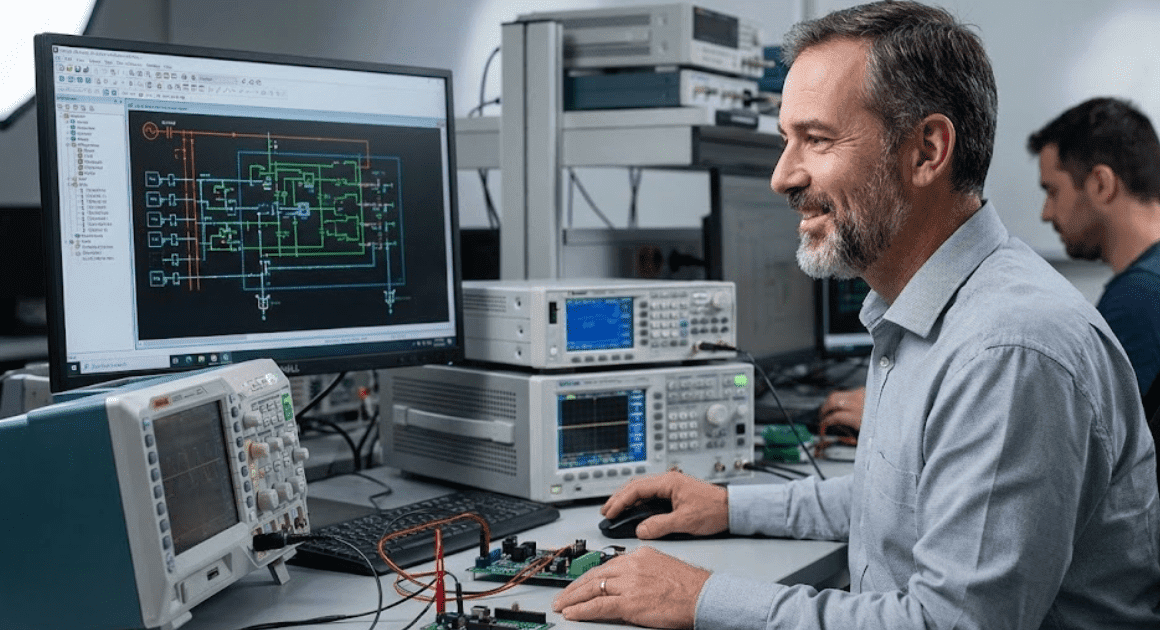
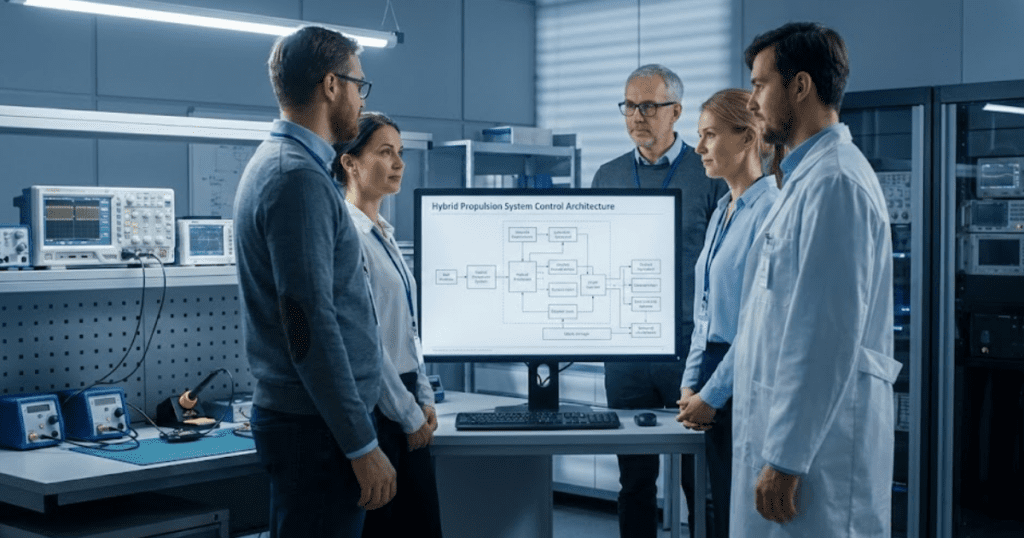
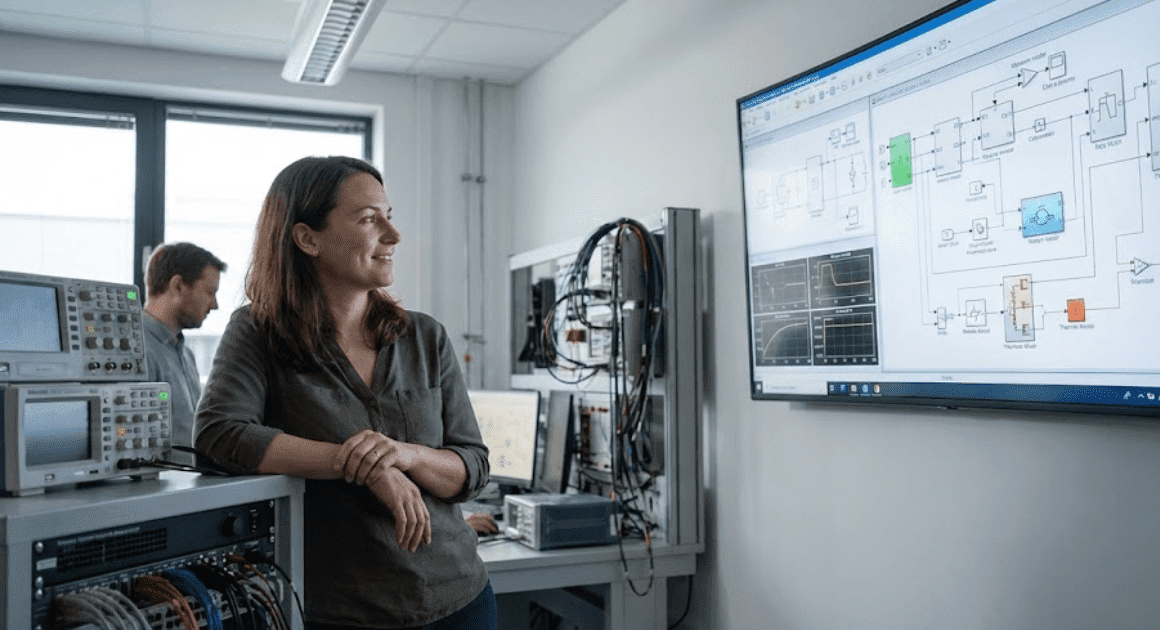
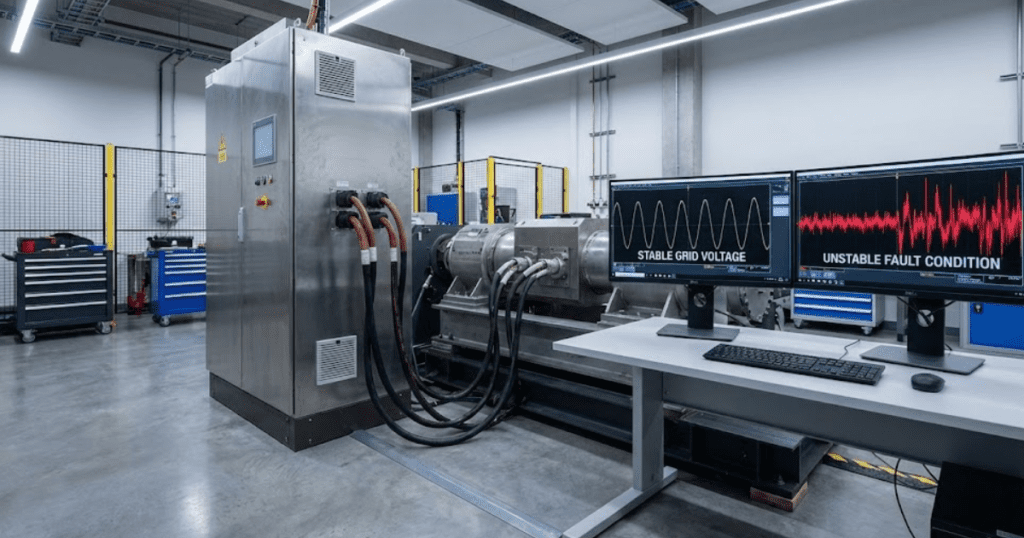
Engineer building real-time power simulation hardware for SPS integration in the OPAL-RT laboratory.
Power Systems

7 Best Practices for Power Supply & Grid Testing

You cannot afford guesswork when a power system reaches the lab. Small oversights ripple through converter controls, protection logic, and firmware, causing costly rework. Teams that plan tests with care catch issues earlier, shorten cycles, and keep budgets intact. Clear methods, high-fidelity models, and disciplined execution turn risk into reliable results.

Engineers tell us the toughest part is balancing depth of testing with schedule pressure. A structured approach aligns requirements with models, hardware, and data, so each test pays off. That structure also improves traceability across simulations, hardware-in-the-loop setups, and field validation. The outcome is a safer grid connection, stronger designs, and fewer surprises during commissioning.

Why reliable power systems testing matters for engineers

Reliable power systems testing protects schedules, reputations, and assets. Converter controls for renewable plants, microgrids, and traction platforms depend on measured behaviour that matches models. Test rigs that drift, clip, or miss events create blind spots that surface late during integration. Rigorous methods tie requirements to acceptance criteria, so measurements map cleanly to design intents. Teams then know which risks are retired, and which require deeper study.

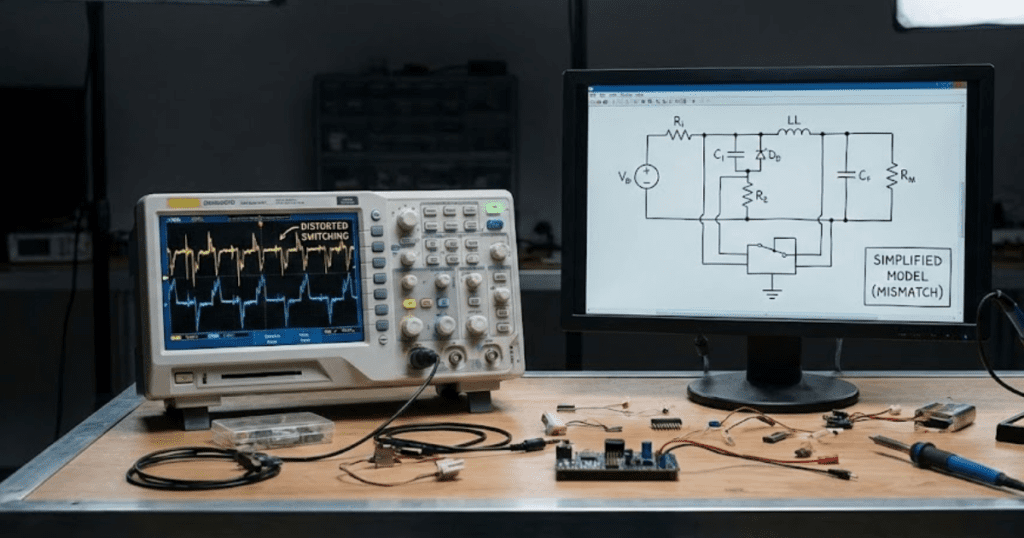
Data quality sits at the centre of this conversation. Oscilloscope bandwidth, sensor linearity, time synchronisation, and time-step resolution shape what you can trust. Power-hardware limits, such as voltage slew and current ripple, also influence what failures appear in the lab. Treating the test bench as a system, with calibration, version control, and documented limits, reduces ambiguity. A disciplined approach to power systems testing creates shared confidence across engineering, quality, and leadership.

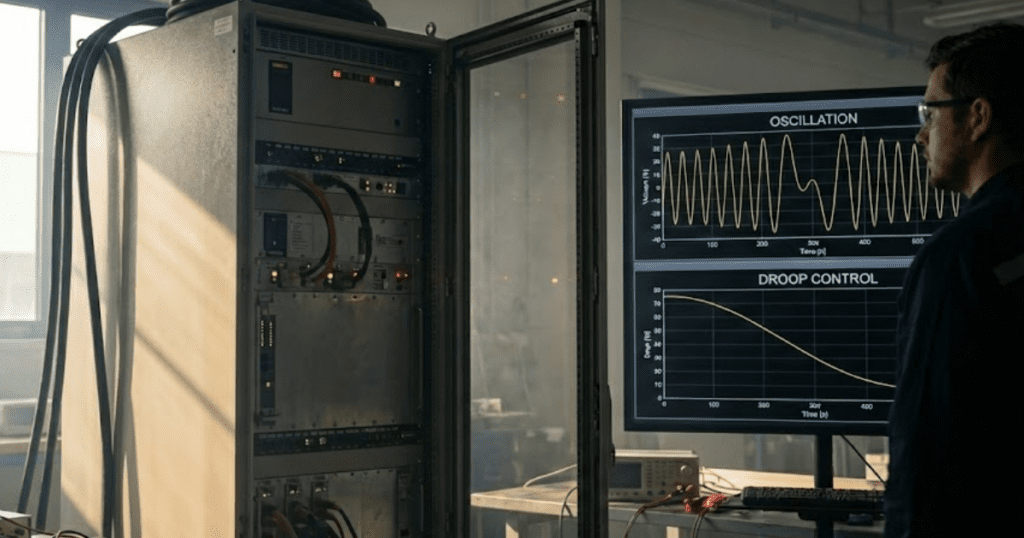
Small oversights ripple through converter controls, protection logic, and firmware, causing costly rework.

7 best practices for power supply and grid testing today

Practical habits separate dependable test labs from labs that burn time on retests. Clarity in objectives, faithful modelling, and disciplined execution all show up in cleaner data. When teams align power hardware, controls, and analytics, issues surface earlier and cost less to address. Lessons from grid integration, converter validation, and protection studies point to a repeatable playbook.

1. Define clear objectives before setting up a power supply test system

Start with a single sentence objective per function under test, written in measurable terms. Define signals, ranges, and timing, then tie each item to an acceptance criterion and a record format. Clarify the role of the power supply test system, including limits on slew rate, sinking capability, and fault clearing. Agree on what success looks like for protection trips, control loops, and efficiency windows, so judgement calls do not derail reviews. This discipline prevents scope creep and reduces retest churn.

Translate objectives into a test matrix that maps scenarios to equipment, models, and data fields. Think through transient events such as cold starts, brownouts, and grid faults, and include time alignment rules. State how you will separate controller bugs from plant modelling gaps, because that choice shapes next steps. Decide how you will handle outliers, saturation, and missing data before the first run to keep debates short. Clear objectives turn every hour on the bench into proof, not speculation.

2. Use high-fidelity models to capture complex power system behaviours

Model depth must match the questions you need to answer. Switch-level detail captures pulse width modulation edge effects, dead time, and non-linearities in magnetics. Average-value models run faster and help screen control choices before investing compute on detailed runs. Parameter identification from measured impedance, thermal coefficients, and sensor offsets keeps models honest. High-fidelity modelling closes the loop between design intent and measured behaviour.

Pick time steps so that switching events, current ripple, and protection delays are resolved without aliasing. Validate models against bench data using the same filters, sampling rates, and window lengths used during tests. Document solver choices, convergence settings, and configuration versions to support repeatability across the team. For grids, represent short-circuit strength, harmonic impedance, and frequency drift to probe controller margins. Models that expose stress paths reveal failure points long before a prototype hits a power bus.

3. Validate grid interactions under different operating conditions

Grid conditions vary through voltage steps, frequency offsets, and fault events, so tests must span that range. Check grid-following and grid-forming behaviours, including phase-locked loop stability and current limiting. Study ride-through during low-voltage events, including symmetric and asymmetric dips across realistic durations. Evaluate behaviour under weak grid conditions where short-circuit ratios fall and resonances appear. These scenarios surface coupling between control loops, passive filters, and protection devices.

Measure harmonics with windows that match relevant norms, and check interharmonics that can trip protections. Probe islanding detection, reconnection timing, and soft-start sequences to validate controller sequencing. Record sequence components, flicker indices, and point-on-wave timing to support root cause analysis later. Vary cable lengths, transformer tap positions, and grounding schemes to capture layout effects that models may miss. Results from these tests guide filter tuning, controller gains, and protection settings.

4. Incorporate hardware-in-the-loop methods to reduce project risk

Hardware-in-the-loop (HIL) links real controllers with simulated plants, so logic faces realistic feedback without high energy risk. Teams can iterate control code, fault responses, and timing paths while keeping people and equipment safe. Fast real-time solvers exercise protections at microsecond scales, revealing edge cases that software-only runs miss. Input and output (I/O) fidelity matters, so treat converters, sensors, and PWM capture with the same care used on the bench. 

HIL lets you shake out race conditions, configuration mistakes, and latency assumptions before energising a prototype.

Build tests as reusable sequences that run first in HIL, then on power hardware, using shared datasets and scripts. Maintain timing budgets that cover computation, communication, and signal conditioning, and log them as part of results. Model faults, parasitics, and sensor saturation to test protective actions under stress, not just nominal conditions. Synchronise HIL with measurement equipment using deterministic triggers to support time-correlated analysis. This workflow de-risks first energisation, and accelerates closed-loop validation with fewer surprises.

5. Apply standardized testing procedures to improve repeatability

Standardized procedures reduce interpretation, which improves trust between teams, suppliers, and auditors. Map each requirement to a documented method that includes setup diagrams, calibration steps, and acceptance ranges. Reference norms such as International Electrotechnical Commission (IEC) and Institute of Electrical and Electronics Engineers (IEEE) where appropriate, then record any justified deviations. Keep scripts under version control, and log firmware, model versions, and equipment serials in every dataset. Consistent methods make results portable across facilities and projects.

Write procedures with clear recovery steps for aborted tests, instrument faults, and out-of-range conditions. Include pre-test checklists for sensor zeroing, wiring verification, and trigger alignment, so teams catch issues early. Define naming conventions for channels, files, and units to stop errors before they enter analysis. Review procedures through peer runs, and update them based on observed failure modes, not anecdotes. Repeatability rises when process discipline equals design discipline.

6. Leverage power system testing services for specialized expertise

Complex programmes sometimes need skills or equipment that sit outside your lab. Power system testing services bring accredited methods, specialised fixtures, and staff who run these tests every day. External teams can stress equipment at power levels, voltages, or fault currents that are impractical to host on site. They also give an independent view on results, which helps settle discussions and clarify next steps. Selective use of services keeps critical paths moving while internal teams focus on core design work.

Scope the engagement with a written test plan, shared data structures, and a change-control process. Agree on measurement uncertainty, calibration traceability, and acceptance criteria to protect the validity of results. Decide who owns raw data, scripts, and models, and ensure formats support replay within your tools. Set up weekly checkpoints with joint review of anomalies, then fold lessons back into your lab procedures. Power system testing services, used thoughtfully, increase throughput without sacrificing rigour.

7. Invest in scalable power test systems to support future projects

Requirements grow as projects move from prototypes to qualification, so the lab must scale without rewrites. Modular power test systems with flexible I/O, real-time compute, and upgrade paths protect that investment. Look for open interfaces that talk cleanly to modelling tools, data pipelines, and version control. Plan for higher voltage, current, and switching speeds, and confirm that timing accuracy holds at those levels. Systems that scale smoothly cut set-up time across the portfolio, and keep expertise reusable.

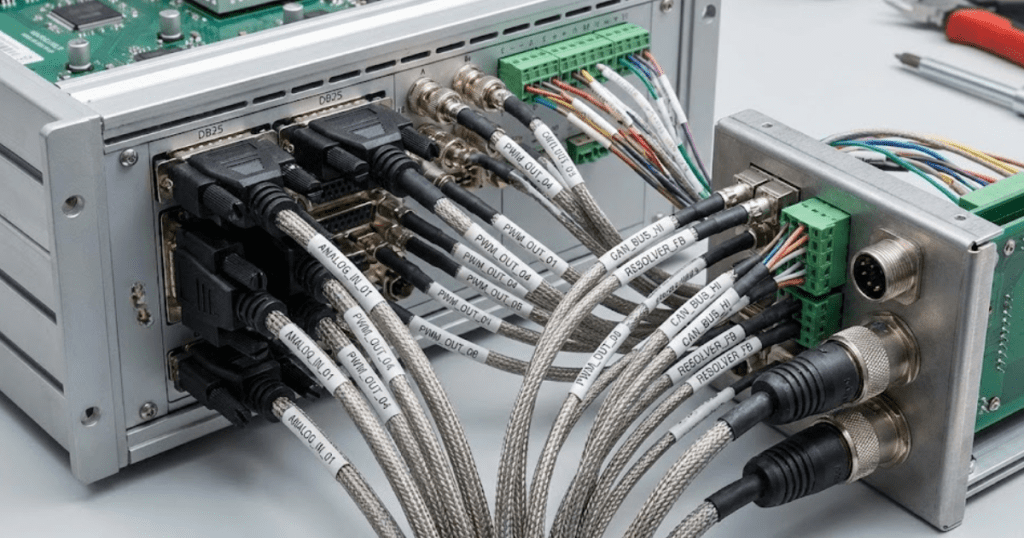
Standardise on signal types, connectors, and data formats, and maintain starter templates for test automation. Adopt asset management that tracks utilisation, calibration dates, and configuration states to keep rigs ready. Design for safe, quick reconfiguration using labelled harnesses, keyed connectors, and documented interlocks. Capture lessons as reference designs for fixtures, controller breakouts, and instrumentation blocks. A scalable platform gives you consistent performance today, and flexibility for the next programme.

Strong testing culture grows from precise objectives, credible models, and disciplined execution. Teams that link methods, tools, and data see faster debug cycles and fewer late-stage surprises. Planning for grid conditions, incorporating HIL, and insisting on repeatable procedures ensure results hold up under scrutiny. When services and scalable platforms complement in-house work, projects stay on schedule, and reliability improves across the fleet.

How testing services and power test systems improve reliability

Outsourced capability and modern platforms shift failure rates in concrete ways. Projects that pair internal strengths with targeted external expertise clear bottlenecks sooner. Shared methods and data formats allow service results to feed your models and reports without rework. The combined effect appears as cleaner measurements, steadier schedules, and fewer engineering escalations.

  • Independent validation: An outside lab using power system testing services can replicate your tests with different equipment and staff. Matching outcomes improves confidence that methods are sound, and exposes process gaps that deserve attention.
  • Access to high-energy equipment: Many services operate facilities that deliver higher voltage, current, or fault energy than a typical in-house bench. This capacity helps you verify margins at levels your safety rules or footprint cannot support.
  • Repeatable automation: Modern power test systems ship with scripting interfaces, scheduling, and result schemas that reduce human variation. Reusable sequences cut set-up time, support unattended runs, and feed analytics with structured data.
  • Faster issue isolation: Service providers often maintain reference fixtures and known-good controllers to A/B suspect behaviour. Swapping pieces methodically reveals whether a symptom traces back to firmware, plant response, or instrumentation.
  • Compliance confidence: Accredited power system testing services maintain calibration chains and documented uncertainty budgets. That discipline translates into evidence that stands up to design reviews, audits, and customer acceptance.
  • Scalable throughput: When several rigs share the same power test systems architecture, your team can split work across benches without rewriting procedures. Consistency across hardware reduces learning curves, and helps new engineers contribute sooner.

Reliability improves when equipment, methods, and people pull in the same direction. External facilities extend your reach, while internal platforms preserve hard-won knowledge and scripts. Shared data standards stitch these parts into a single flow, which lowers cost and shortens rework cycles. Teams then spend more time improving designs, and less time chasing test issues.

How OPAL-RT supports your power system testing goals

OPAL-RT helps you test faster, with confidence that results reflect the physics you expect. Our real-time digital simulators and Hardware-in-the-loop (HIL) platforms combine tight latency, deterministic input and output (I/O), and flexible model integration. You can connect controllers to detailed plant models, inject grid faults at precise times, and capture responses without risking expensive prototypes. Open toolchains align with common model-based design environments, Functional Mock-up Interface (FMI) and Functional Mock-up Unit (FMU) standards, and scripting languages that your team already uses. The result is a lab set-up that scales from early control tuning to grid compliance studies without constant rewrites.

Our platforms support precise time steps, high-channel-count I/O, and Field-programmable gate array (FPGA) acceleration for plant solvers that need microsecond fidelity. You can script repeatable sequences, manage configuration states, and export structured data that feeds dashboards and reports. Services and training fill gaps when you need method guidance, performance tuning, or help standing up a new bench. Global support teams respond quickly with practical answers, so your projects keep moving with fewer delays. Choose OPAL-RT when dependable testing, grounded advice, and long-term partnership matter most.

FAQ

The best way to confirm proper setup is to define objectives that match your testing requirements and measure signals against those expectations. Calibration of sensors, time synchronisation, and verification of protection sequences are critical steps that help you trust your data. You should also validate that your test ranges align with the equipment’s capabilities to avoid false outcomes. OPAL-RT provides real-time digital simulators that help you confirm these conditions before you put hardware under stress, giving you added confidence in your results.

Models need to match the complexity of the behaviours you are trying to validate, from switching events to grid interactions. Using detailed models when studying converter protections or grid disturbances allows you to capture interactions that average-value models might miss. Verification against bench data ensures that parameters such as impedance and timing are realistic. OPAL-RT supports high-fidelity modelling with real-time precision, so you can rely on results when moving from simulation to hardware.

Some tests require equipment or conditions that are too costly or impractical to replicate in your lab. Power system testing services can provide accredited facilities, higher energy levels, and independent validation that help accelerate progress. External expertise also helps isolate root causes more efficiently when troubleshooting. OPAL-RT complements these services with platforms that let you replicate results internally, ensuring continuity between external validation and in-house development.

As project requirements grow, your testing platforms must keep up with higher voltages, currents, and faster switching devices. Scalable power test systems allow you to expand capacity without rewriting procedures or investing in entirely new infrastructure. Modular architectures make it easier to standardise processes and maintain repeatability across programmes. OPAL-RT provides scalable solutions designed to grow with your projects, protecting your investment and helping you maintain consistent performance.

Hardware-in-the-loop testing connects actual controllers with simulated plants so you can evaluate timing, protections, and stress conditions without damaging equipment. It reveals edge cases and timing assumptions that are often missed in software-only tests. This method also reduces cost by limiting the number of risky first-power events needed on the physical bench. OPAL-RT specialises in real-time HIL platforms that replicate complex conditions at microsecond fidelity, helping you de-risk projects earlier in the cycle.

Simulation

6 Simulation Tools Every Electrical Researcher Should Know

Key Takeaways

  • Advanced simulation software provides a controlled, cost-efficient way to test electrical systems under complex conditions long before hardware is built.
  • Real-time and hardware-in-the-loop testing connect digital models directly with controllers, revealing timing and stability issues that static analysis cannot expose.
  • Selecting the right power system simulation software depends on study goals, fidelity requirements, and integration with existing toolchains.
  • OPAL-RT provides real-time precision, flexible integration, and trusted technical support that help researchers validate and scale electrical projects with accuracy.

You should not have to guess if your model will hold up in the lab. Electrical projects move on tight schedules, and every test needs repeatable, defensible results. Simulation is where ideas meet measurable behavior, long before hardware budgets are committed. When your models are trusted, you move faster, reduce risk, and deliver with confidence.

Teams ask a lot of their tools, from high‑fidelity solvers to real-time execution under tight hardware‑in‑the‑loop (HIL) constraints. That pressure only grows as grids become more distributed, converters switch faster, and controllers get more complex. The right setup gives you clarity on performance limits, corner cases, and interoperability, without wasting lab time. Clear, trusted results come from tools that fit how you test, share, and scale.

Why electrical researchers rely on advanced simulation software

Complex power and control systems cannot be validated on intuition alone. Field trials cost money, disrupt schedules, and rarely cover every relevant fault path. High‑fidelity electrical simulation software lets you observe the consequences of parameter changes, topology decisions, and control updates before you commit. You can sweep operating points, probe edge cases, and compare solver options, all while capturing evidence that stands up to review.

A good toolchain also supports collaboration, traceability, and reuse. Teams can store models in version control, review diffs, and align on a common set of assumptions. Test engineers can reproduce controller bugs with shared seeds and inputs, then hand verified fixes back to design. That workflow tightens feedback loops and keeps your effort focused where it delivers the most value.

How simulation supports real-time power system testing and validation

Offline studies guide architecture and component sizing, but closed‑loop confidence comes from real-time testing. With hardware‑in‑the‑loop (HIL), your physical controller runs against a digital twin that reproduces the plant response on a deterministic schedule. That setup exposes timing sensitivities, interrupt-handling issues, and interface errors that static analysis misses. You learn how the controller behaves under noise, transients, and fault events, with logs you can replay frame by frame.

Real-time platforms give you the speed to hit sub‑millisecond time steps, the I/O to connect safely, and the tooling to script repeatable test sequences. You can perform protection studies, power electronics validation, and grid‑connected converter tests without putting equipment at risk. When a case reveals a weakness, you iterate on the model and re‑run the test without waiting for scarce lab slots. The result is stronger designs and cleaner compliance evidence.

“Simulation is where ideas meet measurable behavior, long before hardware budgets are committed.”

6 simulation tools every electrical researcher should know

Choosing a platform shapes how you model, the solvers you trust, and the test coverage you achieve. Your selection also affects how easily you share work across research groups, labs, and suppliers. Many teams standardize on a few tools to balance depth with interoperability. A careful pick today saves rework when projects scale.

1) SPS Software (formerly SimPowerSystems)

SPS Software is a dedicated library for building, simulating, and analyzing electrical power systems and power electronics. It provides ready‑made blocks for machines, converters, transformers, transmission lines, and measurement devices, which speeds up model assembly without custom code. The powergui block controls solver settings so you can switch between phasor‑domain studies for long duration dynamics and discrete electromagnetic transient simulation for waveform‑level detail. That flexibility lets you move from topology choices to controller validation using one model and a consistent interface. As electrical simulation software, it fits researchers who want tight alignment with workflows and a short path to scripting and automation.

Researchers use SPS when they need a mix of network‑scale studies and device‑level detail without leaving Simulink. Phasor simulation scales well for large feeders and long time windows, while discrete electromagnetic transient (EMT) captures switching behavior, commutation, and protection timing with higher fidelity. For hardware‑in‑the‑loop (HIL) or real-time targets, setting the network to discrete mode with a fixed sample time is important, and trimming stiff parasitics keeps simulations stable. When switching‑level fidelity is required in HIL, many teams pair SPS circuit models with OPAL‑RT RT‑LAB using ARTEMiS or eHS so computation runs predictably on central processing unit (CPU) or field‑programmable gate array (FPGA) targets. It remains a practical power system simulation software for feeder studies and converter validation across many project stages.

Many researchers begin with MATLAB simulations and build full systems in Simulink using block diagrams that align with control thinking. This toolset supports time‑domain studies, frequency‑response analysis, and code generation when you need to move to embedded targets. Model libraries speed up common tasks such as pulse‑width modulation (PWM) generation, sensor modeling, and filter design. You also gain tight scripting for test automation, parameter sweeps, and results management.

For power systems, Simscape Electrical and related libraries provide sources, machines, power electronics, measurements, and network elements. You can prototype converters, drives, and grids with detailed switching or averaged models, then switch solver modes to match your time‑step constraints. Co‑simulation with other tools helps when you need EMT detail in one domain and faster dynamics elsewhere. The ecosystem supports a wide range of toolboxes, so you can extend capabilities without rebuilding your workflow.

“A balanced toolkit lets you combine offline speed, EMT detail, and real-time HIL.”

3) OPAL‑RT RT‑LAB

OPAL‑RT RT‑LAB focuses on real-time execution for HIL and controller prototyping. You build models in familiar tools, then partition and deploy them to central processing unit (CPU) and field‑programmable gate array (FPGA) targets with deterministic scheduling. That approach lets you run sub‑microsecond switching models, interface with physical input/output (I/O), and script repeatable test scenarios. Engineers use it to exercise protections, verify control stability, and stress power converters without risking hardware.

RT‑LAB integrates with Functional Mock‑up Interface (FMI) and Functional Mock‑up Unit (FMU), Python, and Simulink for flexible model import and automation. Teams benefit from low‑latency I/O, rich signal capture, and utilities for scenario playback, fault insertion, and data export. You can map compute budgets to the right hardware, starting small and scaling as complexity grows. The emphasis on real time accuracy gives you confidence when moving from offline studies to closed‑loop tests.

4) PSCAD

PSCAD is widely used for electromagnetic transient (EMT) studies where switching detail, waveforms, and fast events matter. The interface centers on schematics, playback, and time‑series instrumentation, which supports careful validation of converters, machines, and protection. It shines when you need to study steep front transients, insulation stress, and detailed network interactions. Many utility and research teams rely on it for point‑on‑wave studies and high‑fidelity replication of fault events.

You can construct detailed models of power electronic interfaces, high‑voltage direct current (HVDC) links, and complex grids, then capture the effects of control interactions and non‑linear devices. Parameter sweeps and scripted studies help quantify sensitivities and margins. Import and export options support broader workflows with planning software, controller models, and custom scripts. The focus on EMT fidelity makes it a strong choice for projects where waveform detail drives decisions.

5) DIgSILENT PowerFactory

DIgSILENT PowerFactory serves planning, operations studies, and detailed analysis across transmission and distribution. It offers load flow, short‑circuit, protection, small‑signal, and time‑domain simulations under a single model representation. You can maintain study cases for multiple scenarios and seasons, then compare results with consistent data sets. Engineers value the rich library of elements and the ability to customize models for advanced tasks.

The platform supports scripting, data exchange, and co‑simulation when you need to link to external solvers or controller models. Time‑series analysis helps quantify hosting capacity, voltage regulation strategies, and distributed energy resources (DER) integration. Protection coordination studies benefit from device models, selectivity checks, and automated reports. That breadth allows a single model to answer many study questions across a project lifecycle.

6) OpenDSS

OpenDSS is an open-source power system simulation engine maintained for distribution studies. Researchers use it for feeder analysis, hosting capacity, voltage control, and time‑series scenarios with large sets of distributed energy resources. The scripting interface, Component Object Model (COM) automation, and Python bindings support repeatable workflows and batch studies. You can build validation pipelines that import feeder models, apply profiles, and export results for dashboards.

Because OpenDSS is open, you can inspect algorithms, modify source code, and create extensions that match your study needs. That transparency helps with peer review, reproducibility, and long‑term maintenance. Many teams pair OpenDSS with data science tools to process advanced metering infrastructure (AMI) data, weather inputs, and inverter schedules. It is a practical way to stand up scalable studies without costly licenses when budgets are tight.

A balanced toolkit lets you combine offline speed, EMT detail, and real-time HIL. Some projects rely on one platform from start to finish, while others split tasks across solvers and platforms. Interoperability reduces friction as models pass from concept to lab and back again. Your selection should reflect the studies you run most often, not just the features that look impressive at first glance.

How to choose the right power system simulation software for your project

Picking power system simulation software feels easier when you anchor on study goals, constraints, and team skills. Start with the physics that must be captured, then match solvers to the time scales involved. Map the path from offline analysis to real-time validation if HIL is on your roadmap. Treat integration effort as a first‑order requirement, not an afterthought.

  • Study type and fidelity requirements: Decide if you need phasor‑domain speed, EMT waveform detail, or both. The required time scales drive solver choice, time step targets, and model complexity.
  • Real-time and HIL readiness: Confirm that models can be partitioned and executed deterministically with your controller and I/O. Verify that the tool supports your latency limits, scheduling, and safety interlocks.
  • Toolchain compatibility and standards: Check Functional Mock‑up Interface (FMI) or Functional Mock‑up Unit (FMU) support, Python or MATLAB APIs, and co‑simulation hooks. Interoperability protects prior work, helps with peer review, and reduces rewrite risk.
  • Licensing model and total cost: Account for licenses, support, hardware, and training. Include the opportunity cost of slow iteration, long debug cycles, and blocked lab time.
  • Model management and reproducibility: Look for scripting, headless runs, and clean integration with version control. Reproducible studies save time, improve trust, and simplify collaboration across teams.
  • Performance and scalability: Assess multi‑core, graphics processing unit (GPU), or FPGA acceleration options, along with profiling tools. Growth headroom matters when models expand or real-time targets tighten.
  • Support, learning, and community resources: Evaluate documentation quality, example libraries, and responsiveness of support teams. Strong resources shorten onboarding and reduce mistakes.

A clear decision framework prevents tool sprawl and duplicated effort. Your choice should shorten the path from study idea to verified result, not add friction. Keep a small set of primary tools, and define when to hand a case to a specialized solver. Revisit the decision annually to confirm your needs are still being met.

“Best” depends on what you need to study, the fidelity required, and how far you plan to go into real time testing. Many teams start with MATLAB and Simulink for control design, add switching‑level detail with an electromagnetic transient platform, and move into HIL as controllers mature. Planning and protection groups often favor tools that keep one network model across load flow, short‑circuit, and time‑series studies. Distribution researchers may add OpenDSS for feeder‑scale analysis with flexible scripting. The strongest setup is the one that reduces rework, preserves traceability, and gets you to defensible results faster.

Real time targets require deterministic execution, low‑latency I/O, and tooling that partitions models across CPU and FPGA. Platforms such as OPAL‑RT RT‑LAB are designed for this use case and integrate with controller hardware, test automation, and signal capture. The key is matching solver selection, time steps, and I/O timing to your controller limits. Offline tools can still contribute by preparing models that convert cleanly into real time subsystems. A good decision keeps the modeling effort portable, so you do not rebuild when you move into HIL.

Hardware‑in‑the‑loop connects your controller to a digital twin that runs on a fixed schedule, then measures how the controller behaves under stress. You can inject faults, vary operating points, and test protections without risking equipment. Latency, jitter, and communication behavior become visible, which often reveals issues hidden in offline runs. Because scenarios are repeatable, teams can reproduce bugs and confirm fixes with confidence. The process turns lab time into structured evidence rather than one‑off experiments.

The main difference between EMT and phasor‑domain simulation is waveform detail versus averaged behavior. EMT solvers compute instantaneous voltages and currents at small time steps, which capture switching, high‑frequency dynamics, and steep transients. Phasor‑domain studies represent signals as magnitudes and angles, which run faster and suit planning, load flow, and many time‑series tasks. Projects often use both, reserving EMT for cases where waveform detail drives design choices. The right pick depends on the physics you must see and the time you can spend per case.

Open source tools can handle feeder models, time‑series profiles, and batch studies while keeping costs contained. Many researchers use OpenDSS for distribution analysis, then link results to data science notebooks for scenario generation and plotting. The transparency helps with peer review and long‑term maintenance, especially in academic and public‑sector projects. When real time testing is required, models can be exported or recreated in platforms designed for HIL. The mix keeps budgets under control while still meeting study needs.

OPAL-RT engineers discussing real-time power system models at a whiteboard filled with electrical calculations.
Simulation

9 Benefits & Applications of Electrical Simulation

Electrical simulation lets you test, tune, and trust your design long before hardware arrives. When you can iterate in software, you remove guesswork and cut back on costly rework. Your data gets stronger, your confidence grows, and your team stays focused on outcomes that matter. That is how programmes stay on schedule and projects move from idea to validated system.

Engineers, researchers, and technical leads across energy, aerospace, automotive, and academia need proof under constraints. Budgets are tight, lab time is scarce, and hardware is never as early as you want it. Simulation closes those gaps by giving you a safe, rapid, and measurable path from concept to controller. With the right tools, you gain repeatability, traceability, and clarity across every phase.

Why electrical simulation is essential for power system design

Electrical simulation strengthens engineering workflow at every step of power system design. Early in a project, it clarifies requirements and boundary conditions, so your team avoids costly false starts. As designs mature, it offers a controlled setting to test controls, study interactions, and predict response to faults or unusual operating points. Late in the cycle, it supports validation against standards and improves handoff to test rigs and field trials.
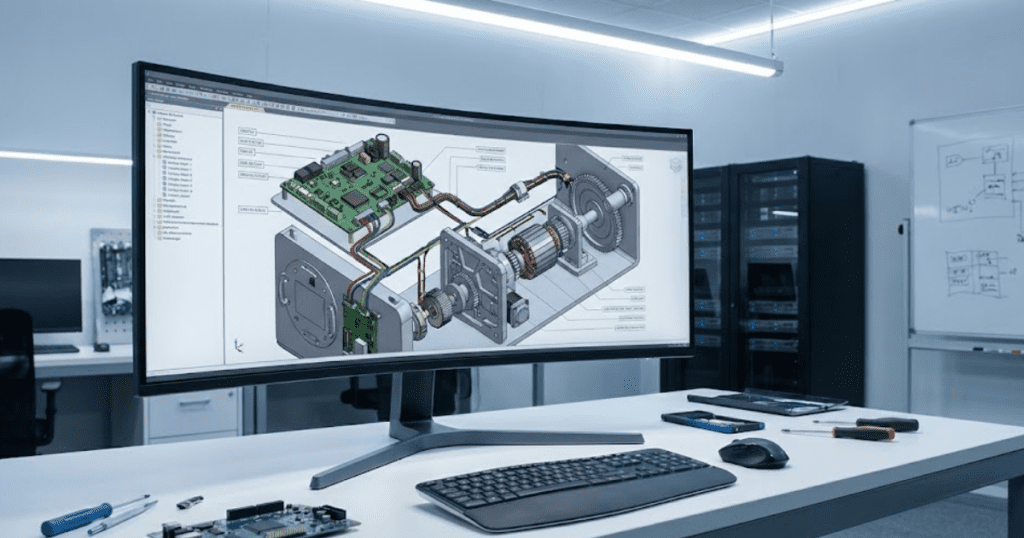
For electrical power systems, the stakes are high because interactions between components can be nonlinear, fast, and tightly coupled. Grid codes, safety constraints, and performance targets create a narrow window for acceptable behaviour. Simulation lets you probe outside that window without risk, then guide the design back into a safe and efficient zone. The result is less uncertainty, faster learning, and higher assurance when hardware finally arrives.

9 benefits of electrical simulation for engineers and researchers

Effective teams rely on repeatable methods, trusted data, and rapid feedback that keeps projects on track. Electrical simulation delivers those qualities through validated models, real-time execution options, and rich analysis workflows. You reduce reliance on scarce lab resources and gain the ability to test many more scenarios than physical hardware would ever allow. Stronger coverage, better insight, and clear traceability translate into measurable gains across quality, cost, and schedule.

1. Improves accuracy in electrical power systems analysis

Accurate models sharpen your understanding of electrical power systems and reduce surprises during integration. With parameter identification and system identification methods, you can calibrate models against measured data. That process helps expose hidden assumptions, fix unit errors, and align control targets with physical limits. When models match reality, your simulations become a trustworthy guide for design choices.

High fidelity is not only about detailed component equations but also about the quality of operating scenarios. Load profiles, network contingencies, and switching events must reflect plausible conditions to produce reliable results. Simulation lets you sweep through parameter ranges to stress the design and quantify margins. You end up with traceable evidence that supports safety cases, standards compliance, and internal reviews.

2. Reduces cost and time of physical prototyping

Virtual prototypes let you evaluate architecture decisions before committing to boards, cabinets, or field wiring. You can compare topologies, control strategies, and component ratings with minimal expense. That early clarity avoids excess capital tied up in hardware iterations and saves lab time for the most promising options. Teams that simulate first also find integration issues sooner, when fixes are cheaper and quicker.

Procurement delays and supply constraints often limit how fast a physical prototype can advance. Simulation keeps progress moving while parts ship, reducing idle time for engineers and testers. You can refine control code, validate protection settings, and build automated test suites that later run on hardware. When the prototype shows up, many issues are already resolved, and the build stage moves faster.

3. Enhances performance validation with Electrical modeling software

Electrical modeling software brings structure and consistency to how you validate performance. From block-based modelling to equation-level tools, you can create repeatable test benches that probe efficiency, response time, harmonic content, and stability. These test benches capture requirements as executable checks, so performance expectations remain clear as designs change. Your validation work becomes transparent, reviewable, and easy to audit.

Tool-integrated solvers support multi-rate, switched, and stiff systems that appear often in power electronics and drives. You can pair average models for controls exploration with detailed switching models for waveform accuracy. That mix helps you converge faster, then confirm edge cases with precision. With the right configuration, performance evidence is easy to regenerate and share with technical leaders and auditors.

4. Supports safer electrical system testing before deployment

Testing safety features on physical systems can expose people and equipment to risk. Simulation lets you trigger faults, miswire conditions, and extreme operating points without harm. Protection logic, alarms, and failsafes can be evaluated thoroughly, including timing, selectivity, and recovery behaviour. This approach raises confidence that safety functions will respond correctly under stress.

Hardware-in-the-loop (HIL) adds another layer by running controls against a real-time digital plant. You can validate trip thresholds, isolation states, and restart sequences while hardware sees realistic signals. The test setting stays controlled, repeatable, and observable, which helps teams diagnose issues quickly. Safer experiments lead to quicker learning, fewer incidents, and stronger compliance outcomes.

Electrical simulation lets you test, tune, and trust your design long before hardware arrives.

5. Optimizes renewable energy integration into power systems

Renewable assets introduce variability, inverter-driven dynamics, and grid code requirements that change project complexity. Simulation supports sizing, dispatch strategies, and control tuning for photovoltaic arrays, wind generation, and storage. Grid studies, including short-circuit levels and voltage stability, are easier to conduct repeatedly with consistent conditions. You can analyse impacts at feeder, plant, and transmission levels to guide planning.

Converter control is central to renewable performance, and its tuning benefits from many trials under different conditions. Simulation allows targeted sweeps of irradiance, wind speed, and state of charge to quantify margins. You can test ride-through capability, frequency response, and reactive power support with clarity. The end result is a better plan for interconnection that reduces risk for operations teams.

6. Provides flexibility through advanced Electrical system design software

Electrical system design software gives you the flexibility to adapt models, interfaces, and workflows to each project. Open standards, support for scripting, and import of third-party formats help teams reuse assets they already trust. That flexibility reduces friction between research and test groups, so models stay useful across the programme. When tools adapt to your process, productivity improves naturally.

Integration across design, verification, and HIL is most effective when models serve multiple purposes. The same plant model that guides architecture discussion can feed controller tests and later power hardware tests. With careful configuration, you maintain a single source of truth from concept to validation. That continuity reduces rework, shortens onboarding time, and improves knowledge transfer.

7. Strengthens reliability with predictive fault analysis

Reliability grows when you study failure modes before they show up on a bench. Simulation lets you stage faults at different locations, durations, and severities to learn how systems respond. You can measure recovery time, thermal stress, and control stability after disturbances. That evidence supports design updates that improve robustness without oversizing.

Predictive analysis pairs well with statistical methods that quantify confidence in performance. Monte Carlo studies reveal which parameters drive risk, guiding sensor selection and tolerance targets. You can also evaluate maintenance strategies by testing detection thresholds and alarm logic. The combination of foresight and data reduces unplanned downtime and costly service events.

8. Delivers real-time insights for hardware-in-the-loop applications

Real-time execution brings controller code into contact with a digital plant that behaves like the intended system. Hardware-in-the-loop (HIL) exposes timing bugs, interface quirks, and corner cases that desktop runs may miss. When plant models run on dedicated processors, you can evaluate control tasks at their actual rates. That visibility helps you tune gains, adjust filters, and refine sequencing based on measured response.

Real-time platforms support communication buses, I/O conditioning, and timing that mirror lab setups. Engineers test start-up, shut-down, and fault handling with accurate latency and deterministic behaviour. The work produces evidence that software, hardware, and protection act as a coherent whole. With clearer insight, teams reduce risk before power-up on a high-energy test bench.

9. Expands opportunities for innovation in electrical power systems

When simulation lowers risk and cost, teams have space to try new ideas. You can experiment with novel topologies, adaptive control strategies, and different component mixes without committing to builds. Evidence from these trials helps justify investment in prototypes that truly merit fabrication. Creativity grows when iteration is fast, safe, and measurable.

Innovation also benefits from collaboration across engineering groups, research teams, and labs. Shared models, standard interfaces, and reproducible tests keep everyone aligned on targets. A healthy modelling culture makes it easier to compare approaches and converge on stronger designs. Over time, this practice raises the quality bar across electrical power systems projects.

Effective use of simulation is not only about tools but also about method. Clear requirements, validated models, and disciplined test plans build a steady pipeline of trusted results. Teams that invest in these habits see gains across quality, cost, and schedule. Strong methods, paired with capable platforms, deliver the outcomes stakeholders expect.

Common examples of electrical systems that benefit from simulation

Engineers often ask for practical context, and examples help crystallize where simulation brings the most value. Power electronics, grid applications, and complex controls share similar modelling needs that reward careful study. Effective planning calls for clear test objectives, well-defined operating points, and realistic disturbances. A short sampling of applications shows how these patterns play out from lab to field trials.

  • Microgrids with distributed energy resources: Coordinating storage, photovoltaic arrays, and controllable loads calls for studies of islanding, reconnection, and protection selectivity. Simulation helps size assets, tune droop controls, and verify black start sequences before installation.
  • Electric vehicle powertrains and charging systems: Traction inverters, battery management, and onboard chargers require detailed studies of efficiency, thermal headroom, and electromagnetic compatibility. Simulation supports control development, charger interoperability, and grid impact analysis for depots.
  • Aerospace power distribution and actuation: Weight, redundancy, and strict safety constraints create tight margins for power conversion and distribution. Simulation provides evidence for fault clearing, load sharing, and transient response under flight profiles.
  • Industrial motor drives and converters: High performance speed and torque control relies on precise models of machines, sensors, and power stages. Simulation validates control laws, switching strategies, and protection limits across duty cycles.
  • Protection and control systems for substations: Coordination of relays, breakers, and communication links must be proven for many contingencies. Simulation tests zone boundaries, timing, and sensitivity to ensure dependable clearing without nuisance trips.
  • High-voltage direct current and flexible AC transmission: HVDC links and FACTS devices influence stability, power flow, and voltage regulation across networks. Simulation validates controller interactions, filter design, and converter behaviour across operating ranges.
  • Wind and solar inverter systems: Variable resources introduce fast dynamics and grid code requirements that must be addressed in design. Simulation confirms ride-through capability, reactive power support, and curtailment policies with confidence.

Examples of electrical systems like these demonstrate how careful modelling supports better engineering choices. Strong coverage of operating conditions keeps risk low when projects move to lab tests and field trials. Evidence from simulation also helps align stakeholders on budgets, timelines, and acceptance criteria. Clarity at this stage shortens the path to commissioning and improves long-term reliability.

Real-time execution brings controller code into contact with a digital plant that behaves like the intended system.

How OPAL-RT supports your electrical system simulation needs

OPAL-RT focuses on the challenges you face every day in energy, aerospace, automotive, and academia. Real-time digital simulators with CPU and field-programmable gate array (FPGA) resources give you deterministic performance, precise timing, and repeatable I/O conditions. The RT-LAB software suite connects modelling tools you already use, including MATLAB/Simulink, FMI/FMU, and Python, so teams can keep trusted workflows. Toolboxes such as HYPERSIMeHS, and ARTEMiS help you move from averaged models to switching detail, then into hardware-in-the-loop (HIL) without rework.

For teams building complex controls, OPAL-RT supports model-in-the-loop (MIL), software-in-the-loop (SIL), and HIL validation across power electronics, protection, and grid studies. Open interfaces, broad protocol coverage, and modular I/O let you integrate new rigs or extend existing labs with confidence. Cloud and AI workflows are available for test automation and data management, which speeds analysis and improves repeatability. You get a practical path from concept to physical testing, supported by a partner known for precision and reliability.

FAQ

Electrical simulation lets you compare topologies, test control ideas, and size components before any purchase order. You avoid extra board spins, compressed lab schedules, and emergency rework that sprawl budgets. You also create test benches that carry into hardware, so effort spent early keeps paying off. OPAL-RT helps you reduce cost-to-validate with real-time digital simulators and Electrical modeling software that shorten cycles, improve reuse, and keep teams focused on the best build.

You need fidelity, repeatability, and workflow fit across modelling, verification, and hardware handoff. Look for open interfaces, support for FMI/FMU, and strong latency performance for controller studies. Real-time options matter when you want to move from desktop runs to Hardware-in-the-loop (HIL). OPAL-RT offers open, scalable platforms that slot into your toolchain, helping you cut test time, raise confidence, and preserve traceability across phases.

Start with models that reflect grid codes, protection logic, and realistic disturbance cases. Build automated checks for timing, selectivity, and recovery behaviour, then stress them with fault studies. When the same plant models run in real time, your controllers face conditions that match lab equipment. OPAL-RT supports this path with HIL-ready simulators and Electrical power systems libraries, so you can produce clear evidence, minimise risk, and accelerate approvals.

It clarifies inverter control, energy storage interactions, and plant-level coordination, all before site work. You can assess ride-through, reactive support, and dispatch strategies under changing resource conditions. Detailed sweeps show margins that inform protection, sizing, and interconnection. OPAL-RT provides tools for high-fidelity studies and real-time execution, helping you raise performance while keeping commissioning smooth and predictable.

Once control timing, I/O behaviour, and communication buses affect outcomes, desktop runs stop telling the whole story. HIL exposes task jitter, sensor scaling, and start-up sequences under conditions that feel like the lab. You keep the safety of software while gaining timing accuracy for controllers. OPAL-RT makes this step practical with real-time hardware and RT-LAB integration, so you shorten debug, improve coverage, and reach sign-off sooner.

Team working at computer desks in a modern office environment, focusing on a visible workstation.
Simulation

How to Simulate Smart Grids & Renewable Energy Systems Effectively

Modern power grids are integrating renewable energy, and the only way to do it confidently—without blackouts or budget overruns—is by testing every scenario in high-fidelity simulation beforehand. Renewable capacity is surging worldwide; by 2025, renewable energy is expected to surpass coal as the leading source of electricity globally. Engineers are racing to connect more solar panels, wind farms, and battery systems to the grid, but they face a critical challenge: traditional testing methods cannot keep up with the complexity and speed of these new systems. 

Variable generation and power-electronics-driven resources introduce fast transients and intricate control interactions that static studies or slow simulations often miss. The result? Costly surprises like instability, equipment damage, or project delays can emerge late in development. High-fidelity, real-time simulation has therefore become not a luxury but a necessity for modern grids as it provides a safe, realistic proving ground to catch issues early, optimise designs, and ultimately deploy renewable technologies with confidence in grid stability.

Renewable Grid Complexity Outpaces Traditional Testing Methods

Power grids were once relatively predictable, but the surge in renewables and distributed energy resources has introduced a level of complexity that conventional testing can’t handle. Unlike the slow-moving mechanical generators of the past, today’s inverter-based solar and wind systems react to grid disturbances in milliseconds. A fault or fluctuation in one corner of the network can trigger unexpected behaviour in these fast-acting devices, something many legacy planning models fail to predict. Most utilities have not fully adjusted their studies or equipment settings to account for this new reality, leaving blind spots in reliability planning. In fact, a single line fault in California knocked nearly 1.2 GW of solar generation offline, an incident underscoring how older simulations missed inverter control nuances.

Traditional off-line simulations and sparse field tests struggle to capture such rapidly unfolding events. That’s why grid regulators are now pushing for more advanced modelling approaches. The North American Electric Reliability Corporation (NERC), for example, urges utilities to adopt electromagnetic transient domain analysis, as it can portray fast grid events far more accurately than phasor-type models ever could. In short, renewable-rich grids are outpacing old testing methods, and without new strategies, engineers risk flying blind as they integrate high levels of renewables.

Real-Time Digital Twins Offer a Risk-Free Testing Ground

The solution gaining momentum is the use of real-time digital twins of the power system as a risk-free testing ground. A real-time digital twin is essentially a high-fidelity software replica of the grid (or a portion of it) that runs in sync with actual time. This setup allows engineers to plug in real controller hardware or detailed models of equipment and observe true-to-life performance without any danger to people or infrastructure. Engineers can provoke rare faults, crank up a wind farm’s output abruptly, or simulate a battery inverter’s rapid switching, all to see how the integrated system responds.

It’s no wonder that hardware-in-the-loop (HIL) simulation has become a go-to approach for integrating renewables into the grid. This technique merges physical devices with the digital twin so that new controllers, protection relays, or even power electronics can be tested under realistic grid conditions early in development. HIL lets utilities and vendors refine complex control algorithms in a controlled, repeatable environment long before equipment is installed in the field. Critically, this method also exposes how devices behave during extreme conditions that are impossible or impractical to test on an actual grid. With no risk to actual equipment, teams can iterate endlessly to iron out bugs and optimise settings, confident that the real network will be stable from day one.

High-fidelity, real-time simulation has therefore become not a luxury but a necessity for modern grids—it provides a safe, realistic proving ground to catch issues early, optimise designs, and ultimately deploy renewable technologies with confidence in grid stability.

Best Practices for Effective Smart Grid Simulation

Effective smart grid simulation is not achieved by technology alone as it also requires a thoughtful strategy. Seasoned engineers follow a set of best practices to make sure their simulations truly de-risk projects and yield actionable insights:

  • Use high-fidelity models for critical components: Represent the grid’s behaviour in detail by using electromagnetic transient (EMT) models for anything involving power electronics or fast dynamics. High-fidelity modelling captures fast transients and control nuances that simpler models overlook, ensuring the simulation reflects reality for complex renewable interactions.
  • Incorporate HIL testing early: Don’t wait until final prototyping to involve real hardware. Connect controller hardware or even power equipment to the real-time simulator during development; running real devices in the loop uncovers integration issues in a safe environment instead of during on-site commissioning. Early HIL testing keeps costly surprises out of later project stages.
  • Simulate a wide range of scenarios: Push your digital twin through scenarios ranging from normal operations to worst-case disturbances. This includes sudden loss of generation or load, extreme weather events, and multi-fault scenarios. By exploring these “what if” cases methodically, engineers ensure the grid’s control and protection schemes are robust against extreme conditions.
  • Ensure multi-vendor interoperability: Modern grids often mix equipment from many manufacturers. Use simulation to verify that these components work together. For instance, plug a physical sensor or relay into a real-time simulation to see how it communicates with the grid model. This reveals protocol or timing issues early, ensuring different vendors’ devices truly work in concert.

Following these best practices turns simulation from a theoretical exercise into a powerful decision-support tool. When models are accurate, scenarios exhaustive, and hardware integration tested early, the results of a simulation become something project teams can firmly trust. This rigorous approach directly translates to greater confidence when it’s time to implement changes on the actual grid.

Building Confidence in Grid Innovation with HIL Testing

Catching issues before they hit the grid

Hardware-in-the-loop testing shines at catching problems long before any new grid equipment goes live. Integrating real controllers or control code into a simulated grid lets engineers see how their systems respond under realistic conditions. Software bugs, tuning errors, and hidden interactions often surface during HIL trials—issues that otherwise might only appear during a costly field deployment. Identifying and fixing these problems early means fewer emergency fixes and retrofits later on. This early debugging approach directly shrinks development cycles. HIL simulations have been shown to significantly cut overall development time while still ensuring high system reliability. After HIL testing, teams know their design has been battle-tested virtually, boosting confidence as they move to implementation.

Mastering rare and extreme scenarios

HIL also lets engineers tackle extreme grid scenarios that would be impossible to test on an actual system. For example, operators can simulate a once-in-a-century storm impact on the grid to see how their systems cope. In a controlled real-time simulation, they can trigger a sudden voltage collapse or rapid frequency swing and then fine-tune the control response accordingly. This stress testing reveals how new components behave under duress and whether fail-safes kick in as expected. Engineers can then adjust settings or add safeguards long before such conditions ever occur. In short, even rare “edge case” events are anticipated in these trials, leaving far less uncertainty on the real grid.

Accelerating innovation cycles

Integrating real-time simulation and HIL into the workflow accelerates innovation cycles. Traditionally, developing a new grid control or protection device could take years of repeated design, lab tests, and cautious field trials. Real-time simulation compresses this timeline by allowing concurrent development and testing. Engineers can try new ideas in the digital twin, iterate rapidly, and validate concepts without waiting for hardware prototypes at each step. This approach is already standard in aerospace and automotive development, yielding faster results without sacrificing safety. Now the power sector is following suit—using HIL platforms to prototype complex controls and inverter algorithms in months instead of years. And it’s not just about speed—HIL produces better outcomes. Developers can run far more test cases than would ever be feasible physically, gaining a much deeper understanding of system behaviour. In the end, innovative solutions—move from concept to deployment with full confidence in their reliability.

Following these best practices turns simulation from a theoretical exercise into a powerful decision-support tool.

OPAL-RT Enabling Confident Renewable Integration

That same commitment to rigorous real-time testing drives our work at OPAL-RT, where we’ve always believed engineers should be able to push boundaries in the lab without fearing unforeseen failures. We develop open, high-performance real-time simulators and HIL technology that let users replicate complex electrical networks with high fidelity. These tools give engineers and researchers a safe space to experiment with new control strategies, validate multi-vendor integrations, and prove out designs under all conditions. The goal is simple: when it comes time to implement solutions on the actual grid, nothing comes as a surprise.

This perspective—that real-time simulation is fundamental rather than optional—has guided us from the start. As grids incorporate more renewables, we collaborate with utilities and manufacturers to ensure our simulation platforms meet their most demanding needs. By providing flexible hardware-in-the-loop systems and high-fidelity digital models, we help projects deploy new technologies. Ultimately, our mission is to empower energy innovators to move forward with confidence, knowing thorough simulation paved the way for success.

FAQ

You can usually tell if real-time simulation is needed when your system involves power electronics, inverter-based resources, or complex multi-vendor integrations. Traditional testing often misses fast transient responses, leaving gaps that only high-fidelity models can capture. Real-time simulation allows you to uncover these hidden risks before field deployment. With OPAL-RT, engineers gain a safe testing ground that validates designs under realistic conditions while reducing costly surprises.

Digital twins create a living replica of your system that reacts to inputs and disturbances in real time. This means you can safely test faults, extreme conditions, or new algorithms without risking physical equipment. A properly built digital twin makes it easier to validate interoperability across different devices and manufacturers. OPAL-RT provides digital twin platforms that give you this clarity, helping ensure that grid integration efforts succeed the first time.

Hardware-in-the-loop testing bridges the gap between theory and practice by connecting physical devices to a simulated grid. This exposes hidden interactions, communication issues, and performance shortfalls long before the equipment is deployed. It’s a reliable way to stress test controllers and relays under extreme scenarios. OPAL-RT helps you do this with flexible, open systems that make HIL a core part of grid project workflows, reducing delays and protecting investments.

Yes. When you use simulation to test control strategies, validate protection schemes, and evaluate interoperability early, you avoid late-stage rework. Iterating virtually is faster and safer than waiting for prototypes or field trials. This approach allows you to try out far more scenarios than you could physically, accelerating design cycles. OPAL-RT supports this acceleration with high-fidelity tools that let you deliver renewable integration projects on tighter schedules with confidence.

The outcomes you should expect include improved stability, fewer commissioning issues, and smoother integration of renewable resources. Engineers can catch hidden issues early, validate multi-vendor setups, and fine-tune responses to rare events. The net effect is better reliability and reduced costs over the project lifecycle. OPAL-RT helps you achieve these outcomes by providing proven real-time simulation platforms that give you confidence from development to deployment.

Engineer operating computer hardware while analyzing data on a connected monitor.
Industry Application, Power Systems

Simulation is the Silent Backbone of Modern Electrical Engineering

The ability to safely test complex electrical systems virtually is now essential. Engineers face pressure to deliver new technologies on schedule and on budget, and they rely on high-fidelity real-time simulation (such as Hardware-in-the-Loop testing) to meet those demands. When engineers iterate designs in a virtual playground, teams expose their systems to extreme scenarios risk-free, fix issues early, and shorten development cycles without compromising safety. As computing power has soared and costs have fallen, simulation tools have dramatically improved in performance and become widely accessible, giving even small teams capabilities once reserved for the largest players. The result is that simulation has quietly become the essential foundation empowering modern electrical engineering breakthroughs.

Simulation quietly powers every modern electrical engineering breakthrough

Major industries developing next-generation electrical technology all share a secret: they use simulation behind the scenes to drive rapid innovation. Across energy, automotive, aerospace, and beyond, engineers use real-time digital models to design, stress-test, and refine systems long before physical prototypes are built. This silent reliance on simulation enables breakthroughs that would be unattainable with traditional methods.

Every cutting-edge electric vehicle, modern power grid upgrade, or advanced aircraft system owes its success to one quiet hero keeping development on track: simulation.

Smarter, more resilient energy systems

Grid operators and energy researchers depend on simulation to modernize electric power systems. For example, national lab testbeds can run full-scale power network models in real time, allowing utilities to validate new distributed energy resource controls in a realistic lab setting before field deployment. This allows engineers to identify stability risks and fine-tune controls without risking outages. Teams can even unleash simulated lightning strikes and surges on a virtual grid to see how the system responds, all with zero danger to real equipment. This approach has become instrumental in integrating renewable generation and ensuring future grids remain stable under all conditions.

Accelerating electric and autonomous vehicles

Automotive innovators have embraced simulation as a core tool for vehicle development. Automakers and research labs run countless virtual driving hours to test new electric vehicle powertrains, battery management systems, and autonomous driving software under every imaginable condition. Instead of waiting for costly prototypes, engineers connect real components like engines or batteries to virtual car models and watch how the entire system behaves in a simulated drive cycle. By finding design flaws early and fine-tuning control software virtually, teams reduce late-stage fixes and improve safety—today’s vehicles are more reliable because subsystems were perfected in simulation first.

Mission-critical aerospace and defense applications

When lives and enormous investments are on the line, aerospace and defense engineers turn to real-time simulation to assure reliability. Every new aircraft flight control system or space vehicle undergoes exhaustive simulated missions on the ground to iron out bugs before launch. Hardware-in-the-loop (HIL) simulators are powerful tools in these domains, forcing autopilot and guidance systems to operate in life-like simulated flights to verify they perform flawlessly. Developers can intentionally trigger sensor errors, extreme weather, or equipment malfunctions in a simulated environment to ensure avionics respond correctly. From fighter jets to spacecraft, simulation quietly guarantees that cutting-edge designs will work as intended when it counts, giving engineers and stakeholders confidence in each mission’s success.

Traditional testing falls short as systems grow more complex and high-stakes

Relying on physical prototypes and conventional testing alone is no longer viable for today’s complex, high-stakes electrical engineering projects. As products like renewable-rich grids and self-driving cars have grown more sophisticated, traditional testing methods struggle to keep up. The pain points are clear:

  • Slow, sequential development: Building and refining physical prototypes for each design iteration eats up time. Waiting weeks or months for new hardware means innovation crawls when it could sprint in simulation.
  • Skyrocketing costs: Fabricating prototypes, setting up specialized test rigs, and fixing issues late in development all drive up costs. Discovering a design flaw after deployment can be over 100 times more expensive to fix than catching it during the design phase.
  • Safety risks during testing: Pushing real hardware to failure or simulating extreme events in the field is dangerous. Engineers often must avoid truly destructive tests, meaning they never see how the system handles worst-case conditions. Certain faults are nearly impossible to trigger safely on actual equipment, whereas simulation allows engineers to test those faults on demand.
  • Integration headaches: Modern electrical systems involve software, electronics, mechanical components, and communications all intertwined. Testing each piece in isolation misses integration issues that surface only when everything works together, often late in the project when changes are hardest.

Traditional approaches leave engineers with blind spots and project delays. Teams risk encountering nasty surprises in the field—precisely when failures are most costly and dangerous. As systems grow more complex, these old testing limitations become unacceptable. Without a better strategy, innovation would stall under the weight of uncertainty, expense, and hazard.

Real-time simulation accelerates development without compromising safety or reliability

Real-time simulation has emerged as the answer, allowing engineers to move fast and innovate confidently. By bringing high-fidelity models into the development process early, teams can work in parallel, test more thoroughly, and keep safety paramount. This approach fundamentally changes the pace and quality of engineering.

Engineers using hardware-in-the-loop platforms often begin validating their control software and algorithms long before physical hardware is available. This shifts testing left in the schedule, so design issues are discovered and resolved earlier. Adopting real-time simulation means that design issues are caught earlier, reducing development costs, shortening the overall cycle, and even lowering testing costs by relying on virtual test benches. Instead of a linear design-build-test sequence, multiple development stages run simultaneously. This parallel workflow slashes calendar time and avoids the costly rework that happens when problems surface late.

Crucially, simulation achieves speed without sacrificing rigor or safety. HIL testing enables engineers to validate embedded code and controllers without real hardware, letting them push systems to failure in a safe virtual space. A battery management system, for example, can be subjected to overcharging, extreme temperatures, or sensor failures in simulation to ensure the real battery will never catch engineers off guard. By the time the design is built, it has already endured thousands of virtual trials from normal operations to worst-case faults. This exhaustive testing in real time gives teams far greater confidence in reliability. The end product isn’t just developed faster—it’s inherently safer and more robust because no stone was left unturned during virtual testing.

Industry leaders who embrace simulation are pulling ahead, while those clinging to old prototype-driven processes find themselves lagging behind.

Simulation has become a strategic necessity, not just a support tool

Today’s engineering leaders recognize that advanced simulation is not an optional add-on but instead a strategic pillar of successful product development. Organizations at the forefront of energy, automotive, and aerospace have woven real-time simulation into their culture and workflows. This shift in mindset turns simulation from a one-off tool into an integral part of strategy:

Teams now model and simulate every critical subsystem from day one, allowing data-driven decisions throughout design. Simulation acts as an insurance policy for innovation—enabling bold new ideas to be tested thoroughly in simulation before anyone is exposed to risk.

Industry leaders who embrace simulation are pulling ahead, while those clinging to old prototype-driven processes find themselves lagging behind. The message is clear: if you want to deliver complex electrical systems on tight timelines with uncompromising reliability, real-time simulation capabilities are a must-have. It empowers your team to innovate with confidence, turning daunting “what if?” scenarios into routine practice. Modern electrical engineering has reached a point where simulation is the bedrock of progress, and those who strategically embrace it are leading the charge.

OPAL-RT and simulation-first engineering

This new reality of simulation as a strategic necessity is one that OPAL-RT has championed. As a provider of real-time simulation and Hardware-in-the-Loop solutions, we help engineers integrate simulation early and seamlessly into their work. We believe that empowering your team with realistic, real-time models of your power systems, vehicles, or aerospace projects is key to managing complexity. Through close collaboration with industry and academia, OPAL-RThas continually advanced high-performance simulation platforms that make it easier to design, test, and refine systems entirely in the lab long before they face actual operating conditions.

Our experience across energy, automotive, and aerospace projects has reinforced that embedding real-time simulation into the development cycle pays dividends. We have seen clients cut months off development schedules by catching problems in virtual prototypes rather than physical ones. Engineers using our HIL test benches routinely subject their designs to thousands of diverse scenarios, building confidence that everything will work when deployed. For our customers, simulation isn’t just for final validation – it’s used from day one to explore ideas, optimize control strategies, and iterate designs through virtual experimentation. OPAL-RT remains committed to providing the technology and support that engineering teams need to innovate faster and more safely, making real-time simulation an integral and unspoken backbone behind each new breakthrough.

FAQ

Simulation gives you the ability to test systems virtually before any hardware is built, so risks tied to failures in the field are minimized. You can evaluate extreme fault conditions safely, identify weak points, and make improvements long before they become costly issues. This reduces late-stage surprises and builds confidence that your system will perform as expected. OPAL-RT supports engineering teams by offering reliable real-time simulation solutions that keep projects on time and safer from unexpected setbacks.

Physical prototypes often take weeks or months to build, which creates bottlenecks every time a design iteration is needed. If a flaw is found late in the process, rework becomes expensive and delays multiply. Simulation allows you to make changes in software instantly, test them immediately, and only move to hardware when designs are proven. OPAL-RT helps streamline this process so you can shorten development cycles while staying confident in your results.

With real-time simulation, different teams can work in parallel on the same project using shared virtual models. Software developers, control engineers, and hardware teams can validate their parts of the system simultaneously, which accelerates integration and reduces errors. This approach fosters clearer communication since everyone is working from the same reference point. OPAL-RT provides flexible simulation platforms that allow your teams to collaborate effectively and deliver faster results.

Renewable energy integration often creates challenges for grid stability and system controls. Simulation helps you test control strategies under fluctuating solar and wind conditions without risking outages in the field. You can evaluate how your systems behave in both normal and extreme scenarios, and make refinements before connecting to the grid. OPAL-RT works with engineers to deliver accurate real-time simulation tools that simplify renewable project validation and reduce deployment risks.

High-stakes systems in aerospace and automotive cannot afford failure, making virtual validation essential. Simulation lets you replicate thousands of flight hours or driving scenarios under conditions that would be unsafe or impossible to reproduce physically. This ensures control software and subsystems are refined before they face real-world conditions. OPAL-RT delivers high-fidelity simulation platforms that give engineers in these sectors the confidence their designs will perform under the toughest conditions.

Team collaborating over a tablet while reviewing simulation results in a modern office.
Power Systems

Comprehensive Guide to Electrical & Power System Simulation

Simulation gives you a faster, safer way to prove an electrical design before any hardware is built. You can explore limits, validate protection, and tune controls without risking equipment or timelines. The result is fewer late surprises, stronger models, and better test coverage. Teams that invest in clear modelling practices, robust data, and repeatable workflows see immediate gains in quality and speed.

You do not need a giant lab to understand complex electrical power systems. Practical models, right-sized solvers, and reliable interfaces take you a long way. Add real time execution and you can close the loop with firmware and controllers. That is how design confidence grows from concept through to field validation.

Understanding electrical and power system simulation basics

Electrical simulation lets you represent circuits, machines, converters, and networks as mathematical models you can run on a computer. Those models range from detailed switching devices to averaged components that support faster studies. Power system simulation extends the idea across feeders, substations, transmission, and protection schemes. Both approaches help you study interactions you cannot easily expose with test benches alone.

To get reliable insight, you map physical parameters to model elements, then select solvers that fit time constants and stiffness. For converter switching, you may need small time steps, while network studies often benefit from phasor or quasi‑steady‑state views. The trick is to balance fidelity and runtime based on the study objective. Strong model discipline keeps errors from creeping into results, and it turns results into decisions you can trust.

Key benefits of using electrical system design software for engineers

Simulation helps you catch issues early, save lab time, and prove designs under more scenarios than bench tests alone allow. Good tools also make your data repeatable, so colleagues can reproduce a finding, extend it, and review the logic. Teams appreciate clear ways to manage versions, parameter sets, and model libraries. Practical workflows keep engineers focused on outcomes, not plumbing.

  • Faster iterations with electrical system design software: Parametric sweeps and batch runs reveal sensitivities before prototypes ship. You gain a quicker path from concept to verified design with fewer build cycles.
  • More insight using electrical engineering simulation software: Rich plotting, frequency analysis, and scripting help you examine corner cases with care. You can answer tougher questions with evidence, not hunches.
  • Accurate device and network studies through electrical circuit simulation software: Detailed device models capture switching events, conduction losses, and control timing. That fidelity strengthens thermal estimates, protection settings, and EMI planning.
  • Grid and facility studies with electrical power system analysis software: Load flow, fault studies, and protection coordination become structured and traceable. Multi‑scenario runs let you compare upgrades and operating policies with clarity.
  • Reduced risk via model reuse and libraries: Proven subcircuits cut rework, raise consistency, and shorten onboarding. Shared templates help new engineers contribute faster without repeating past mistakes.
  • Better collaboration through open data and scripting: Clear interfaces, version control, and readable scripts support peer review. Auditable results build trust across design, test, and safety teams.

Good tools pay for themselves when the first late‑stage issue is avoided. You also cut time building one‑off harnesses that will never be used again. Data moves smoothly across design, controls, and test, so everyone works from the same facts. Managers see better forecasts because results are traceable, repeatable, and well documented.

Simulation gives you a faster, safer way to prove an electrical design before any hardware is built.

How electrical modeling software improves testing and validation

Solid models unlock cleaner test plans, tighter requirements, and stronger coverage across edge cases that are hard to stage on benches. Electrical modeling software helps you probe conditions that would damage hardware or take too long to recreate. It also shortens the loop between design, firmware, and compliance signoff. Teams make faster progress because data is consistent, scripts are shared, and results are reproducible with minimal friction.

Accelerating model‑based requirements and traceability

Clear requirements reduce rework, and models give you a shared language to validate them. You can connect each requirement to a simulation case, an input dataset, and an acceptance metric. That mapping makes reviews faster, because every plot ties back to a rule you agreed upon. When a parameter changes, you know exactly which tests to rerun, and which documents to update.

Traceability also helps during audits and safety reviews. Test evidence includes model versions, solver settings, and seed values, so nothing is ambiguous. Automated reports collect plots, tables, and pass or fail summaries in a tidy package. Colleagues can rerun the same cases and get the same numbers, which builds trust.

Parameter sweeps, tolerance studies, and design of experiments

Small changes in component values can shift stability margins or protection timing. Design of experiments lets you choose efficient sweep points that expose those sensitivities. You then rank the drivers that matter and simplify the rest. That focus saves time and improves targeting in later lab work.

Tolerance studies support procurement and quality decisions. If a wider tolerance barely moves key metrics, you can save cost without sacrificing performance. If a small drift causes a big effect, you can add a guardband or update the control. Engineers get to the point faster because the data is clear and specific.

Fault injection and protection validation

Protection rarely gets enough coverage with ad hoc tests. Simulation lets you inject short circuits, open phases, sensor failures, and communication dropouts without risking equipment. Each case measures trip times, selectivity, and recovery behaviour, which helps you tune thresholds with confidence. You can also stack faults to mirror messy field conditions that are difficult to stage.

Controls benefit from this level of rigour. You see how filters, observers, and limiters respond under stress. You also confirm that protections do not fight each other, and that they reset cleanly after the event. Teams graduate to the lab with a shorter, sharper punch list.

Co‑simulation with controls, software‑in‑the‑loop (SIL), and processor‑in‑the‑loop (PIL)

Controls rarely live in isolation, so co‑simulation matters. With software‑in‑the‑loop you run compiled control code against plant models to verify logic and timing. Processor‑in‑the‑loop adds your target microcontroller to measure execution time, resource usage, and firmware behaviour. These steps catch integration issues before hardware is on a bench.

Good frameworks make co‑simulation repeatable. You script build steps, track binary hashes, and log interface timing in every run. That record gives you precise evidence during reviews or signoff. When the controller arrives, you already trust the code path through normal and upset conditions.

Strong modelling workflows lift test quality without slowing teams down. Engineers can justify decisions with clean data, not opinions. Risk drops because edge cases get attention earlier. That is why well‑run validation always pairs engineering judgement with reliable simulation.

Comparing power system simulation software for different applications

Power system simulation software covers a broad range of study types, from converter‑level switching to city‑scale networks. Choosing a tool starts with the study goal, then the needed fidelity, solver type, and runtime. Electrical power system analysis software excels at steady‑state, contingency, and protection studies, while converter tools target fast switching and control loops. Many teams maintain a small stack of tools and connect them through disciplined data exchange for power system modeling and simulation.

A practical way to think about selection is to map application to solver needs and real time requirements. The table below sketches common applications and the traits that help each one succeed. Keep your model scope tight, validate with measurements where possible, and document settings. Clean, focused models produce results you can defend.

ApplicationTypical study goalsRequired model fidelitySolver preferenceReal time needNotes
Distribution planningLoad flow, volt‑VAR, hosting capacityPhasor or RMS with detailed loadsAlgebraic or implicitLow to mediumUseful for upgrade screening, DER siting, and loss studies.
Transmission operationsContingency, stability, protectionDynamic machines, AVR, PSSImplicit trapezoidalMediumTime‑domain studies for oscillations and protection timing.
Converter designSwitching behaviour, EMI, control loopsDetailed power electronics devicesFixed small step explicitMedium to highNeeded for gate timing, current ripple, and filter sizing.
Microgrids and facilitiesIslanding, reconnection, power qualityMixed average and detailed modelsVariable step or hybridMedium to highSupports controller tuning and fault ride‑through checks.
Education and researchConcept proofs, teaching labsFlexible fidelityAnyLow to mediumFocus on clarity, reusability, and documentation.
HIL with controllersClosed‑loop verificationReal time, deterministic timingFixed stepHighUsed for firmware tests, protection, and system bring‑up.

Real time simulation of power systems and hardware-in-the-loop testing

Engineers use real time simulation of power system models to close the loop with controllers, relays, and protection hardware. A power system real time simulator executes plant models fast enough to interact with equipment at electrical time scales. You can validate timing paths, I/O ranges, and edge cases safely and repeatably. Hardware‑in‑the‑loop simulation then becomes a practical way to test firmware before energizing equipment.

Real time execution requirements

Real time means the simulator completes each time step before the next one starts. That budget includes computation, I/O, and any communication between processors. Stable performance requires predictable latencies and tight jitter control. The result is a clean timing base, so closed‑loop behaviour matches expectations.

Model partitioning often decides success. You split fast switching from slower network parts, and assign them to suitable compute resources. Fixed time steps align with control rates and converter dynamics. Careful scoping keeps the model within timing margins without cutting needed detail.

Power system real time simulator architecture

A capable platform needs strong CPUs for network dynamics and fast FPGAs for converter switching. Reliable analogue and digital I/O tie models to controllers, relays, and sensors. Engineers also need flexible signal conditioning for the ranges and isolation their labs use. Scalable racks help you grow channel counts as projects expand.

Software matters as much as hardware. Clear build pipelines, version control, and test automation keep models reproducible. Scriptable configuration shortens setup, so teams spend time on tests, not plumbing. Good logging turns every run into evidence you can review and share.

Hardware‑in‑the‑loop simulation workflows

HIL starts with a model validated against offline simulation and any available measurements. You then define I/O maps for voltages, currents, status lines, and communications like PWM, CAN, or Ethernet. Bring‑up begins at low power with soft limits, then moves through staged scenarios. Each test case logs inputs, outputs, and timing to support reviews.

Firmware teams gain a safe place to try new logic. Protection engineers check selectivity and coordination without risking breakers or transformers. Power electronics specialists can tune observers, compensators, and limiters under stress. Everyone benefits from repeatable scenarios and clean comparisons across versions.

Timing, latency, and determinism

Closed‑loop testing depends on deterministic timing. If a task runs long or a bus stalls, the control loop can misbehave. Monitoring tools that show step time, jitter bands, and I/O latency help you spot problems quickly. Engineers then adjust model scope, partitioning, or I/O settings to restore margin.

Networking adds its own timing paths. Make sure time stamping, sync signals, and interface buffering are configured and verified. Hardware diagnostics should record timeouts and overruns clearly. That clarity keeps teams confident when moving from lab tests to energized systems.

Careful planning turns real time projects into steady progress. Teams agree on timing budgets, define acceptance metrics, and log every result. Firmware and systems engineers collaborate on repeatable tests that build trust. The payoff is safer bring‑up, shorter schedules, and stronger products.

Applying modeling and simulation of power electronics systems in renewable projects

Converter‑rich systems sit at the centre of modern renewable energy plants. Modelling switching devices, magnetic components, and control loops helps you manage harmonics and grid interactions. You can study ride‑through, current limits, and protection steps under a wide range of operating points. That work builds confidence before energizing in the field.
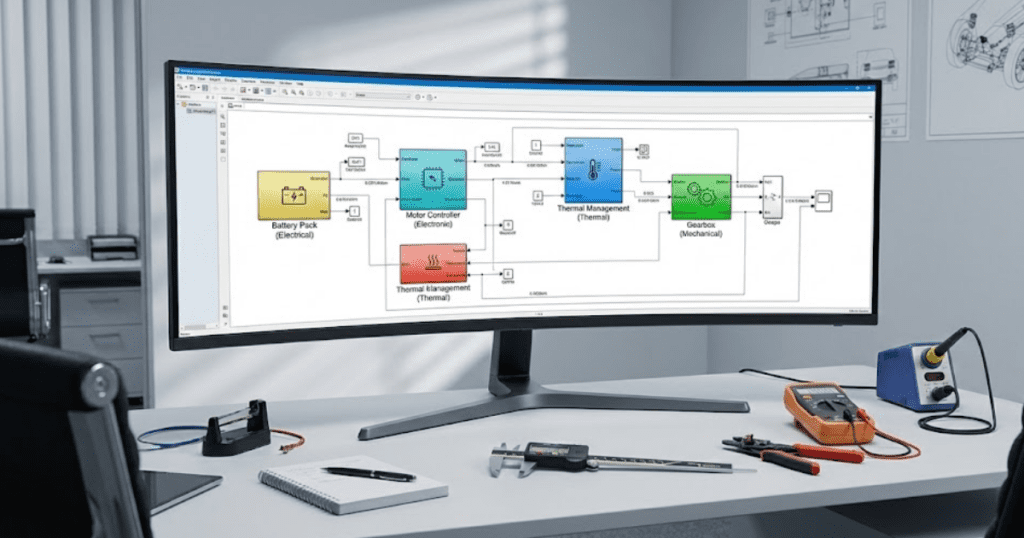
Use modeling and simulation of power electronics systems to size filters, select devices, and tune controllers. Average models speed long scenario runs, then detailed device models refine switching and thermal estimates. Renewable energy system simulation also highlights interactions with plant communications and curtailment policies. These insights cut risk during compliance testing and commissioning.

Using microgrid simulation and battery modelling to advance energy research

Energy research benefits from models that are transparent, validated, and easy to share.

Microgrid simulation captures interactions between sources, loads, and protection, including transitions to and from islanded operation. Battery modelling and simulation covers electrochemical behaviour, thermal limits, and degradation under cycling. Strong models speed controller research, improve protection settings, and support field pilots.

Microgrid control strategies, islanding, and reconnection

Control schemes often mix droop, voltage and frequency regulation, and supervisory logic. Simulation lets you test transitions between grid‑connected, islanded, and resynchronization states with care. You can stage faults, measure ride‑through, and tune reconnection thresholds. These studies reduce uncertainty before site trials.

Protection coordination needs equal attention. Directional elements, transfer trip, and load shedding must work across multiple modes. You can check selectivity when sources change state or lines switch. Clean results help teams agree on settings and operating practices.

Battery modelling and simulation fidelity

Storage models range from simple Thevenin blocks to detailed electrochemical equations. The right choice depends on study goals, cycle lengths, and thermal coupling. Parameter identification from lab data improves accuracy across temperatures and states of charge. Those steps give you confidence when projecting lifetime and warranty exposure.

Thermal coupling shapes safety and performance. Cooling limits, pack geometry, and sensor placement all influence behaviour. Simulation clarifies safe operating windows and helps plan derates under stress. Engineers then write control logic that respects those limits without wasting capacity.

Grid codes, protection, and interoperability

Renewable plants must meet strict ride‑through, power factor, and voltage regulation rules. Simulation helps you verify compliance under challenging transients. You can model measurement delays, filtering, and controller limits that influence test outcomes. The findings guide firmware updates and operating policies.

Interoperability matters for communications and protection. Teams test protocols, timing, and fault messaging under heavy traffic and fault conditions. Clear logs help vendors resolve issues without finger pointing. Field trials go smoother because the surprises were handled early.

Data, cloud workflows, and optimization

Data volume grows quickly when you run many scenarios. Scripted pipelines store inputs, versions, and outputs in a structured way, so results stay findable. Cloud workflows let you scale offline batches, then bring the key cases back to the lab for HIL. That mix shortens studies while keeping costs under control.

Optimization routines sit on top of clean data. You can tune setpoints, schedules, and controller gains against firm objectives. Sensitivity plots show which levers matter most, so teams focus on the right changes. Decision makers get reliable summaries, not noisy dashboards.

Energy research benefits from models that are transparent, validated, and easy to share. Microgrid simulation makes complex interactions measurable, not mysterious. Battery modelling and simulation ties physics, controls, and safety into one workflow. The outcome is faster progress from concept to field trial.

Importance of power system testing services for commercial and industrial projects

Facilities leaders face pressure to improve uptime, safety, and energy costs without adding guesswork. Power system testing services turn those goals into structured plans you can repeat each year. The results inform maintenance, upgrades, and protection settings with clear evidence. Teams secure budgets more easily because findings are specific, auditable, and tied to risk.

  • Protection coordination and power system test coverage: Facilities need selective trips that keep faults small and contained. A structured power systems testing plan checks pickup, time dial, and clearing times against site goals.
  • Short‑circuit, arc flash, and equipment ratings: Studies verify duty on breakers, busbars, and cables, then propose practical corrections. Commercial power system testing reduces surprises during outages and maintenance windows.
  • Power quality and harmonic assessments: Measurements and models reveal sources of distortion and flicker. Recommendations focus on filters, grounding practices, and control adjustments that deliver measurable improvement.
  • Reliability audits and contingency planning: Data‑driven reviews map single points of failure and restoration steps. You leave with clear actions that protect production, labs, and offices.
  • Compliance and documentation for electric power systems testing and engineering services: Reports provide the proof inspectors and insurers expect. Evidence includes diagrams, settings, test records, and clear change logs.
  • Commissioning support and power supply test system validation: New gear ships with settings that match studies, not guesses. Site tests confirm operation under load, so handover is smooth and complete.

Well planned services protect staff, assets, and schedules. The right partner builds capacity on your team with training, templates, and clear reports. Over time, a living one‑line, settings database, and procedures manual keep everything aligned. Leaders sleep better because risk is measured, managed, and steadily reduced.

How OPAL-RT supports engineers with advanced power system simulation

OPAL-RT gives engineers practical ways to move from offline models to rigorous, closed‑loop tests with controllers, relays, and embedded code. Our real time digital simulators execute complex plant models at fixed time steps, with low jitter, and reliable I/O for lab integration. Teams run hardware‑in‑the‑loop simulation to validate firmware timing, protection selectivity, and converter controls before any energization. Open scripting, version control hooks, and automated reporting keep results repeatable and easy to audit.

We also support grid studies, converter design, and microgrid research with modular platforms that scale channel counts, compute, and fidelity. Engineers connect toolchains they already use through documented interfaces, then standardize on shared libraries for long‑term reuse. Field and lab teams benefit from consistent data, structured test plans, and responsive support that understands day‑to‑day constraints. When projects reach site commissioning, you carry forward the same models, signals, and acceptance criteria with confidence. Choose OPAL-RT for trusted real time performance, proven workflows, and support that meets engineers where they work.

FAQ

You start by matching electrical power systems study goals to solver needs, then consider runtime, I/O, and real time requirements. For planning and protection, electrical power system analysis software excels with phasor and dynamic studies. For converters and control loops, electrical circuit simulation software with fixed small time steps gives the fidelity you need. You get more value when toolchains connect cleanly, and OPAL-RT helps you keep data, timing, and hardware interfaces aligned so your tests stay repeatable.

Set clear acceptance metrics, trace requirements to test cases, and version models, scripts, and datasets. Electrical engineering simulation software supports fault injection, tolerance sweeps, and closed-loop checks before lab time. That preparation cuts risk during commissioning and reduces unplanned outage windows. OPAL-RT supports these steps with real time platforms and workflows that turn plant models into reliable tests you can trust.

Hardware-in-the-loop simulation lets a power system real time simulator interact with controllers, relays, and sensors at electrical time scales. You validate I/O ranges, timing paths, and edge cases without stressing equipment. Logging and automation produce consistent evidence for reviews and safety signoff. OPAL-RT provides deterministic execution and practical I/O so your team can focus on outcomes, not plumbing.

Electrical modeling software shapes converter design, filter sizing, and protection logic, while battery modelling and simulation clarifies thermal limits and lifetime. Average models speed plant-level studies, then detailed switching models refine loss and EMI estimates. You also confirm ride-through, communications timing, and curtailment behaviour before site tests. OPAL-RT supports these workflows with real time execution when you need closed-loop checks against actual controllers.

Start with the study scope, decide on fidelity for machines, networks, and converters, then map to solver and timing needs. Power system simulation software aimed at facilities, microgrids, and transmission often pairs well with tools focused on fast converter dynamics. Keep models tight, validate against measurements, and document solver settings so results are defensible. OPAL-RT helps you bridge offline and real time studies so selection turns into a coherent process across teams.

1 2 6 7 8

Get started with SPS Software

Contact us
Cart Overview